Total Pageviews

Showing posts with label gold mining. Show all posts

Tuesday, May 15, 2012

Gold Occurrences in Uruguay


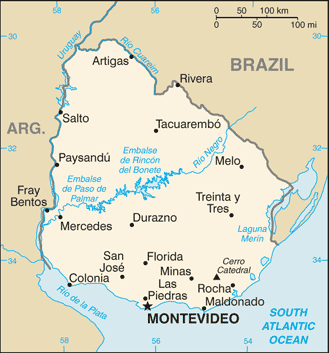
Map of Uruguay


Until 1997 gold was not mined in Uruguay although the potential for finding it existed and a gold mine named El Arenal in Rivera where a $30 million investment created a mine that was expected to last for six years.  This start-off created a sustained growth in the mining industry that is still ongoing.

Although Uruguay has long been noted for its exploitation of non-metallic industrial minerals it has only been within the past few years that metallic minerals have been exploited.  That coupled with significant foreign investment has brought about a rise in production.  The processing of granite is one of the benefactors of this as well as the production of gemstones especially large amethyst lined geodes some as large as houses and other metallic minerals.

Uruguay is a country that has been little explored until recently with the outlook promising for further exploration.  The future of the mining industry in Uruguay is very forward looking with many licenses for mineral exploration having been granted in recent years with national interests driving the further exploration.  Attracting foreign investment is one of the aims of the present government.

Before the continents of Africa and South America split apart millions of years ago Uruguay was joined to Namibia in Africa making it entirely that both gold and diamonds could be found in the country.

Although there are no volcanoes today in Uruguay there is plenty of evidence of past volcanoes and volcanism.  The amethysts are associated with vast flows of basalt that heralded the splitting of the continent of Gondwanaland when the Atlantic Ocean opened during the Triassic/Jurassic to form today’s deposits of basalt.  Earlier volcanic activity occurred during the Precambrian.  These episodes of ancient volcanism provided the heat engines to cause gold to be deposited in favorable places.

Although gold is known to exist in Uruguay it still remains one of the most under-explored countries on the face of the earth.  There is known gold that has already been contracted to a Canadian Mining Company and there are at least two other areas containing gold that haven’t been let out on contract as of yet.  Today the country is like a treasure chest waiting to be opened.

Friday, May 4, 2012

Gold Occurrences in Brazil


Coat of Arms of Brazil


Within its borders Brazil is the fifth largest country in the world; it touches upon all the countries in South America except Ecuador.  The country also has an astonishing variety of mineral deposits including iron, gold, gemstones, diamonds and oil.  There are literally hundreds of active mining companies found in Brazil.  Brazil also enjoys a rising economy and has a stable government with the future for mining being extremely bright.

The Amazonian shield covers much of the eastern portion of the South American continent and provides many of its gold mines.  Prospecting in the area is similar to prospecting in Canada’s Abitibi Gold Province in Ontario with a repeat of its greenstone belts with alternating gneiss’s.  There are also many deposits of turbidite hosted paleo-gold deposits similar to those found in the Witwatersrand in South Africa.  To the north of the Amazonian shield is the Guyana shield, to the south are the Rio Apa and Platian cratons and in the west is the Sao Francisco craton.  All of these areas are gold bearing.

Brazil covers 8.5 million square kilometers with 7,500 kilometers of coastline making it the largest country in South America, a size that dwarfs all its neighbors.  Its size is on continental size contains a vast resource base making it a prime target for attracting foreign investors and miners as well as Brazilian mining companies.  The country also has a long history of gold mining dating back into the 16th century.

It is estimated that less then 30% of the country has been adequately mapped so there is plenty of room for prospecting in both placer and lode gold deposits. Placer deposits can be found throughout Brazil except in the depths of the Amazon Basin, and there are plenty of gold deposits found in the Precambrian Shield areas that dot the country.

One of the biggest problems facing the Brazilian mining industry are the number of artisanal mining operations that keep popping up; there was a gold rush in the 1990s that centered on the Guyana shield that reportedly attracted over 90,000 miners to the area.  These miners for the most part disregarded good environmental practices resulting in large areas that were contaminated with mercury and other contaminants.

It has been found that artisanal mining is today the largest source of mercury release into the environment not only in Brazil but other countries too.  One of the sites mentioned that is the largest is in the Tapajos River Basin in the Amazon region of Brazil.  The Global Mercury Project (GMP) under the auspices of the United Nations is aiming to reduce this mercury contamination.

Brazil as a whole is mining friendly and enjoys a now stable government and a rapidly expanding economy that welcomes miners from around the world.  There are still vast amounts of the country that have not been explored, so one never knows what might be found just around the next bend of the river.

Friday, March 30, 2012

John Carter on Martian Gold Mining


Mars from the Hubble Telescope   NASA


It may be a long time before we have prospector’s boots on ground on Mars, but we already know the Red Planet has gold deposits.  Gold and other valuable minerals on Mars will be associated with such geologic features as volcanoes, lava flows and impact craters.  Because the Red Planet has a totally different history, atmosphere and chemistry then Earth it is certain that many of the minerals found on Mars will be different then minerals found on Earth.  Another thing that is certain it will be a long time before any of these minerals and ores will find their way back to Earth.

Since all the elements in the universe other than hydrogen and helium are the results of atomic fusion that has taken place inside of stars and is a byproduct of supernova's gold can be found throughout the universe as a universal substance. You might consider gold and the other elements as leftovers from the formation of a supernova.

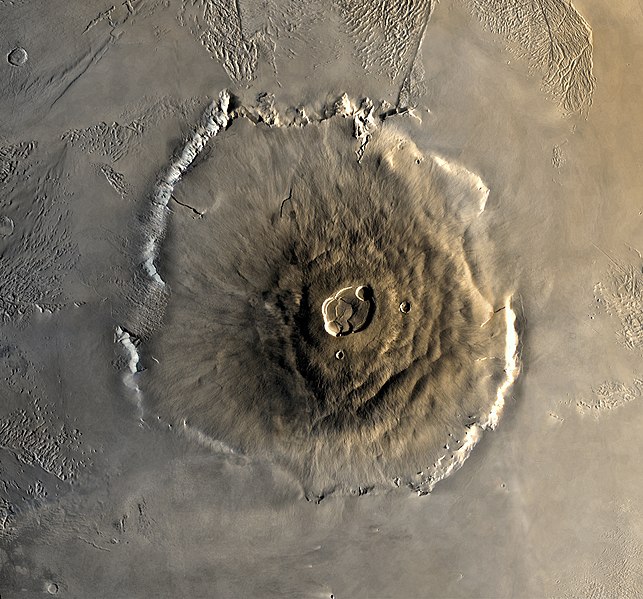
Olympus Mons the largest volcano on Mars and the largest known volcano in the Solar Ststem   NASA


Future prospectors on Mars are likely to find valuable mineral deposits in some usual locations according to planetary scientists that have been studying different ways to valuable deposits of metal ores can be concentrated on the red planet Mars as well as all the other planets in the universe.

The only environment that we have observed so far are those found on Earth or surface waters, ground waters and even chemicals left by lifeforms have played a major role in leaching, concentrating and depositing different kinds of valuable metal deposits including gold, silver, nickel, copper, iron and all the rest of the valuable minerals.

Victoria Crater, Mars showing its distinct scalloped edge caused by erosion.  This is a typical impact crater caused by a large asteroid that collided with Mars.  Both volcanoes and these features would be prime targets for prospecting.  Notice the large field of sand dunes in the center of the crater.   NASA


At present there is no surface water visible on Mars but there is plenty of evidence visible themselves this used to be running water across the surface of Mars. This fact indicates that there is ample evidence to support the idea of finding place or deposits on the surface of Mars where gold and other metals have been concentrated by the action of running water as well as wind. Other than these placer deposits question is raised where else does the starving prospector look for gold and other valuable metals on Mars.

Valleys and canyons on the surface of Mars as seen from the orbiter HiRise   NASA


According to planetary scientist Michael West of the Australian national University in Canberra and the Mars Institute is desirable minerals would be found around volcanoes and impact craters. One of the great differences in prospecting on Mars versus the planet Earth is that on Mars the planet is so cold that even groundwater is turned to ice as permafrost so that it functions little more than as another mineral in the ground.

Yes, there is gold to be found on Mars but don't count on putting any evidence of it in Fort Knox for a few more years at least.

Thursday, February 9, 2012

The Foundations of a Good Gold Mining Business


The type of mine where good business practices are used.
Photo by Greverod


For small operations, mining for this precious metal takes a lot of personal sacrifice and faith. Recently,
reality television shows like Discovery Channel’s “Gold Rush” and “Bering Sea Gold” have brought the
business of gold mining to the general public’s attention. Television shows like these do try to show all
sides of the business, but as with all television, the glamorous side seems to come out more than the
gritty side.

At the heart of every good gold mining operation are a few basic yet necessary requirements. These
requirements provide the foundation for a legal and well-planned gold mining business. Before you go
prospecting for gold, you must be sure to take care of the following…

Locate a mining claim: In accordance with the Mining Law of 1872, a mining claim can only
be staked on federally-administered lands that have not been previously claimed or closed to
mineral entry under some special act, regulation or public land order. There are 19 states where
mining claims can be located.

Stake your claim: Federal law requires that claim boundaries be clearly marked. Most states also
have additional staking requirements.

Record the mining claim: In accordance with the Federal Land Policy and Management Act of
1976, all claims and sites must be recorded with both the state and the proper Bureau of Land
Management (BLM) office.

Secure an investor or investors: The total amount of money needed to run a successful mining
operation will depend on the size and location of your claim, the number of employees hired
and the method of mining used. Typically, a company will bring in managers with prospecting
experience to assess the claim and decide on an operating budget. This is the amount proposed
to investors. Investors will require a return on their initial investment, and smart prospectors
will hire an attorney to ensure the mining company receives a fair deal.
Purchase the right equipment: Investing in the right prospecting tools is essential for success.
When you use the right equipment, you find more gold and make more money.

Hire experience: For the most part, you want your employees to have previous experience in the
specific job they will be performing. This reduces the time and money used for training.
Meet all federal and state mining safety and labor law requirements: There are laws and policies
that must be followed in order to continue operation. Each state has its own safety training
policy, so check them out before opening the operation.

Maintain workers’ compensation insurance: Even with proper training, accidents can happen.
Protect your company by maintaining the right workers’ compensation insurance. In some
states, it is actually a law to maintain workers’ compensation insurance, so check your state’s
requirements before hiring.

Maintain the mining claim: Under the federal mining law, all claims must follow the annual
mining claim maintenance requirements and pay an annual maintenance fee.

In addition to these practices, all gold mining operations should hire an accountant and office manager
to maintain all financial, employee and other records. A good operation keeps great records and a close
eye on profits and losses.

For more information on federal mining laws, visit the U.S. Department of the Interior Bureau of Land
Management website and search “gold mining.”

About the Author: Allison Lane owns the website  www.mpaprograms.org  and enjoys writing guest blog posts on various topics of interest.

Monday, January 2, 2012

The Importance of a Business Plan in Gold Mining

A collection of classical capitals.


One of the most important document in gold mining or exploration, any mining or any business ventures is a good business plan that acts not only as a road map as to how the operations will proceed, but is also necessary to get capital for the operations of the business. Yes, gold mining in this sense is like any other business whether it is selling shoelaces or building rocket ships all business have to have a roadmap to their success.

If you are not familiar with a business plan it is a formal statement of the goals of your business. It also includes the reasons why you believe those goals are achievable and how you expect they can be achieved, and the way you are going to reach these goals. The business plan may also contain information about the personalities that will be conducting the operations necessary to achieve these goals.

A well-written business plan will also target whatever changes that may occur as to how the public perceives the business and its branding by the customer, client, taxpayer or the larger community as a whole. When your operations assume a major change such as the gold turning the copper at depth as often happens. It can be also used for planning new ventures or additional minds. Most principals or investors require a 3 to 5 year business plan since investors will look for their annual return of investment in that length of time.

There is a great deal of information about business plans on the Internet that can be found by Googling the phrase business plan. In addition there are also many, many templates that are available online where literally all you have to do is fill in the blanks and your business plan is written. Using one of these blanks is very helpful, however the best way to write an effective business plan is by scratch. At the very least by Googling business plan you can quickly gather a great deal of information as to how to write one.

No matter whether you use a pre-existing template or start writing your business plan from scratch you will quickly discover how much smoother everything goes for you. The business plan will not only direct you in operating the mine have but also make raising money far easier. There is not any operation on earth that does not benefit from a well written business plan.

Monday, December 19, 2011

Strategic Alliances

This is a group of companies providing goods and services to the mining and exploration industry.  If you would like more information about our strategic allies they are listed below.


G&O Diamond Drilling Contractors is based out of Hay Lake, Alberta, Canada covers North America has over 40 years experience.  Their crews are trained to provide not only core drilling, but many of the other skills needed in modern mining practices.  You can contact them through the following link: http://coredrilling.ca/

The Sonic Goldblaster 100

Goldlands is a company in Bellingham, Washington that makes Big Boys Toys for large scale placer mining up to 150 tons per hour. You can contact them through the following link: www.goldlands.com 

Sunday, October 23, 2011

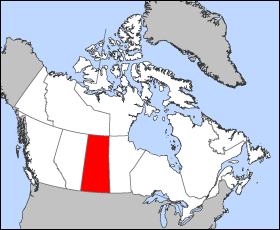
Gold Occurrences in Saskatchewan


Many of the people living in Saskatchewan don’t realize that the province is the largest producer of Uranium in Canada but also has or had some world class gold deposits that are found in the northern part of the province. The starting point for all this mining activity is the city of Saskatoon where many of these mining companies are headquartered. The potential of the province where the surface geology has barely been scratched is vast with many mineral deposits yet to be found.

Rumors of gold being found by trappers on the North Saskatchewan River started filtering out in 1859. These rumors claimed there were one ounce and larger nuggets being found were prevalent during the building of North Battleford. Flour gold can still be recovered by panning the river from Churchill west to Edmonton Alberta and beyond. Some stories even tell of seeing businessmen with their pants rolled up panning gold from the river during lunch hour around Edmonton Alberta.

Gold was first discovered in Saskatchewan near Prince Albert in 1859 in the North Saskatchewan River. The province began producing gold in small quantities in the early 1900s from placer deposits along the North Saskatchewan River and its tributaries. Today there five gold mines have been brought into production since 1987 with additional production coming from base metal mines mainly from around Flin Flon. There are an additional 200 gold occurrences in the province that are not being worked presently.

During the 1980 although gold had been produced since the early 1900s marked the first time that there had been a significant gold exploration program had been used in the province. Most of these occurrences are in the Precambrian shield area except for some small placer deposits draining off the Canadian Shield.

According to the Saskatchewan Geological Survey (SGS) there are still large areas in the Province that haven’t been explored especially in the Canadian Shield. To search for Saskatchewan occurrences of gold, use the Saskatchewan Mineral Deposits Index searchable database, or the Geological Atlas of Saskatchewan. Or open the Mineral Resource Map of Saskatchewan.http://upload.wikimedia.org/wikipedia/commons/2/2b/Saskatchewan-map.png

It has been pointed out to me by one of my Canadian prospectors whose mother was born in Battleford, SK that they mined placer gold along the Saskatchewan River flowing between Battleford and North Battleford.  Some of the miners reported they were able to recover as much as an ounce a day.

Tuesday, September 6, 2011

Gold Occurrences in Manitoba

Gold in Quartz.
Photo by Rob Lavinsky
There are several gold mining companies that are presently exploring for gold or mining it in Manitoba. The provinces also been the site of many gold rushes the earliest of which occurred in the southeast corner of the province where the abutts Ontario. This part of the province is part of the Canadian Shield as well as northern Manitoba where there are several operating gold mines.

The southern part of the province as well as the other Prairie Provinces is covered with a sequence of glacial lake sediments that are derived from glacial Lake Agassiz about 10,000 years old. Today, Lake Winnipeg is just a small part of Lake Agassiz. The gold deposits in the province are mostly found north of the Lake District where you encounter the ancient rocks of the Canadian Shield. It is these rocks that contain gold except for a narrow area in the far eastern part of the province. Gold and other valuable minerals are founded this area of the Canadian Shield.

The southern portions of these three provinces are the home to oil and natural gas; they also contain minable amounts of gypsum, potash and salt because they were covered by an ancient sea that bisected North America from the Gulf of Mexico to the Arctic Ocean. The Williston Basin extends into these provinces that also contain portions of the Bakken and Three Forks Formations.
Gold is found in northern Manitoba where rocks of the Canadian Shield are exposed. There is mining for gold and other metals in this part of the province. It isn’t only gold that they find. There are deposits of copper and nickel that are mined around the area around Flin Flon.
Manitoba is huge, it is almost as large as Texas so there is plenty of territory where you are able to prospect plus you have a provincial government that is quite friendly to the exploration and mining industries.
A good share of the exploration that is occurring in the province is between Rice Lake and Red Lake in Ontario. These two lakes are only 60 km apart and are both on the same continental fault. Although gold was discovered at Rice Lake in 1916 there were only a few mines that operated to the five hundred foot level. The deposits that have been discovered recently are all below the 1,000 feet.
Like a lot of other places in Canada it is often useful to prospect in the shadow of an existing mine. To find these old mines you are going to have to spend some time in the library researching them. Another good source of information about gold and other mineral localities is available from your provincial government.

Wednesday, August 17, 2011

Gold Occurrences in Quebec


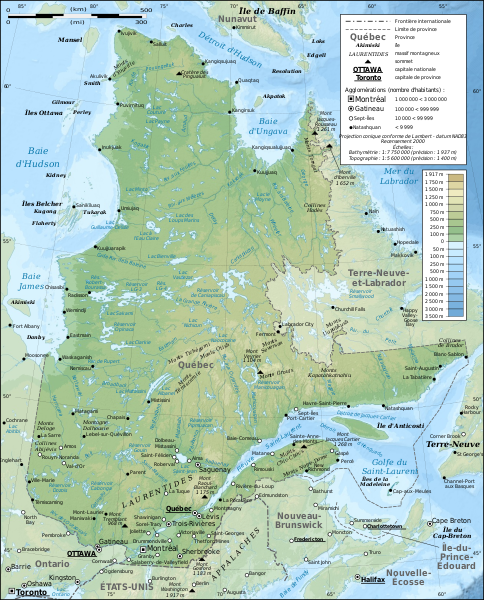
Topographic Map of Quebec   NASA


There are many gold deposits in Quebec many of which are being explored or developed into active gold mines at this moment.  The province is also the eastern terminus of the Abitibi Gold Belt that begins in Wawa Ontario and supposedly ends at Val D’or Quebec.  This is the second largest gold belt on earth only the Witwatersrand of South Africa is larger.  Since it was first discovered in the early 1900s the Abitibi has produced more then 160 million troy ounces of gold, more then there is in Fort Knox.

There are several different parts of the province that contain gold either as native gold or associated with other metals of which copper is one.  This is the case in the copper/gold mines around Chibougmau.  There is a goldmine located about 60 km west of Chibougmau on Rt 113 in the Chapais Mining Camp. Further north these is mining exploration work being undertaken on the Taigus Road that goes from Radisson east to within a little more then 100 km from the Labrador border.  There is also further exploration work being done in the far north of Quebec in the Ungava Bay Territory.  

The Matagami Camp is another hotspot of activity for both gold mining and exploration with several mining and exploration examining the surrounding area for gold and other base metals.  Exploration has reached the level where a surface mine is being opened near the town of Malartic between Val D’or and Rouyn-Noranda.  This site is located in the Abitibi Gold Belt.  A new find of Volcanogenic Massive Sulfides has been reported near Rouyn-Noranda. 

A great deal of exploration and mining activity is found north of the St. Lawrence River especially in Archean aged rocks, but most of the placer activity is found south of the river especially in the rivers and streams that drain the Height of the Land on the Maine Border.  Gold is found in the area centered on Sherbrooke and Thetford Mines as well as along the Chaudiere River.  This is an interesting area because it also displays the same kind of chaotic geology as the rest of the area that is on the seaward side of the Brampton/Baie Verte fault where continental terrane and oceanic terrane collided during the Taconic Orogeny forming the Iapetus Suture Zone.  This entire area in the Eastern Townships warrants further exploration for lode gold.  

Sunday, July 3, 2011

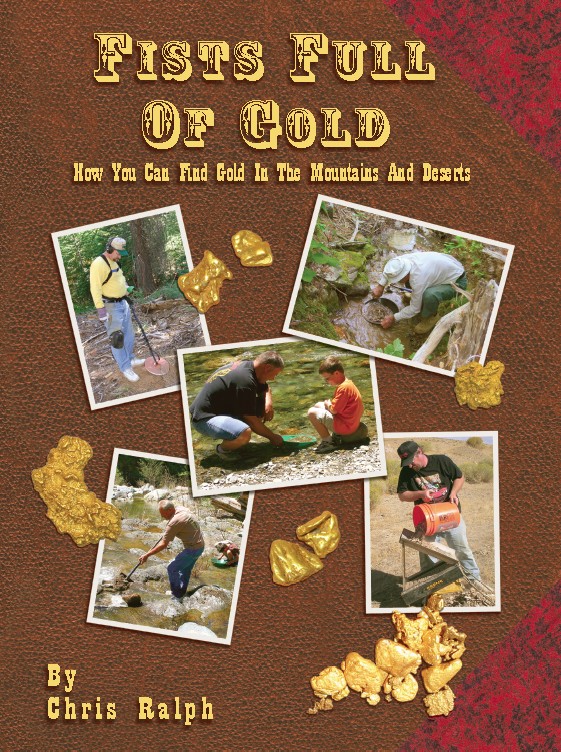
Fists Full of Gold


Chris Ralph the associate editor of the Mining and Prospecting Journal claims there is still plenty of gold out there for the taking.  The title of his book is “Fists Full of Gold” because he hopes that will be what you have after reading his book.  He has put years of experience in writing this book making it the most comprehensive prospecting book that has ever been written. The focus of the book is to teach you how to find gold deposits and what to do after you have. A lot of information is included in this book that simply can’t be found in other books about prospecting. There is plenty of basic information for beginning prospectors, more information for more advanced prospectors and plenty of information for those prospectors that have decades of experience.  The book holds plenty of the latest technology and up-to-date methods for finding gold.


The book will teach you the skills of being a prospector in an entirely different and unique way that is explained in any other book. Equipment is not the only thing that is explained in this book that also explains the methods of using that equipment. Will the most important things that is covered in this book is where to look for gold, and how to recover the gold. The book was designed to be the only prospecting book you'll ever need, or will ever outgrow. Fists Full of Gold contains more than 360 pages for 225,000 words devoted to the world of prospecting. The book is longer than any other two or three books devoted to prospecting and gold. It's all written in words the average reader can understand that has no training in either geology, prospecting or mining.


The basics of prospecting and finding gold, including:
    The fact that there is lots of gold is still out there to be found
    How to use a gold pan, including crevicing, mossing and sniping for gold
    How to get the best recovery out of your sluice box or highbanker
    How to use a suction dredge to find and recover paystreaks
    How to operate a dry washer for gold
    An extensive section on metal detecting, perhaps the best on the market
Building your own equipment: including building your own:
    Portable sluice box
    Lightweight suction dredge
    Desert dry washer
How to operate a small scale commercial mining operation
How to deal with and get the most out of your black sands
How to get the best prices for your gold, specimens and nuggets
A full coverage of the geology of gold and silver mineral deposits:
    All about minerals and how to identify them
    Minerals associated with gold deposits
    Rocks: what they are and how to identify them
    Basic geology for the prospector in an understandable form
    A detailed explanation of placer geology and how paystreaks form
    A detailed explanation of hard rock geology and how gold deposits form
    How to recognize many types of hard rock gold and silver deposits
How to do research to find your own rich concentrations of gold:
    Using and understanding topographic maps, aerial photos and GPS
    Where to find little known sources of information on gold deposits
    How to use geology maps to find gold
Signs and indicators of gold deposits that you want to look for in the field
    How to read and interpret signs of old timer workings
    How to recognize geologic indicators of gold mineralization
How to prospect for commercial deposits of gold and silver
Mining law and how to stake and maintain your own claim
Platinum placers and deposits – How to prospect for them
Diamonds in placers – How to recognize them
Maps of where to find gold in the US and Australia


Plus hundreds of photos, diagrams and illustrations to explain the concepts presented in the book.


Price USD $29.95   Shipping included!


Please allow 4 to 6 weeks for delivery  


Connecticut residents please add 6.35% sales tax. 


Friday, May 13, 2011

Gold Mining Practices in Ancient Egypt.

The Ancient Egyptians were highly skilled in the mining of gold, made possible by the “alluvial spoil heaps and quarries which still bear witness to their activities”. Egyptian gold took two forms, dust or powder from alluvial workings and ring-shaped ingots cast from the smelted gold produced in the mines.


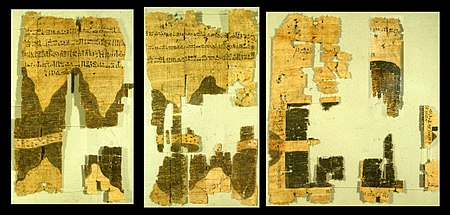
The Turin Papyrus Map is dated to 1100 BC is now at the Turin Museum. This map is rumored to be the oldest map in the world and it demonstrates the many gold bearing regions in the eastern desert of EgyptThe area shown is in the Wadi Hammamat between the towns of Quina and Qoseir. A network of roads intersects the mountainous regions and the inscriptions illustrate where gold was being mined in Egypt.

This is the right half of the above map.


In 60 B.C. Diodorus Siculus traveled in Egypt to inspect the gold mines of the Egyptians. His impressions and descriptions found in his Bibliotheca Historica drew largely upon the account given by Agatharchides of the working of gold. Agatharchides was a Greek philosopher and historian who wrote about the Red Sea in several books and the successors in Alexandria, where he worked at the court of PtolemyVI. Unfortunately, his work has been lost, yet Diodorus Siculus has keenly described laborers washing out gold from crushed quartz.


"At the extremity of Egypt and in the contiguous territory of both Arabia and Ethiopia
there lies a region which contains many large gold mines, where the gold is secured in great quantities with much suffering and at great expense. For the earth is naturally black and contains seams and veins of a marble which is unusually white and in brilliancy surpasses everything else which shines brightly by its nature, and here the overseers of the laborers in the mines recover the gold with the aid of a multitude of workers” [1].

Workers worked day and night and were confined to their particular work area in an event they tried to escape. The ground which was rich with gold was first burned and the remnants of the burn were crumbled by hand. The overseer or guard would point towards the ground or a rock. The workers with the greatest strength were assigned the quartz and they would pound it with massive force. No skills were necessary, just brute strength and agility. The workers would tunnel through the quartz, following the cleavage points and seams, never in a straight line.

Young men would wind their way through the hollowed tunnels and collect the rocks which would have been cast down piece by piece. They then transfer their load to the middle aged men who pound out the stones with iron pestles, making coarsely chopped pieces. Those pieces are then transferred to the women and older male workers whom cast them into mills and grind them into a fine powder.

The final stage includes pouring the powder on to a marble slap which has been worked into a board. The board is set at a gradual incline, so while a worker pours a continuous stream of waterover the board, the heaviest of the elements settles. Using a delicate sponging method, they pickup any small earthy particles, imperfect to be exact, and what’s left is gold dust. The gold dust is placed in earthen jars and mixed with “a lump of lead proportionate to the mass, lumps of salt and a little tin, and adding thereto, barley bran; thereupon they put on it a closefitting lid, and smearing it over carefully with mud they bake it in a kiln for five successive days and as many nights”. Once cooled, all that’s left in gold in pure form.

Notton noted that this working of the gold, as it is carried on at the farthermost borders of Egypt, is effected through all the extensive labors here described; for Nature herself, in my opinion, makes it clear that whereas the production of gold is laborious, the guarding of it is difficult, the zest for it is very great, and that its use is halfway between pleasure and pain [2].

1. Diodorus Siculus, Book III, Chapters 12 to 14; C. H. Oldfather translation, Loeb
Classical Library, 1935, 115-123
2. Notton,J. H. F.Ancient Egyptian Gold Refining: A REPRODUCTION OF EARLY
TECHNIQUES. Johnson Matthey & Co Limited, London.
3. Pictures are in the Public Domain

By Lauren Axelrod publisher of the Ancient Digger at: http://http://www.ancientdigger.com/ 

Tuesday, May 10, 2011

Gold Occurrences in Nevada

The Goldstrike Mine in the Carlin Trend of Nevada   USGS


Placer gold has been found in 14 of the 17 counties in Nevada in the form of either commercially viable deposits, or deposits that are potentially viable. Most of these deposits are located in the northern and western part of the state. Many of these deposits were worked out by early prospectors, but there are many areas in the state were overlooked that can still afford a working wage if they are developed. It is especially important to hunt out areas where virgin gold can be found that were never mined in the past.

Much of Nevada is so arid that the early prospectors had several different methods of dry washing their gold bearing gravel. One of the biggest problems they had in processing placer gold was the presence of lots of caliche, a type of hardened sub-soil that attains the hardness of concrete. 

It is felt by many that the discovery of gold is an ongoing process with much of the gold still waiting to be discovered.  By drilling in the basin and range province of the United States exploration geologists are finding even richer deposits of gold then there are in the Carlin Trend.  It is claimed that prospecting in the state is exciting because there is so much undiscovered mineral wealth present, and it isn't all gold.

Placer Gold
Photo by Nienetwiler


Nevada is also the home of unique deposits of finely disseminated gold that was discovered in the 1960s by Newmont Mining Company who developed a method for extracting the gold. For the most part these cool deposits are found in an argillaceous limestone that has been subject to enter thermal alteration. This is the famous Carlin trend of cool deposits where the gold is so fine it can only be seen with electron microscope, and at times goals of the limestone was represented by a single ion.

Gold of this sort is mined using the heap leaching method of recovering the gold values. He teaching consists of piling up a heap of crushed stone about a quarter inch in diameter and treating it with a weak solution of an alkali salt of cyanide. The heap is piled up on a watertight floor that slightly slopes towards the center and all the pregnant liquor from the gold leaching process is directed to a sump where it is collected for treatment to recover the gold.

Although there are several different techniques used on the ore one of the most common is treating the pregnant liquor with powdered zinc. The gold in the liquor chemically replaces the sink it is collected as a black powder that is further refined into pure gold.

Nevada also produces many gemstones including precious opal and turquoise. The precious opal comes mainly from the Virgin Valley, and the author used to buy some really beautiful turquoise from the area around Crescent Valley.

Friday, April 29, 2011

Gold Occurrences in Oregon

In 1964 the author spent some time as a prospector looking for gold in southeastern Oregon on down by the Nevada border. Although we didn't see much gold we had a good look at the Oregon desert.

Map of Oregon showing the High Desert
By Oxygun


According to the geology reports there is plenty of gold in Oregon it just depends on where you look. Gold and other minerals of interest are found throughout the state, but the northeastern part of the state has produced more Gold placers. Gold mining was occurring in Oregon as early as 1859 when the first goal strike happened. Most of the rivers and streams in Oregon carry placer gold; another place where placer gold is found accompanied by about 10% platinum is in the black sands found on the beaches of the Pacific Ocean.

Panning for gold in a stream.  USFS


What you should do is try panning for gold in a likely looking stream for starters. The best kind of stream to find gold in is what might be termed a babbling brook with lots of boulders and rapids and other places where gold may be entrapped. You can usually find gold on the inside of bends on what is called the point bar. Gold is also found behind a boulder or any place where the water changes velocity from fast to slow. Generally any place where Swiftwater trout would be found is also a good place to look for gold.

Two of the best places where gold may be found in a stream is where the water runs over a ledge in the stream causing the gold to be caught in cracks on the rocks. The other place is in the plunge pool beneath a waterfall.

One of the best places to search for gold in Oregon is in the northeast quadrant of the state. This part of Oregon is mostly desert, and because of the arid conditions water is apt to be scarce for gold panning. A gold pan works almost as well in the desert as it does in more humid places where water is abundant; the difference is you don't have any water to help of the panning process otherwise the process for finding gold is practically the same.

This is what you have to do to dry pan. Fill your gold pan about half full of gravel and go through the same motions that you would if there was water in the pan. That is shaking the pan horizontally so that the larger stones and pebbles come to the top. You’ll have to pick them out by hand almost the same way that you do with water. Keep working the pan until all you have left is sand.

Now you are ready to work the sand down into a concentrate. Holding the pan so the internal riffles are facing you and slowly by rocking the pan back and forth while the excess sand pours over the edge of the pan. In this manner you can work the sand down until there isn’t really anything left but the black sand concentrate that you can take home and work over at your leisure.

This is a thunderegg collected in the Blackrock Desert.
Photo by David Rix Eibonvale


There are other minerals of interest in Oregon among them are agates and thundereggs. These stones are usually associated with flows of basaltic lava. It is in the cavities and gas bubbles in the lava that the agates and thundereggs are formed.

Most of these thundereggs are found in gravel where they have been washed out of the basalt cliffs. The thunder egg have a crust that is kind of nubbly looking. Once you see one you will always be able to recognize another. Agates and thundereggs are very hard to see in nature, but there is a way to lure them out of their hiding place. Using a spray bottle filled with water spray the gravel in front of you and if there are any agates were thundereggs there. By being soaked with water will make them stand out against the other stones like a neon sign.

Sunday, April 10, 2011

13,500,000 Acre Land Grab by the US Government


The road to Perdition is often paved with good intentions, but this often leads straight to unintended consequences so be it with the latest land grab attempt by the federal government.  From what I understand the government already owns three out of ten acres of land in the United States why di they need more?  This time the land grab goes by the nice name of the “Antiquities Act,” but its purpose is designed to ban mining and prospecting designating them as National Monuments.  The proposed Land Grab will affect the entire gold mining and prospecting community, so we urge everyone to contact their Congressmen to protest against this land grab.  You might ask yourself, “Who really owns this land, we all do?

Saturday, April 2, 2011

Oil Seep in Carlin Type Gold Deposits

As reported in the July 15, 1991 issue of the Oil & Gas Journal an active oil seep has been found in the Yankee Gold Mine in White Pine County, Nevada.  This mine operates on the western side of Long Valley and is one of the Carlin Type Deposits that has made Nevada the premier gold mining state in the United States.

A naturally occurring oil seep in sandstone
Photo by Lidenke

Carlin type deposits are a hydrothermally altered limestone of Paleozoic age that contain deposits of gold measured in micron sizes that are only visible under an electron microscope.  The same deposits are also noted as containing disseminated deposits of arsenic and locally hydrocarbons.  The Yankee deposit is the only known deposit in Nevada that has active oil seeps.  The discovery of oil seeps here are felt to be important to further exploration for gold in the Carlin Trend gold deposits, but also in the search for oil.

The oil seep was originally discovered when an oil wildcatter was preparing to drill a 7,000 foot deep oil well in the area of the mine and asked the then operator of the mine Kennecott if he could hook up a telephone connection to his drill site from the mine.  The oil seep was brought up when a mine employee casually told him there were hydrocarbons seeping onto the mine that was operating in a calcerous shale that according to some other employees were pooling on the ground under the seep.

An oil seep in limestone similar to the one in the Yankee Mine in Nevada
Photo by Lidenke

Although the discovery of an oil seep is important in this formation for the discovery of oil and what is more interesting however is the description of gold deposits. These are found in sedimentary deposits that were formed during the Paleozoic from Cambrian through Mississippian carbonate and siliclastic rocks that have been permeated by hydrothermal fluids. Many of these deposits are found in siltstone and limestone although some of them are found in calcerous shales are siltstones.

These older deposits of been covered by later deposits of the tuffaceous sedimentary rocks of tertiery age and by andesites that are about 30 million years old. The deposits are also characterized by veinlets of quartz, kaolin and stibnite.  There are further deposits of realgar and cinnabar. 

Saturday, March 5, 2011

Advertise on this Blog

This blog “Gold Mining and Prospecting is now open to advertising and affiliate marketing from all who have products or services for the gold mining and prospecting industry.  We have available programs ranging from simple links with an explanatory paragraph explaining your product or service for $30/month to full articles of up to 400 words and illustrations for $150 per month.

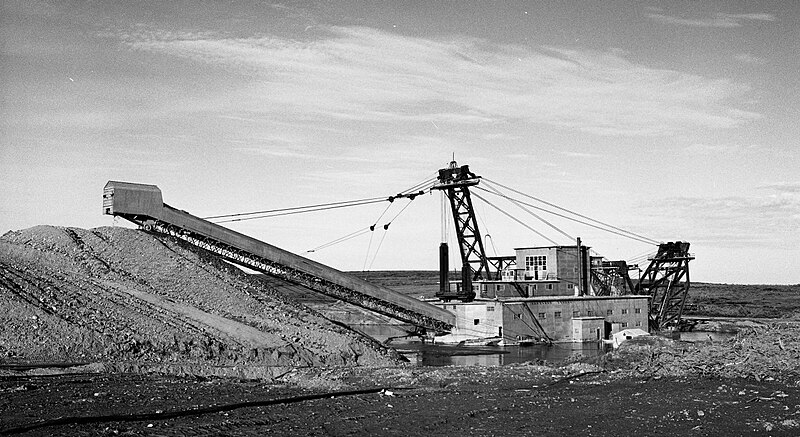
A mining dredge in action in Nome, Alaska.  This is the largest placer mining dredge in the world.

Here is an opportunity to show your product or service to one of the fastest growing blogs on the Net.  For further information contact us at geotekllc@gmail.com  

Sunday, February 27, 2011

An Auction Site for Used Gold Mining Equipment

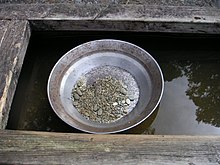
This is an old fashioned gold pan that is still in use today.


What this country has needed for a long time is a good nickel cigar, or a place where you can buy and sell used mining and prospecting equipment in a single website. We may wait quiet while for a nickel cigar, but there is now a website where you can buy and sell used Gold Mining equipment in an auction. The name of the new service is prospecting -- Gold.com that can be reached at: http://www.prospecting-gold.com

They bill themselves as the 1st auction site on the net for gold prospecting gear. They have all equipment, tools, supplies and gear. Be sure you check their gold giveaway page for the latest thing in giveaways. Another page on the site is about gold-mining info and metal detector manuals. The site also contains equipment reviews and free plans for building your own gold-mining and prospecting equipment.

Wednesday, February 23, 2011

Gold Occurrences in Pennsylvania

Pennsylvania has a long and rich tradition of mining especially for anthracite and bituminous coal as well as iron. What is not generally known however is the state is also produced a considerable amount of gold. It has a well-trained workforce of miners many of whom have a tendency to be prospectors. Because of this some iron miners down around Cornwall have actually produced more than 61,000 ounces of gold while they were mining the magnetite iron ore. Aside from the mine at Cornwall another mine that reportedly produced gold from magnetite was the Grace mine in Morgantown.

There were a series of three openings to the iron deposit in Cornwall located at Big Hill, Middle Hill and Grassy Hill that were originally owned by the Cornwall Ore Banks Co., but were eventually owned by Bethlehem Steel who eventually closed the mines in 1979.  This deposit of magnetite was produced by the replacement of limestone by hydrothermal activity during the Jurassic from a diabase intrusive, so in effect the deposit is a skarn.

The eastern part of the state is covered with crystalline rocks producing potential gold lodes as well as placer gold. This gold weathers out of the crystalline rocks and is collected in the rivers and streams of eastern Pennsylvania. This is not the only source of gold however, in the northern part of the state the last glacier left placer gold in the terminal moraines found in Pennsylvania.

There are several streams producing placer gold that came in Lancaster and York Counties in glaciers that have advanced into the state during the past million years. Any of these glaciers were capable of bringing gold down from Canada where one of the richest gold belts the world the Abitibi is found in Québec and Ontario. According to some geologists there have been as many as 24 episodes of glaciation that have affected the northern part of the United States in the past 2.5 million years.
Although the eastern part of the state is mostly covered with crystalline rocks that produce gold as lode gold that weathers out so it becomes placer gold that collects in the rivers and streams found in eastern Pennsylvania.
One of the places where gold has been found is along the Susquehanna River where it has been found as both nuggets and flakes of gold. Generally Wyoming County has been a good place to look for gold as well as in the surrounding counties.  In York County  placer gold is associated with the deposits of diabase that make up the tops of many ridges. The action of weathering releases the gold from bedrock allowing it to migrate downhill into the streams and rivers in the area.
During the Civil War the great battle at Gettysburg was fought on some of these diabase ridges with names like Little Round Top or Cemetery Ridge. There is no doubt that the rivers and streams around the Gettysburg Battle Site undoubtedly contain gold. 
The best way to find out where the gold is in Pennsylvania is to research old newspapers and town histories.  The state only keeps track of commercial mining operations and not that of individual prospectors. Old newspapers are often the source of stories about where one of the local citizens has found gold in their town.
Helpful Links:


There are several gold prospecting clubs that are active in Pennsylvania that can supply more information about Pennsylvania gold.

Our thanks to Stephen Shanks of the Pennsylvania Geological Survey for additional information.

Tuesday, February 15, 2011

Gold Occurrences in Madagascar

Although in the past Madagascar was a significant gold producer but because of its tumultuous political history for many years it remained in the doldrums. Today Madagascar is considered to be an up-and-coming place for mining now the political situation has become more stable. Today Madagascar has become a beacon for the mining and exploration industry that right now is largely undeveloped.

Madagascar is shown in red.

For those who don't know where Madagascar is, is approximately 400 km due east of the African mainland. It is separated from Africa by the Mozambique Channel.

Although the island has a vast potential for hosting valuable mineral deposits right now the country does not have a well-developed mining industry. As little as 30 years ago it was one of most geologically studied areas in the African region, but then the country underwent a period of political instability resulting in mineral exploration being put on the back burner. It wasn't until 1993 that the political instability vanished when the country returned to a liberal democratic form of government. It wasn't until recently however, that it began to regain some of the lost footing it once had in exploration and mining.

Although Madagascar is considered to be a part of the African Continent the island geologically is a micro-continent between Southern Africa and India. This becomes readily apparent when you start looking at the local geology and the flora and fauna. The geology of the island is more akin to that of Sri Lanka and India that is anything found in Africa.

Madagascar's primary gold deposits are similar to those of the Abitibi region of Canada than anything else. Like the Abitibi the gold is associated with greenstone belts, quartz reefs and veins, and is also found the fuse for the country rock in deposits similar to those of the Carlin Trend in Nevada.  There is a great deal of gold that is also associated with that volcanogenic massive sulfide (VMS) deposits similar to those that are found at the kidd Creek Mine in Timmins, Ontario or the Horne Mine in Rouyn-Noranda, Québec. Both of these mines are in the Abitibi Gold Belt of Canada.

Gold isn't the only thing found in Madagascar that is worth money.
Photo by Rob Lavinsky

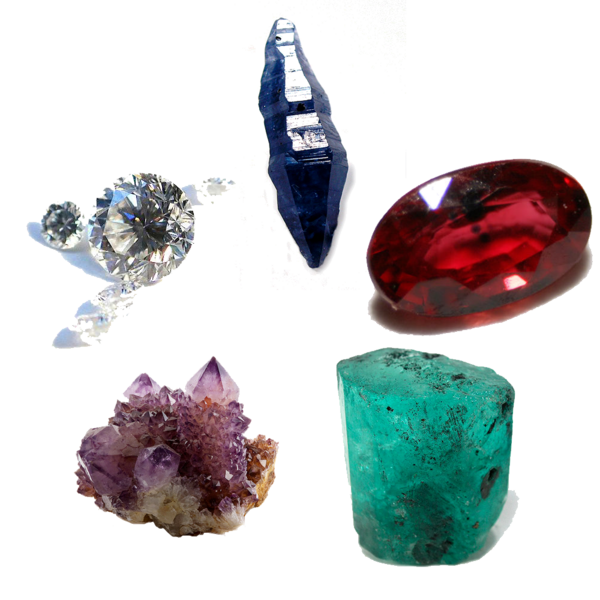
Alluvial gold is also been recovered from both ancient and recent placer deposits as well as lateritic earth. Aside from the gold deposits found in Madagascar is also the home of many valuable gemstones including those of the ruby and sapphire family that are mined mainly by artisanal miners although in some cases a few of these mines have been mechanized.

Although the primary gold deposits found on the island predate the breakup of Gondwana one of the two continents that made up the supercontinent Pangaea. This is very important to remember because it makes the regional tectonics arrival into the emplacement of gold deposits. Madagascar's gold bearing rocks are all part of its suite of basement rocks. These rocks are divided into three different systems with the youngest being the Vohibory System, the middle is the Graphite System and the oldest is the Androyen System. Most of the gold however is found in the graphite system. There are also some interesting gold deposits in the Vohibory System.

Monday, January 10, 2011

The Hollon GoldMaker for Rapid Gold Recovery


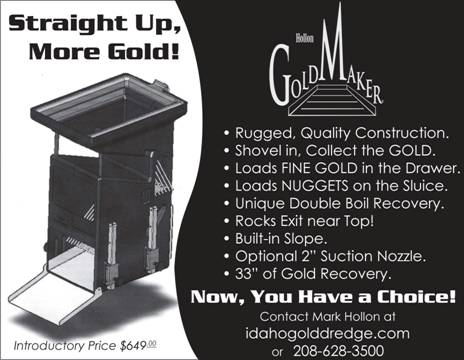
The latest entry into the tools available to small scale gold miners is the Hollon GoldMaker. The Gold- Maker is an extremely efficient and highly portable device for working in placer gold deposits. This is not a toy, nor is it a gimmick it will go is designed for producing the largest amount of gold as fast as possible for a couple of guys or gals armed with shovels. The maker says, “if you can shovel into the top, you can make gold.”

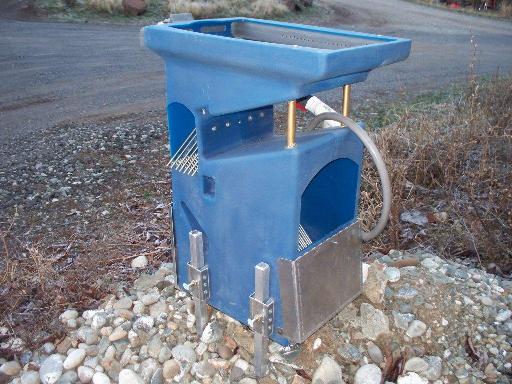
The Hollon GoldMaker setup for action.


Features:

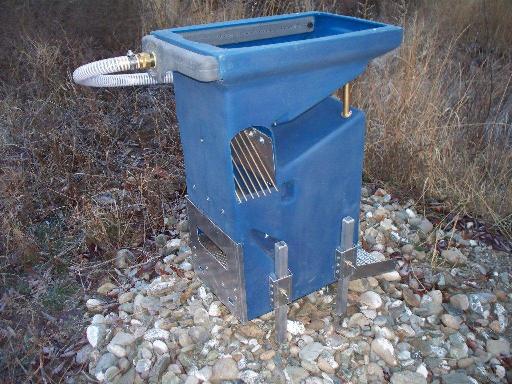
The Gold maker only weighs 32 pounds with its legs included. It has a unique molded spray bar supplying water to the Gold maker that has a built in slope that is capable of producing more Gold. This will build device was invented, tested and built by miners that love gold mining.

The Gold maker only requires 20 gallons of water to operate, it is equipped with a scalper allowing for quick field testing for gold and other valuable minerals. At the bottom of the Gold maker there is 11 1/4 inch wide true or that easily fits into a 5 gallon plastic bucket for a quick clean-up.

Another view of the Hollon GoldMaker 


 Accessories for the Gold Maker:

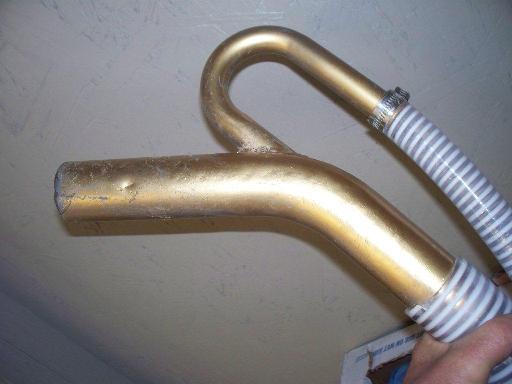
Gold maker comes equipped with a 2 inch suction nozzle including 15 feet of either one or two inch in diameter and a 2 inch suction nozzle with attachments.
There are also a set of settings and legs so that you can turn your Gold maker high bank or into the 2 inch suction dredge high bank or combo.

The Hollon GoldMaker in use being loaded with stream gravel.


How what works:

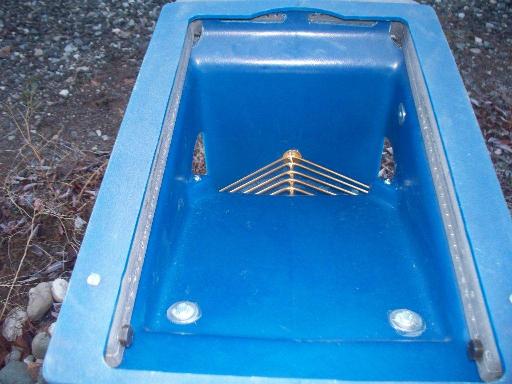
All you have to do to use the Hollon Gold maker is to show will some gold bearing gravel into the top where it is washed by water from the spray bar. If there is any material larger than three quarters of an inch is classified and exited by the top classifier, but is sometimes called a grizzly. By exiting the discarded material near the top of the Gold banker close your discard pile to grow without trying to crawl back into the machine immediately or fouling the lower sluice box.

In the next step the smaller material passes through 8 second 3/16 inch minus classifier to enter the recovery drawer. This recovery drawer has several features that were designed especially for trapping the finest gold that includes two boil recovery areas having unique scallops that were designed to put the finest gold further up the hill, and at the back of the boil. This design means it is less likely to migrate down through the riffle system to eventually run out of the bottom of the machine.

The Top of the GoldMaker showing the grizzly for removing large stones.


The Gold banker also features a scalper area which can be quickly cleaned and panned to test a theory that you are mining in an area that is Really productive. After two or three hours of operation, all you have to do is simply remove the drawer and recover your Gold.

If you are worried about the material that measures between 3/4 inch and 3/16 inch that may contain potential gold nuggets. In the GoldMaker this material slides down to the second classifier where it is reloaded into the sluice box below the find recovery drawer allowing the nuggets to be recovered without them or the other medium material mixing with and fouling the fine gold recovery.

The two inch suction dredge used in conjunction with the GoldMaker.


Throughout the entire 34 inch gold recovery system the whole thing is laced with an expanded style of riffles and trips designed to catch gold. Riffles used in virtually all the other gold recovery systems are not able to catch the finest gold alone because the action of water and materials of the sluice box as well as vibrations caused from shoveling along with the rocks rattling around in the system as they move down and out will eventually allow many small gold flakes to slowly migrate out one step at a time. The unique system of boil recovery that is used in the Gold Maker is one of its most important features. Until you have used the Gold maker system that catches even the finest gold particles in quantity, you will does not know what you have been missing!

Disclaimer: 

This is not a paid advertisement!