Total Pageviews

Showing posts with label prospectors. Show all posts

Friday, May 25, 2012

The Lost Doukobor Mine


Argentite aka Acanthite
Photo by Rob Lavinsky


In autumn of 1929 lightning struck in Gold Creek Basin and started a forest fire in the area behind Hubbard Ridge, to the north of Flagstaff Mountain.  Although the fire was in Washington State the nearest crew for fighting the fire was a crew of twenty-five Doukobors from Rossland, British Columbia.  The Doukobors were a religious sect that migrated from Russia mainly during 1899 that were mainly farmers, but many of the men worked on the railroad while their women did the actual farming.

While the Doukobors were fighting the fire it jumped their fireguard and engulfed their camp in flames.  The firefighters ran for their lives.  Once the fire was finally extinguished they conducted a headcount and discovered two of their crew was missing.  The next morning the missing men rejoined their crew.

The Doukobors told the rest of their crew how they had managed to keep ahead of the flames.  During the night they took shelter at the base of a landslide where they discovered a vein of galena, an ore of lead and silver.  The men took samples of this ore that they brought back with them.  One of the workmen named Ray Wiley recalled later, “It was fine grained argentite – high grade silver ore.

The ore was sent to the CM&S Company’s assay office in Trail, British Columbia where it was assayed at over 1,000 ounces of silver per ton, thus it was bonanza ore.  Later in 1930 the Doukobors in company with some geologists returned looking for the rich vein of galena at the foot of a landslide.  They were unable to find a trace of the silver ledge, nor even the landslide.

Since that time many other prospectors have searched in Gold Creek Basin for the lost Doukobor Mine, but all their attempts to find the galena bearing ledge have failed.

Tuesday, May 31, 2011

Gold Occurrences in Arizona

Superstition Mountain the reported home of the Lost Dutchman Mine.
Photo by Doug Dolde


As the home of the famous Lost Dutchman Mine on Superstition Mountain as well as several other lost gold mines it is apparent that there is gold in Arizona. The gold runs across Arizona in a line from Greenleee County on the New Mexico border to the Nevada border in Mohave County. The greatest concentration of gold can be found in Yavapai County in central Arizona. This concentration of gold ore extends to the southwest into La Paz County. There is a fine map by the Arizona Department of Mines and Mineral Resources that depicts the known resources of metals found in the state.

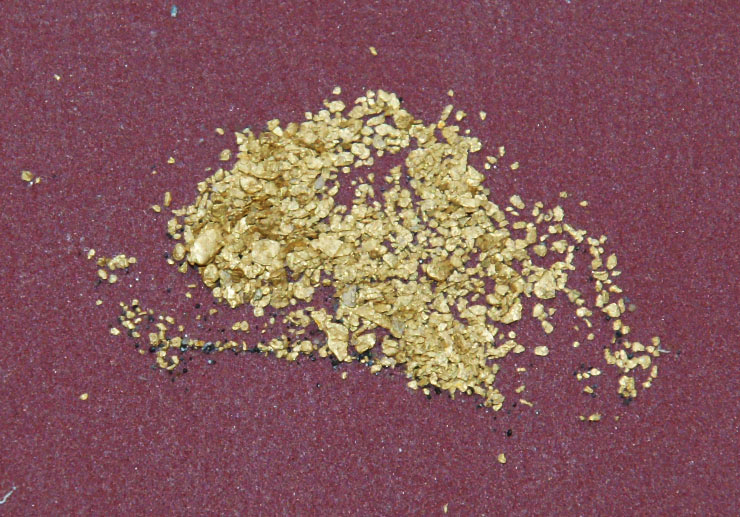
Placer gold in Arizona is a resource that was mainly tapped by the first prospectors that came into the state because finding this gold is so easy that it is often called “poor man's gold.” Although this may be true it also be remembered that every flash flood that occurs in Arizona brings more gold down from the mountains. Although placer gold is not as plentiful now as it was during the pioneering days of the 19th century it is still possible to find placer gold. There are probably many places in the state where rich gold deposits are still able to be found that were overlooked by the original prospectors.

One of the greatest difficulties faced by prospectors in Arizona that are searching for placer gold is the lack of water. Although it is true in many places you can prospect for gold using the dry wash method, but it still leaves you with the problem of having sufficient gold in your prospector’s camp to pay your expenses.

During the summer months it becomes extremely hot in southern Arizona, so hot in fact that I once observed that coyote was chasing a jackrabbit; they were both walking. This extreme heat makes for difficult prospecting that requires a considerable amount of physical labor. The best time to prospect under these conditions is during the colder months of the year.

Although a few prospectors are making out very well, and even more are making expenses, but the majority are not even making enough money to pay for their food. In these days of high unemployment if a man has enough money to afford to go prospecting rather than lying around there is always the chance that may find some high-grade gold deposits that have been overlooked by the early prospectors. It is this chance for sudden riches that drives gold prospectors.

Placer gold is a product of weathering where the gold weathers out of some gold bearing veins founded in hard rock. The gold is concentrated by the action of running water or wind in placer deposits. In some places in Arizona for placer gold as soon trapped in a cement like soil called caliche where it is virtually impossible to recover unless the caliche is broken up in a crusher just like hard rock.

Gold on Quartz
Photo by Rob Lavinsky


The state of Arizona contains more than 219 known metallic mineral deposits. A total of 26 of these districts have produced more than 100,000 ounces of gold, and 46 more have produced more than 10,000 ounces. This gold is found in many different types of mineral deposits that either produce gold is the primary metal or as a byproduct from mining other metals principally copper.

The most recent producer of gold the state was the Copperstone deposit that produced over 500,000 ounces of gold before closing in 1998. Parity posits that the state that are capable of producing over 100,000 ounces each but it just been waiting for the price of gold to go up. It is probable that these resources are being ramped up for production as you read this article. Among the gold deposits are those at: Yarnell, Newsboy, Moss, Mexican Hat, Tiger, Golden Eagle and Copperstone underground.  

Tuesday, May 10, 2011

Gold Occurrences in Nevada

The Goldstrike Mine in the Carlin Trend of Nevada   USGS


Placer gold has been found in 14 of the 17 counties in Nevada in the form of either commercially viable deposits, or deposits that are potentially viable. Most of these deposits are located in the northern and western part of the state. Many of these deposits were worked out by early prospectors, but there are many areas in the state were overlooked that can still afford a working wage if they are developed. It is especially important to hunt out areas where virgin gold can be found that were never mined in the past.

Much of Nevada is so arid that the early prospectors had several different methods of dry washing their gold bearing gravel. One of the biggest problems they had in processing placer gold was the presence of lots of caliche, a type of hardened sub-soil that attains the hardness of concrete. 

It is felt by many that the discovery of gold is an ongoing process with much of the gold still waiting to be discovered.  By drilling in the basin and range province of the United States exploration geologists are finding even richer deposits of gold then there are in the Carlin Trend.  It is claimed that prospecting in the state is exciting because there is so much undiscovered mineral wealth present, and it isn't all gold.

Placer Gold
Photo by Nienetwiler


Nevada is also the home of unique deposits of finely disseminated gold that was discovered in the 1960s by Newmont Mining Company who developed a method for extracting the gold. For the most part these cool deposits are found in an argillaceous limestone that has been subject to enter thermal alteration. This is the famous Carlin trend of cool deposits where the gold is so fine it can only be seen with electron microscope, and at times goals of the limestone was represented by a single ion.

Gold of this sort is mined using the heap leaching method of recovering the gold values. He teaching consists of piling up a heap of crushed stone about a quarter inch in diameter and treating it with a weak solution of an alkali salt of cyanide. The heap is piled up on a watertight floor that slightly slopes towards the center and all the pregnant liquor from the gold leaching process is directed to a sump where it is collected for treatment to recover the gold.

Although there are several different techniques used on the ore one of the most common is treating the pregnant liquor with powdered zinc. The gold in the liquor chemically replaces the sink it is collected as a black powder that is further refined into pure gold.

Nevada also produces many gemstones including precious opal and turquoise. The precious opal comes mainly from the Virgin Valley, and the author used to buy some really beautiful turquoise from the area around Crescent Valley.

Wednesday, March 9, 2011

The Difference between an Ore Deposit and a Mineral Deposit

A mineral deposit is the showing of any type of mineral whether it has value or is just of scientific interest. An ore deposit is a mineral deposit that has an economic value as well as a scientific value.

The copper mineral malachite
Photo by Rob Lavinsky

There are times when you can actually have a very large mineral deposit worth millions of dollars, but because of its location or the cost of production to mineral deposit is not classified as ore. A good example of this is a group of prospectors found a copper deposit in northern Canada that after performing a considerable amount of drilling it was determined that this copper deposit held $100 million worth of copper. Because of its isolated location and the amount of money that would've been required to bring this into production was actually more than the deposit was worth.

This example drives home the difference between ore deposits and mineral deposits to the extent that the prospectors of all eventually called this the $100,000,000. nuisance.

Tuesday, March 1, 2011

How to find Gold in a Stream

How to find gold in a stream is a problem that often is not solved easily especially by beginning prospectors. As a general rule of thumb you can find gold anywhere you can find Swift water trout, but there is an easier way to get the feel of a stream then looking for trout. This involves using a package of balloons, some 10 or 12 pound monofilament line and some fishing sinkers.

This is the kind of stream that contains trout and probably gold.
Photo by Ian Simons

When you encounter a stream flow of little balloons, and tie it shot with a length of monofilament and attach the sinker so it hangs a couple of inches below the balloon with about 10 or 12 feet of line hanging out behind you can hang onto. Drop the balloon into the water and watch how it travels through the water in some places it will be quite fast, and in other places it will slow down or even stop. The gold will be where the balloon slows down or stops. You might want to mark these places was a piece of orange tape of the type used by surveyors to mark a boundary line or corner.

Because gold is heavier than most other things that are found in the stream it tends to travel in straight lines, and stay fairly close to the bank. Because his density is so much higher than water the sand and gravel in which it is found by the action of running water will make the gold work its way down through the gravel where it comes to rest either at bedrock or on top of a blanket of clay.

If you're lucky enough to find a stream that is running over a ledge without any gravel on top of it, just bare rock gold will often find its way into the crevices and cracks of that rock. It often requires that you try to get all the material out of the crack that you can even if you have to break the rock using a prybar to get the gold. In this kind of situation the best gold hunting is when the cracks are at right angles to the current of the stream.

Another place where you may find gold is behind large boulders that are laying in the bed of a stream of course this is also where you can often find Swift water trout that are just waiting there for a morsel  to float by they can grab. If there is any Moss or vegetation growing right up to the edge of the stream this is often where you can find gold it becomes lodged in the Moss or the roots of plants.

In hunting for gold in the stream the closer you come to bedrock the more apt you are to discover gold because the upper portions of the stream gravels are usually barren. Sometimes the gold found in the stream is so fine that it will float on water in your gold pain this problem can be virtually eliminated with just one drop of dishwashing fluid by breaking the surface tension of the water.

Most miners do not separate the gold from the stream but wait until after they have finished for the day. The time to clean up is in the evening or at times the miner may even bring the concentrate home to work on in his spare time. 

The most likely problem he is going to discover his removing the black sands from the gold particles. Most of these particles are magnetite that can be removed very easily with a hand magnet, but some of the black sand is also another mineral called hematite that is a different oxide of iron that is not attracted by an ordinary magnet. What is needed to remove this other mineral is what they call a rare earth magnet that will attract hematite Sands from the concentrate.

Thursday, February 3, 2011

Finding gold in Quartzite

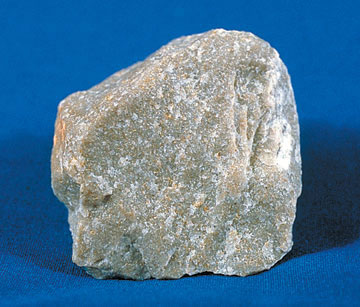
 Many prospectors in the field would look upon quartzite that doesn't have any gold showing as barren when in reality there is plenty of this overlooked material that can assay as high as 80 ounces per ton without a speck of gold showing to the naked eye. The gold in quartzite occurs when sandstone is metamorphosed by hydrothermal action with gold and silver  bearing hydrothermal waters that further cements the grains together. Sandstone is porous readily giving this water access. It is the silica in the water causes the transformation of sandstone into quartzite by cementing the individual grains together. If you break a piece of sandstone you can still see the individual unbroken grains, but if you break a piece of quartzite the grains of sand are also broken.

This kind of quartzite with a yellowish color may contain significant amounts of gold. 
Quartzite that is dull white in appearance is generally barren,but quartzite that is glassy in appearance in yellowish in color can often contain significant amounts of gold. We have seen samples of quartzite like this but it actually has assayed to more than 80 ounces per ton without a speck of gold being visible to the naked eye.