|
| A Natural Arch similar to that found in the Turtle's Range of California. Photo by Library of Congress Prints |
We first became familiar with the story of the Lost Arch Gold Diggings by reading an account of the story in the Earth
Science Digest a publication that has been long out of print that coupled
with tales of my great grandfather’s gold prospecting and mining in eastern
Canada in the 1860 fired my imagination for the lure of gold that remains to
this day.
The story begins in the northern part of the Turtle Range
that lies east and south of a range called the Old Woman’s Mountain
on the Colorado River in California . The Lost Arch Diggings have the distinction
of being twice found and twice lost because some strange acts of Providence .
Jim Fish and a prospector that had arrived in California
with the first gold rush in 1848 were on their way from Nevada
to California in an old-fashioned
buckboard drawn by a team of stringy bay horses. While crossing the Colorado River
they had filled their water barrel from the river. From there they continued to make their slow
search for hidden wealth. They had been
looking for gold for months already with little luck.
Two days after crossing the river Fish discovered their
barrel was leaking, and when they turned the barrel so the bung-hole was
pointing downwards barely two canteens of water flowed out. Although Fish’s discovery was un-nerving it
was a situation that was only to familiar to anyone that was used to traveling
through the mountains. When his partner
returned, it is said his name was Crocker, he told him the bad news, so it was
decided they would spend a day looking for water in the vegetation covered
gulches they saw in the mountains.
After spending a restless night early the next morning they
set off on their search. “Crocker went
up one canyon while I took another, the one to the right,” recounted Fish to
some friends from San Bernardino , California
“My feet were lagging; my shins were barked and aching, for in the rush I had neglected to be careful. Turning a sudden corner in the gulch, I came upon a natural bridge that spanned the canyon. It was so odd, so regular in the outline of an arch that I could only stand and admire it. Beneath its shade, the most cooling place in the hell-hole, I found a large sandy area and there sank down to rest.
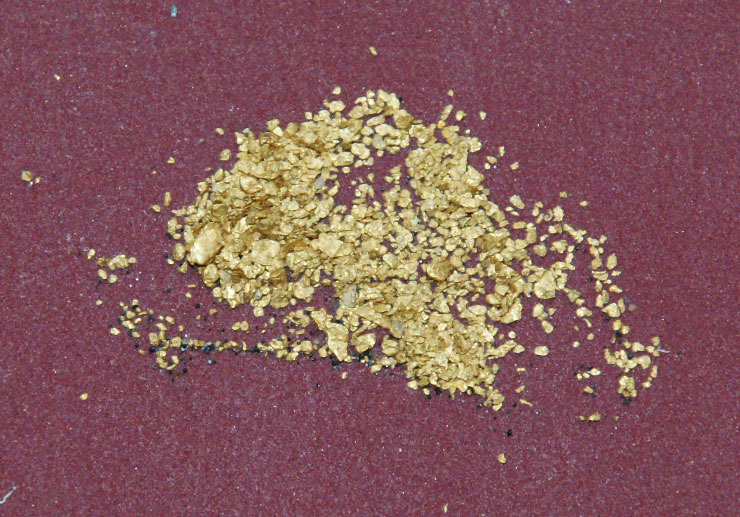
“While idly scratching the sand, its peculiarity attracted my closer attention. I got down on my knees and started to blow the dust away, and before me I had a great pocket of precious metal, gold that averaged the size of wheat grains. I filled several pockets with the heavy grains and, with all thought of thirst forgotten, hurried excitedly down the canyon to impart the news of the find to Crocker.”
After arriving at the buckboard Fish had to wait for several hours before Crocker showed up again. Crocker finally showed up hours later despairing that he hadn’t found any water where he went. At that moment gold was the last thing on their minds because all their thoughts were their quest for water, and the nearest water was in theColorado River two days distant.
“My feet were lagging; my shins were barked and aching, for in the rush I had neglected to be careful. Turning a sudden corner in the gulch, I came upon a natural bridge that spanned the canyon. It was so odd, so regular in the outline of an arch that I could only stand and admire it. Beneath its shade, the most cooling place in the hell-hole, I found a large sandy area and there sank down to rest.
“While idly scratching the sand, its peculiarity attracted my closer attention. I got down on my knees and started to blow the dust away, and before me I had a great pocket of precious metal, gold that averaged the size of wheat grains. I filled several pockets with the heavy grains and, with all thought of thirst forgotten, hurried excitedly down the canyon to impart the news of the find to Crocker.”
After arriving at the buckboard Fish had to wait for several hours before Crocker showed up again. Crocker finally showed up hours later despairing that he hadn’t found any water where he went. At that moment gold was the last thing on their minds because all their thoughts were their quest for water, and the nearest water was in the
After a harrowing trip to the river they finally reached it only
to have Crocker die a few days later and left Fish in a state of shock that
took three months of recovery before Fish could set out for the Turtle’s
again. After expending all his money on
a fruitless search Fish gave up the quest.
In 1900 a German prospector whose name was probably Peter Kohler
came back from the Turtle’s came back from them with a tale of rediscovering
the Lost Arch, but because he had been a naturalist in the Old Country he
didn’t have a thought about any gold there, he was completely lost in the
beauty and strangeness of the setting.
He had never hears Fish’s story of the gold so he missed the chance of a
lifetime.
Later a prospector named John Packer searched in vain for ten
years without finding a trace of the Lost Arch Diggings. The desert is a strange place that has the
capability of changing its face in the blink of an eye; perhaps a flash flood
destroyed the arch and its usefulness as a landmark.