Total Pageviews

Showing posts with label mining. Show all posts

Monday, July 30, 2012

Tales of the Devil to Date


The new entrance to Mine #1 The shaft is 40 feet deep with an adit going off from the bottom northweat for 10 feet that is 6 feet wide and 7 feet high.  The adit is well timbered and the shaft was filled with debris dating back to the 19th Century.
Photo by John Carter


We have rediscovered an old mining complex in western Connecticut that to date comprises two mine shafts with accompanying adits.  The first mine consists of a shaft approximately forty feet deep with an adit going off to the northwest that is ten feet long, six feet wide and sever feet high.  Town records reveal the first mine was a prospect hole that may have been created in pre-Revolutionary days; the second mine was just discovered on July 30, 2012 and is yet to be explored.  Town records indicate this mine may have an adit up to 140 feet long.

At the end of May 2012 a blue ribbon committee was convened at the site consisting of Charles Merguerian of Hofstra University, Nicholas Bellantoni of Uconn, Stefan Nicholescue of Yale, John Carter of Geotek and two engineers, none of us could determine what they were mining.  The town P&Z Officer finally discovered some old records that divulged the fact the second mine was dated to 1858.  The mineral mined was chalcocite an ore of copper.

The mines were found within two miles of Cameron’s Line a major fault system that extends from Staten Island, NY the western mountains of Norway under a series of different names.  There are several important mines located in the proximity of this suture zone producing gold, silver and copper.  The largest copper mine in the U.S. before the discovery of copper in the Keweenah Peninsula of Michigan was the Argo Mine in Vermont that is also associated with this large fault system.

The property where these mines are located is highly mineralized containing in addition to chalcocite, malachite, pyrites, quartz, kyanite, ilmenite, magnetite, cerrussite, beryl and many other minerals yet to be identified.  Although there are no plans to resume mining operations at these old mines mineral specimens will be available for sale.  For further information contact John Carter at geotekllc@gmail.com or 860-469-4804.

Many of the specimens of kyanite, ilmenite and magnetite are of museum quality and are really spectacular.  Some of these specimens are on display at the Yale Peabody Museum in New Haven, CT.

Wednesday, June 6, 2012

Tales of the Devil: The Whodunit Mine


Typical Landscape at the Whodunit Mine
Photo by P. L. Chadwick


No this isn’t a tale of the nether regions it is the story about the discovery of a long abandoned mine in western Connecticut.  For lack of a better name we might as well call it the “Whodunit Mine.”  The mine is on private property, and its owner is in the business of raising big dogs.  He will loose the hounds on anyone who goes trespassing on his property, so let that be a warning.

The old mine was discovered by the owner when he wanted the zoning classification of his property changed from residential to farming.  There were several old pits in the ground the zoning enforcement officer wanted filled in as part of the change.  This got the curiosity of the owner that led to the discovery of several acres covered with pits and several hundred feet of trenching giving the property the appearance of a battlefield.

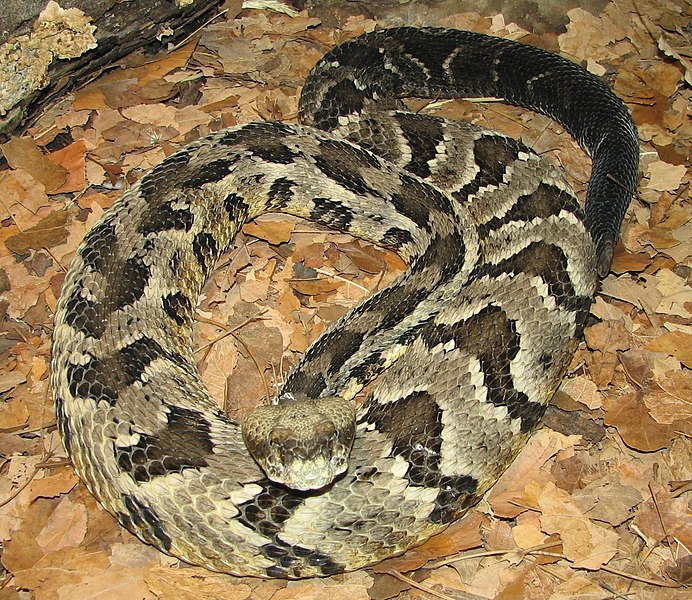
The site also contains timber rattlesnakes
Photo by Trisha M. Shears


Somewhere in the process last April 2012 he contacted me because I operate a school for prospectors teaching the fundamentals of prospecting that I try to tailor to the individual.  The owner already knew how to pan for gold, what he was really curious about was what he had on his property.  We made a trip to the site where we looked the site over and discovered plenty of evidence of prior mining activity with many prospecting pits and several hundred feet of trenching.  This activity covered several acres of the property.  From prior experience I know what this kind of work costs in money and labor.

In the past I had some involvement with Robert J. Altamura who worked for the Connecticut Geological and Natural History Survey when he prepared a map of the Bedrock Mines and Quarries of Connecticut.  Since I had a copy of the map and its accompanying booklet I checked and the site wasn’t on the map.  With that I contacted Margaret Thomas the state geologist and told her I’d found an unlisted mine.

Another creepy-crawler found on the property is the copperhead
Photo by Trisha M. Shears


Because the owner was a contractor he had some construction equipment including a backhoe that he used to explore the old mine.  He called me on the phone one morning in early May to tell me he had dug into what turned out to be an apparent mineshaft and had discovered many old bottles and other artifacts.  I told him to stop digging and I’d contact the state archeologist.  The state archaeologist told me he couldn’t come until May 24.

In the meantime I also contacted the Yale Peabody Museum who put me in touch with their mineral collection manager.  A bit later I contacted the geology department chairman at Hofstra University a personal friend to tell him what we had discovered.  Ultimately both the mineral manager and the chairman of the department agreed to come to the site on May 24.

What happened on the 24th was the meeting of a blue ribbon panel consisting of one archaeologist, three geologists and two engineers.  The net result of the meeting was we couldn’t determine what they had been mining.

The mine contains the following minerals: amphibolite, beryl, corundum, ilmenite, kyanite magnetite, pyrites talc and other minerals that are yet to be identified.  We also found one small speck of gold.

My own theory of this is:

The digging probably happened in the 1850’s after somebody came back from the California Gold Rush and decided there was gold on this property and went looking for it.  The debris filling the mineshaft has been dated to the post Civil War Era by the state archaeologist.  The mineshaft yielded what appears to be a cast iron ladle that could be used in assay work.

This tale is going to be continued!

Wednesday, May 16, 2012

Gold Occurrences in the Argentine


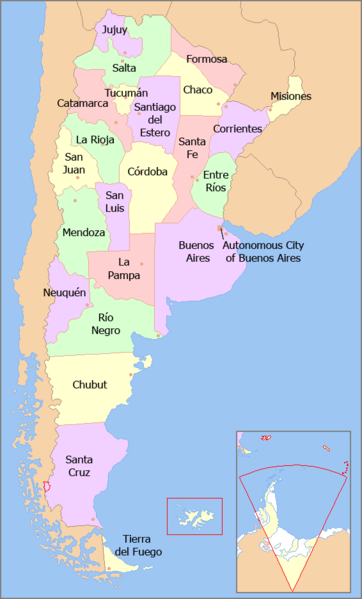
Map of Argentina.  The provinces in the far west of the country are most apt to contain gold
By Bliff


Although an ocean separates them Argentina has a neighbor the country of South Africa that although they were split apart with the opening of the Atlantic Ocean during the Cretaceous millions of years ago they share much in common.  Forty percent of all the gold that has ever been mined comes from the Witwatersrand in South Africa that leaves the question are like gold deposits to be found in the rocks of Argentina.  The very name of the country is derived from the Latin word for silver “argent” hence Argentina.

Argentina overhauled its protectionist mining laws in 1993 causing gold production to rise in a parabolic curve from a mere 36,000 ounces to over 1 million ounces.  This change in the laws has made Argentina the third largest producer of gold in South America.  This number was only exceeded by Peru and Brazil, respectively.  Only Argentina has seen as dramatic a rise in recent years.

Only in Argentina has the level of gold production raised in recent years with the production of gold having peaked in the other countries.  These points out the fact that unlike the others Argentina’s gold fields are from being mature is respect to their development cycles.  Argentina’s wealth of buried gold is yet to see any meaningful development translating into a booming domestic gold industry with a pronounced growth curve.

In area Argentina is the second largest country in South America that is 1,580 kilometers from east to west and 3,460 kilometers from north to south.  To its west it borders Chile along the crest of the Andes.  The country has well over thirty volcanoes that also follow the Andes which have supplied the heat engines necessary to forming deposits of gold dissolved in their hydrothermal waters.

The presence of placer gold in the rivers and streams draining the eastern slopes of the Andes Mountains are known to contain large amounts of placer gold.  Some of the deposits that have been found are supposed to exceed 1 million ounces of gold.  Some of this gold is pristine crystals giving weight that gold nuggets are caused by gold fixing bacteria.  Much of this crystalline gold is as high in content as >98% pure gold, some of the purest in the world.

Lode gold is often associated with arsenopyrite and copper sulfides the normal byproducts of hard-rock gold.  Another element often associated with the gold from Argentina is mercury that may explain why the placer gold has such a high percentage of gold because the mercury left over from past mining operations has dissolved the residual silver.  There are lode deposits the length of Argentina in the spine of the Andes Mountains.

Tuesday, May 15, 2012

Gold Occurrences in Bolivia


A scene from Potosi a famous Bolivian mining center.  Note the volcano in the background a source of gold deposits.
Photo by Idobi


Although Bolivia is noted for its tin production especially in the area around Potosi gold mining and prospecting proceeded at a brisk rate during the late 1980s.  Gold is found throughout the country with more then 300 cooperatives and over 10,000 prospectors producing gold.

Bolivia like many other countries in the world now faces a trade-off between economic growth vs. the environment.  The country derives much of its foreign exchange from the mining industry with zinc being its largest mining export followed by tin, gold and silver. As a result of this dilemma Bolivian mining companies have developed tighter rules with gold mining being an important source of foreign exchange for the country.  Things get difficult because Bolivian and U.S. environmental groups continue to fight prospecting and mining efforts because of their devastating effects on the local environment.

The practices of the mining industry leads to soil erosion combined with pollution of the country’s fresh-water resources.  This leaves the peons of the country torn between mining and jobs or protecting the environment that fails to bring Bolivia much needed jobs.

Mining is the mainstay of Bolivia’s economy with around 50% of its foreign exchange coming from this source.  The country’s private mining sector has continued to grow led by Canadian and U.S. companies.  The government has set aside a large area about 120 km north of LaPaz for gold mining and exploration.

There are plenty of active and extinct volcanoes in Bolivia to provide heat engines to drive the hydrothermal waters responsible for building gold deposits when the water reaches conditions that will precipitate the dissolved gold from solution.  This volcanic activity has given birth to extensive deposits of hard rock gold and abundant placer deposits in the country’s rivers and streams.  There is both artisanal and full scale mining in Bolivia, and it’s still ongoing.

Mining has been going on in Bolivia since the days of the Spanish conquest that began in 1524 and was mainly completed in 1833.  In those days after the conquest what is now Bolivia was known as “Upper Peru.”  When it was founded in 1545 as a mining center Potasi quickly started pouring immense mineral wealth into the coffers of the Spanish Empire it quickly became the largest city in the New World with a population larger then 150,000.  The Spaniards were mainly interested in gold it was later that Potasi became known for its tin deposits.  Mineral wealth continues to pour from Bolivia. .   

Friday, March 23, 2012

Gold Occurrences in Chile


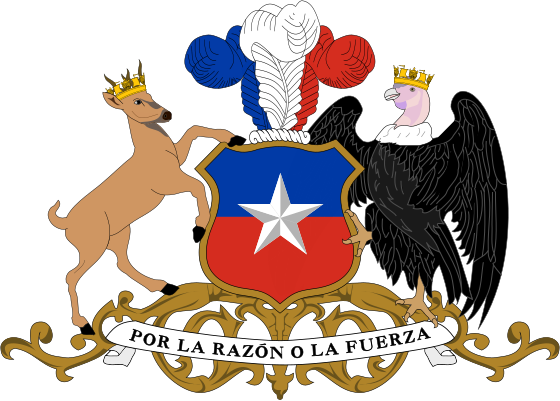
Coat of Arms of Chile
by B!mbo

Whenever anyone thinks of Chile they immediately think of copper since it is the largest producer of copper in the world, but many of the copper deposits have gold and silver as trace metals.  A recent statement by the Chilean Copper Commission (Cochilco) says their country’s production of gold could triple by 2015 making the country one of the top producers in the world.  Currently Chile’s gold production is pegged at 39.2 tonnes, however new developments and expansions of existing mines could cause output to swell to 103 tonnes by 2015.  This figure may be an underestimation as there are other gold mining projects waiting in the background.  Most of the gold produced in Chile comes from the production of copper as a byproduct.

There are several mining companies involved with this surge in gold production with the most notable being Barrick with its Pascua Lama project.  This does not include several other gold mining projects that are waiting in the wings.  Recent discoveries of gold/copper mineralization have been found in the high Andes that have become viable because of the high rise in gold and copper prices.  The biggest hurdle facing miners is the lack of or shortage of capital for developing these gold finds that sometimes can cost billions of dollars to get them into production.

Most of these projects in the high Andes are found above the 4,000 meter line making them difficult to mine as operations are hard on both personnel and equipment.  Some of these projects are centered on banded quartz projects carrying in places high anomalies of gold.  Other projects are to be found in gold bearing porphyry that has a lower gold content, but because of the vast volumes of rock present high tonnage, low grade projects.  At present the main target of the explorers is at La Falda that is a near-surface porphyry having associated epithermal gold-silver. 

Chile is not as famous for gold production then either Mexico or Peru exploration of the country by the Spaniards was financed with the placer gold that was discovered there.  In 1810 an the eve of its independence Chile was producing as much gold as Mexico and Peru combined.  In the 16th century from the founding of Santiago in 1541 gold from placer deposits mainly in the southern part of the country produced up to 2 tonnes of gold annually. This mining came to an abrupt end when the Spaniards were evicted by the local Indians.

A second cycle of gold production started at about 1740 that were mainly based on vein mining.  The gold was recovered using trapiches and mercury to recover the gold.  This production peaked with the production of 3 tonnes in 1810.  There were several areas that were producing gold with the most prominent being located at Andacollo and other areas.  Gold production in all areas declined during the War of Independence that was finally reached in 1823.


Wednesday, August 17, 2011

Gold Occurrences in Quebec


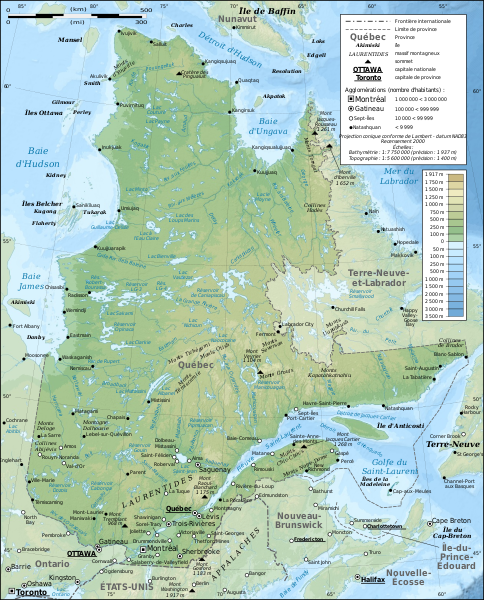
Topographic Map of Quebec   NASA


There are many gold deposits in Quebec many of which are being explored or developed into active gold mines at this moment.  The province is also the eastern terminus of the Abitibi Gold Belt that begins in Wawa Ontario and supposedly ends at Val D’or Quebec.  This is the second largest gold belt on earth only the Witwatersrand of South Africa is larger.  Since it was first discovered in the early 1900s the Abitibi has produced more then 160 million troy ounces of gold, more then there is in Fort Knox.

There are several different parts of the province that contain gold either as native gold or associated with other metals of which copper is one.  This is the case in the copper/gold mines around Chibougmau.  There is a goldmine located about 60 km west of Chibougmau on Rt 113 in the Chapais Mining Camp. Further north these is mining exploration work being undertaken on the Taigus Road that goes from Radisson east to within a little more then 100 km from the Labrador border.  There is also further exploration work being done in the far north of Quebec in the Ungava Bay Territory.  

The Matagami Camp is another hotspot of activity for both gold mining and exploration with several mining and exploration examining the surrounding area for gold and other base metals.  Exploration has reached the level where a surface mine is being opened near the town of Malartic between Val D’or and Rouyn-Noranda.  This site is located in the Abitibi Gold Belt.  A new find of Volcanogenic Massive Sulfides has been reported near Rouyn-Noranda. 

A great deal of exploration and mining activity is found north of the St. Lawrence River especially in Archean aged rocks, but most of the placer activity is found south of the river especially in the rivers and streams that drain the Height of the Land on the Maine Border.  Gold is found in the area centered on Sherbrooke and Thetford Mines as well as along the Chaudiere River.  This is an interesting area because it also displays the same kind of chaotic geology as the rest of the area that is on the seaward side of the Brampton/Baie Verte fault where continental terrane and oceanic terrane collided during the Taconic Orogeny forming the Iapetus Suture Zone.  This entire area in the Eastern Townships warrants further exploration for lode gold.  

Monday, June 13, 2011

The Hurdles You Face in opening a New Gold Mine

So, you have been lucky enough to find a good strike of lode gold!

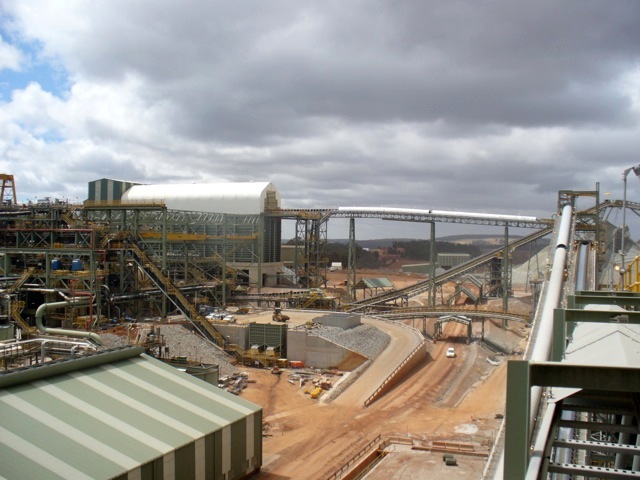
This will give you an idea of the scale of operations found at a working gold mine.  This is the Buddington Gold Mine in Australia.
Photo by Calistemon
That is only the first step in a long journey that is required to change a gold strike into a producing mine. It has been estimated by members of the mining community than in the United States this is a process that can take as long as seven years or more just for getting the necessary permits to mine. There are permits required by several different governmental agencies including the Environmental Protection Agency (EPA) and the Army Corps of Engineers. There are also several other permits that are required at the state and local level that can involve not only the Planning and Zoning Commission (P&Z) in your town, but if you are going to use explosives in your mining operations you are required to have a blasting permit from the town Fire Marshal. In some jurisdictions mining is not permitted under any circumstances.

Even with the permits all in place there is a considerable amount of construction activity that has to be accomplished before you ever get the mine into production. Part of the permitting process also includes a set of plans showing how you were going to open your mine, how work on the mine is going to progress, and how you were going to close the mine. All of this work is expensive at has to be performed by an engineer or landscape architect. It is only providing a basic set of plans that complicates the procedure of opening a mine, it is also some modifications to these plans that are required by several different permitting organizations. Probably the toughest of all is your local planning and zoning commission.

Now that you have your permits all in place after several years then you have to go through the necessary steps required to open your mine, and bring the mind into production. This is going to require all the equipment that is found in a crushed stone quarry and then some. Some of the basic Clement you are going to require is a jaw crusher, a secondary crusher and a set of conveyor belts to move the crushed stone to stockpiles.

A stone crushing plant in operation.
Photo by Richard Law


Depending on the method used to extract gold from its ore will require additional equipment like a giant ball mill to further reduce the ore into a powder. This powder is further refined in a process called floatation where it is mixed with water, and a detergent that forms bubbles that remove the gangue minerals from the gold. These processing steps ultimately lead to a smelter where the gold is cast into bars. The final step of reducing the gold to .999 Fine is done by a special refinery that most miners contract for from an outside source.

A ball mill is the device shown in the background of this photo.


The cost of taking a prospect to a producing mine often exceeds $1 billion or more. That is the reason why only about one in 300 prospects ever get that far, and are developed into a producing nine. For the most part mining lode gold is a major industrial operation that is usually beyond the capabilities of the single person although it has been done in the past and will shortly be done in the future.


Sunday, April 10, 2011

Towns in Connecticut where Gold has been Reported

Although today there isn’t much interest in the gold that has been found in Connecticut, but during the 19th century there was more interest in mining in the state.  This listing of gold is from a booklet published by the Connecticut Geological and Natural History Survey in 1951 as Bulletin No. 77 by Julian A. Sohon and edited by Alexander N. Winchell a mineralogy professor at Yale.  For many of us that are interested in geology and minerals this thin booklet has acted as a bible for many years; today it is out of print, but is available in the reference section of many libraries throughout the state.

The Connecticut State Capital's Dome that reportedly is covered by gold that was mined in Connecticut.

This is a list of the towns reporting gold in addition the author has found gold in additional towns in western Connecticut, these towns will be marked with an *.

Barkhamsted*              Bristol              Cheshire           Cobalt              E. Hampton

East Litchfield* Glastonbury*    Harwinton*      Litchfield          Middletown

Munro                          Montville          Mt. Caramel     New Britain*    New Hartford*

New Haven                  Newtown         Portland*         Ridgefield         Sandy Hook

Southbury                     Thomaston*     West Haven     Woodbury

If you see any streets or roads in your travels then have the name “mine” in them you had better find out why. A good example of this is the town of Canton where there was really a silver mine in the 19th century just north of Route 44. There is a full write up about the old silver mine in the history of Canton that is kept at the Canton Historical Society. You can gather a great deal of material about old mines and the mineral resources of Connecticut by reading town histories.

Although gold is a metal that attracts many people it is not the only mineral that is found in Connecticut that exceeds the value. Virtually every river in the state contains a small amount of gold capable of being recovered with a gold pan.

Wednesday, March 9, 2011

Gold Occurrences in Alabama:

The history of mining in Alabama goes back to the early 1800s when they actually had a Goldrush that occurred 20 years before the California Goldrush. Many of the Alabama gold miners went to California because there was more gold although at one time the state had thousands of miners that were searching for gold.

The gold in Alabama is found in the Southern Gold belt that enters the state from Georgia in an area in central Alabama but is about 60 miles wide and 100 miles long. This Gold belt has the appearance of looking like an old sock, but it is a scenario where both placer and lode gold deposits are located.

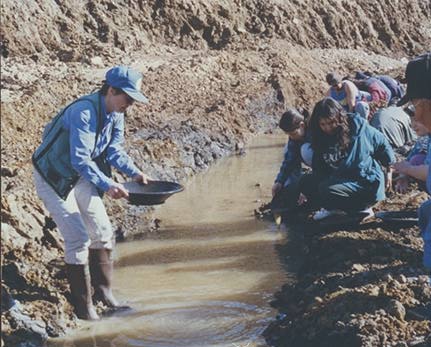
Panning for gold

There are many creeks and rivers in Alabama where you can pan for gold, but many of these places are populated with water moccasins so be extremely careful where you put your hands when you are panning for gold. A bite from one of these critters may not kill you, but it hurts like the blue blazes and will cause you to be very sick. If you have misfortune to be bitten by one of these critters don't panic and get yourself immediately to a hospital or doctor. Don't try to treat the bite yourself let the doctors deal with it they know what they're doing.

This is a cottonmouth water moccasin a highly poisonous snake found in Alabama.
The reason thay are called cottonmouths is because of the white color of the inside of their moutns.
This one is coiled and ready for action. 

Nowadays most of the mining in Alabama is being practiced by amateur prospectors that are either using a gold pan or a sluice box. Although in the past there was a considerable amount of hard rock mining that occurred at the state but now for the most part any gold production in Alabama is in the hands of hobbyists, and small-scale miners.

Gold Ore

The gold deposits in Alabama occur as part of the Southern Gold belt that reaches all away from Maryland to Alabama. The western end of the gold bearing rocks in Alabama plunge under the sediments of the Mississippi River where they reappear again in Arkansas located in the Ouachita Mountains that had its own Goldrush in the 1800s.

In addition to look regular river and creek deposits there is another type of placer gold that is mined in Alabama that occurs in what is called a saprolite this is rock that has undergone deep weathering that at times can exceed 100 feet in depth. The gold in one of these deposits can be found loose in the red clay associated with the remnants of quartz veins.

Tuesday, February 15, 2011

Gold Occurrences in Madagascar

Although in the past Madagascar was a significant gold producer but because of its tumultuous political history for many years it remained in the doldrums. Today Madagascar is considered to be an up-and-coming place for mining now the political situation has become more stable. Today Madagascar has become a beacon for the mining and exploration industry that right now is largely undeveloped.

Madagascar is shown in red.

For those who don't know where Madagascar is, is approximately 400 km due east of the African mainland. It is separated from Africa by the Mozambique Channel.

Although the island has a vast potential for hosting valuable mineral deposits right now the country does not have a well-developed mining industry. As little as 30 years ago it was one of most geologically studied areas in the African region, but then the country underwent a period of political instability resulting in mineral exploration being put on the back burner. It wasn't until 1993 that the political instability vanished when the country returned to a liberal democratic form of government. It wasn't until recently however, that it began to regain some of the lost footing it once had in exploration and mining.

Although Madagascar is considered to be a part of the African Continent the island geologically is a micro-continent between Southern Africa and India. This becomes readily apparent when you start looking at the local geology and the flora and fauna. The geology of the island is more akin to that of Sri Lanka and India that is anything found in Africa.

Madagascar's primary gold deposits are similar to those of the Abitibi region of Canada than anything else. Like the Abitibi the gold is associated with greenstone belts, quartz reefs and veins, and is also found the fuse for the country rock in deposits similar to those of the Carlin Trend in Nevada.  There is a great deal of gold that is also associated with that volcanogenic massive sulfide (VMS) deposits similar to those that are found at the kidd Creek Mine in Timmins, Ontario or the Horne Mine in Rouyn-Noranda, Québec. Both of these mines are in the Abitibi Gold Belt of Canada.

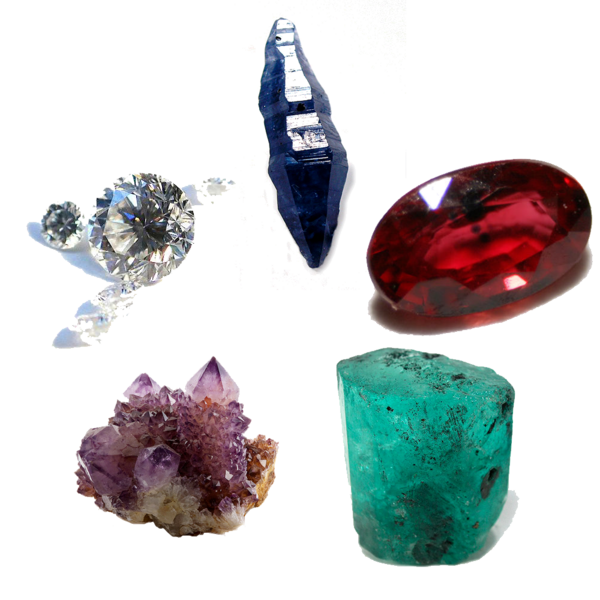
Gold isn't the only thing found in Madagascar that is worth money.
Photo by Rob Lavinsky

Alluvial gold is also been recovered from both ancient and recent placer deposits as well as lateritic earth. Aside from the gold deposits found in Madagascar is also the home of many valuable gemstones including those of the ruby and sapphire family that are mined mainly by artisanal miners although in some cases a few of these mines have been mechanized.

Although the primary gold deposits found on the island predate the breakup of Gondwana one of the two continents that made up the supercontinent Pangaea. This is very important to remember because it makes the regional tectonics arrival into the emplacement of gold deposits. Madagascar's gold bearing rocks are all part of its suite of basement rocks. These rocks are divided into three different systems with the youngest being the Vohibory System, the middle is the Graphite System and the oldest is the Androyen System. Most of the gold however is found in the graphite system. There are also some interesting gold deposits in the Vohibory System.

Friday, December 3, 2010

Field Analysis while Prospecting for Gold

If you ever wanted instant analysis of a sample or ore while prospecting in a re,ote area the portable X-ray Fluorescence Meter is just what you want.  They are pretty pricey, but can be rented from various sources for around $500 per day.

These are a portable x-ray fluorescence meters in action by Niton analyzing copper wire in the field.


There are a number of companies manufacturing portable x-ray fluorescence meters used for identifying different elements in the field whether prospecting or any of a variety of other ways where specific analyses of any chemical element is required.  With one of these meters you can determine the composition of any mineral right in the field without having to take samples home that are later sent to a lab for analysis.

The meter also has many applications in the environmental field among them are identifying lead based paint and other contaminants in the field.  The device will identify all the heavy metals as well as other contaminants.  The EPA and other government bodies use the technology for protecting the public from dangerous substances because of its fast, nondestructive, fast and is capable of being hand-held. 

It is regularly used in the mining industry for field sampling in mineral exploration work in active mining to effectively trace ore shoots.  With this device it is possible to know what you are dealing with eliminating the need to send samples to an outside lab thereby saving time and costs.  

Another example of a hand-held portable x-ray fluorescence meter manufactured in China.
  

The best thing about these devices is they are all hand held about the size of an electric drill.  One of these units can be carried in a holster like a pistol, and in fact are pistol shaped.  The whole instrument ready to use only weighs around 11 pounds (5.5 kg).  They are capable of identifying up to 25 elements at a time that are displayed on a screen at the back of the device.  Not only does the device tell you what elements are present, but also indicates how abundant they are.