Total Pageviews

Showing posts with label date. Show all posts

Monday, July 30, 2012

Tales of the Devil to Date


The new entrance to Mine #1 The shaft is 40 feet deep with an adit going off from the bottom northweat for 10 feet that is 6 feet wide and 7 feet high.  The adit is well timbered and the shaft was filled with debris dating back to the 19th Century.
Photo by John Carter


We have rediscovered an old mining complex in western Connecticut that to date comprises two mine shafts with accompanying adits.  The first mine consists of a shaft approximately forty feet deep with an adit going off to the northwest that is ten feet long, six feet wide and sever feet high.  Town records reveal the first mine was a prospect hole that may have been created in pre-Revolutionary days; the second mine was just discovered on July 30, 2012 and is yet to be explored.  Town records indicate this mine may have an adit up to 140 feet long.

At the end of May 2012 a blue ribbon committee was convened at the site consisting of Charles Merguerian of Hofstra University, Nicholas Bellantoni of Uconn, Stefan Nicholescue of Yale, John Carter of Geotek and two engineers, none of us could determine what they were mining.  The town P&Z Officer finally discovered some old records that divulged the fact the second mine was dated to 1858.  The mineral mined was chalcocite an ore of copper.

The mines were found within two miles of Cameron’s Line a major fault system that extends from Staten Island, NY the western mountains of Norway under a series of different names.  There are several important mines located in the proximity of this suture zone producing gold, silver and copper.  The largest copper mine in the U.S. before the discovery of copper in the Keweenah Peninsula of Michigan was the Argo Mine in Vermont that is also associated with this large fault system.

The property where these mines are located is highly mineralized containing in addition to chalcocite, malachite, pyrites, quartz, kyanite, ilmenite, magnetite, cerrussite, beryl and many other minerals yet to be identified.  Although there are no plans to resume mining operations at these old mines mineral specimens will be available for sale.  For further information contact John Carter at geotekllc@gmail.com or 860-469-4804.

Many of the specimens of kyanite, ilmenite and magnetite are of museum quality and are really spectacular.  Some of these specimens are on display at the Yale Peabody Museum in New Haven, CT.

Tuesday, November 15, 2011

Gold Occurrences in the Northwest Territory of Canada

The NWT of Canada


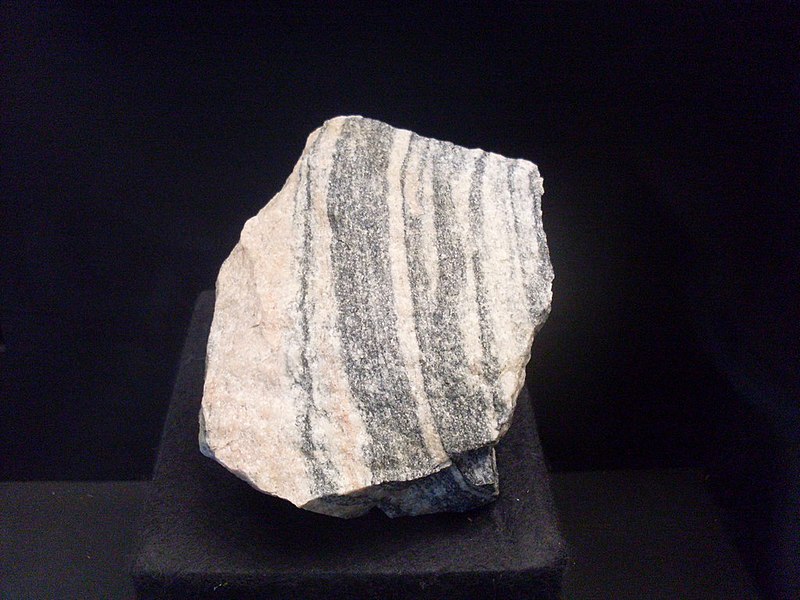
Some of the oldest rocks on Earth are the Acasta Gneiss found in the Northwest Territory of Canada.  The rock itself is metamorphosed sedimentary rock that is far older then its radiometric date of 3.8 billion years.  A zircon found in this rock has been dated as 4.03 billion years old.  These rocks of the Acasta formation are by far the oldest rocks discovered in North America, and were originally laid down in the Hadean era.

A fragment of the Acasta Gneiss on display in the Natural History Museum in Vienna.
Photo by Pedro Alexandrade


Unlike the Yukon that lies to the west of the NWT that has no exposed rock of the Canadian Shield most of the territory is composed of rocks of the shield.  These rocks display plenty of greenstone belts notably the Yellowknife Greenstone Belt near Great Slave Lake.

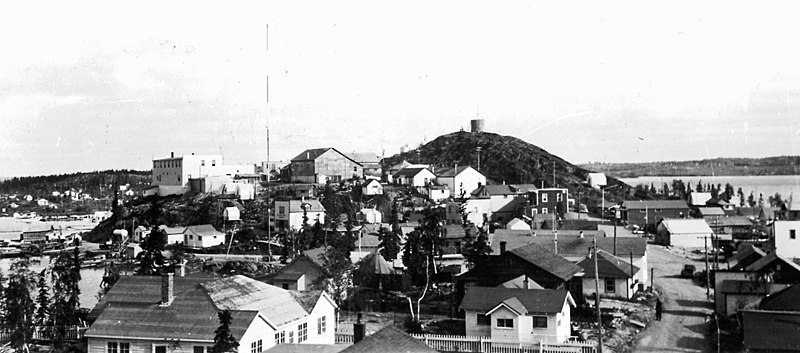
Gold was discovered in the territory in 1898, but active mining did not commence until the mid 1930s in the area around Yellowknife. The opportunities for additional exploration and prospecting in the territory abound. There are other valuable mineral deposits that are being worked in the territory including uranium and the recent discoveries of diamonds have resulted from the opening of diamond mines.

Yellowknife, NWT in the mid 20th century.
Photo by YK Times


A vast amount of information is available through the Northwest Territory’s Geoscience Office in Yellowknife. Another source of information is the Prospectors and Developers Association of Canada (PDAC) in Toronto, Ontario. The Northern Miner in Toronto is a weekly newspaper covering the mining industry worldwide including the Northwest Territory.

Prospecting for Gold the Northwest Territories of Canada along with many other valuable minerals including copper, diamonds and uranium is a viable occupation. Parts of the territory along the Arctic coast and on the islands in the Arctic Ocean contain gas and oil. A few years ago a geologist inadvertently published the locations of test wells on Ellsmere Island and received a proper wigging for his efforts. The territory depends on mining for most of its economy. Today however the emphasis is on diamonds rather then gold.

A significant gold discovery has recently been announced at the REN gold site. The gold was discovered in a seven kilometer long iron formation. Gold is often associated with iron especially with the ore granular magnetite. Some of the grab samples of ore collected have as much as 198 g/t of gold. In follow-up drilling more gold was found in the host rocks adjacent to the gold rich body of iron ore.  The area around Yellowknife is dominated by the Yellowknife Greenstone Belt that has been the scene of several past and present gold mines.

Over the years there have been a number of gold mines found in the area around Yellowknife the territory’s capitol. This city was originally settled as a gold camp and became the capitol later. The diamond mining industry is now centered Yellowknife although the actual mines are located to the Northeast of the city around the Lac de Gras area.