Total Pageviews

Showing posts with label environmental. Show all posts

Tuesday, May 15, 2012

Gold Occurrences in Bolivia


A scene from Potosi a famous Bolivian mining center.  Note the volcano in the background a source of gold deposits.
Photo by Idobi


Although Bolivia is noted for its tin production especially in the area around Potosi gold mining and prospecting proceeded at a brisk rate during the late 1980s.  Gold is found throughout the country with more then 300 cooperatives and over 10,000 prospectors producing gold.

Bolivia like many other countries in the world now faces a trade-off between economic growth vs. the environment.  The country derives much of its foreign exchange from the mining industry with zinc being its largest mining export followed by tin, gold and silver. As a result of this dilemma Bolivian mining companies have developed tighter rules with gold mining being an important source of foreign exchange for the country.  Things get difficult because Bolivian and U.S. environmental groups continue to fight prospecting and mining efforts because of their devastating effects on the local environment.

The practices of the mining industry leads to soil erosion combined with pollution of the country’s fresh-water resources.  This leaves the peons of the country torn between mining and jobs or protecting the environment that fails to bring Bolivia much needed jobs.

Mining is the mainstay of Bolivia’s economy with around 50% of its foreign exchange coming from this source.  The country’s private mining sector has continued to grow led by Canadian and U.S. companies.  The government has set aside a large area about 120 km north of LaPaz for gold mining and exploration.

There are plenty of active and extinct volcanoes in Bolivia to provide heat engines to drive the hydrothermal waters responsible for building gold deposits when the water reaches conditions that will precipitate the dissolved gold from solution.  This volcanic activity has given birth to extensive deposits of hard rock gold and abundant placer deposits in the country’s rivers and streams.  There is both artisanal and full scale mining in Bolivia, and it’s still ongoing.

Mining has been going on in Bolivia since the days of the Spanish conquest that began in 1524 and was mainly completed in 1833.  In those days after the conquest what is now Bolivia was known as “Upper Peru.”  When it was founded in 1545 as a mining center Potasi quickly started pouring immense mineral wealth into the coffers of the Spanish Empire it quickly became the largest city in the New World with a population larger then 150,000.  The Spaniards were mainly interested in gold it was later that Potasi became known for its tin deposits.  Mineral wealth continues to pour from Bolivia. .   

Sunday, March 27, 2011

Gold in Glacial Outwash Plains

When a glacier melts there are large quantities of water that flows off its edge carrying large amounts of glacial debris that is deposited in front of the glacier.  The action of the rushing waters is characterized by being flat layers of sand and gravel or in some cases finer materials. This is called a "glacial outwash plain."

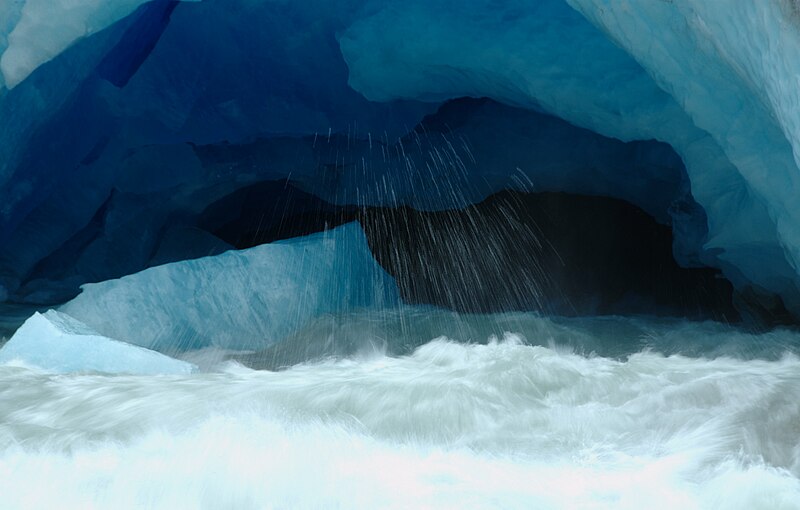
Glacial meltwater flowing from beneath a glacier.  Note the milky appearance of the water.
Photo by Siri Spjelkavik 

Another characteristic of outwash plains is the abundance of braided stream channels that are found in areas of a high concentration of sediments and running water.  This is a perfect environment for gold deposits to form wherever these is a sudden change in water velocity from fast to slow.

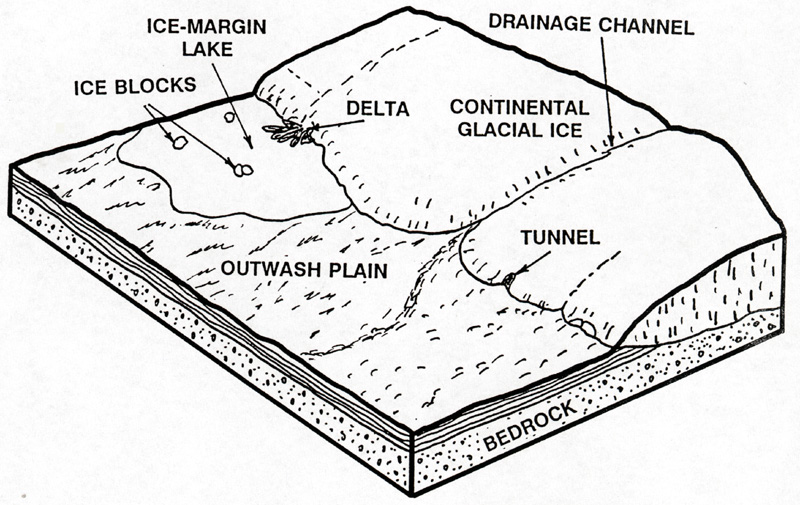
This glacial meltwater eventually flows off into the sea. If the land slopes up in front of the glacier it can form large glacial lakes of glacial melt water at the margin of the glacier.

Water flowing into these glacial lakes from gullies across the ice often form upraised deltas in the lake consisting of mostly sand and gravel. The bottom of the glacial Lake away from the delta deposits is covered with a layer of clay that forms a flat surface like a tabletop.

A glacial outwash plain, and how it is formed
After msu.edu 

The glacial melt water flowing across the glacier is so charged with suspended particles like silt and clay that it appears milky. This is called glacial milk that can be seen wherever glacial melt water is flowing off, or under a glacier.

Glacial outwash plains are recognized by their special kinds of agriculture that favors plants that grow best in a well drained soil. The most common crops found in one of these areas are potatoes.

Because these areas are usually well drained the glacial melt water has long since vanished, and it is difficult to recognize the drainage patterns of a braided stream channel as they now exist. One of the best methods of finding one of these ancient stream channels is by observing the amount of gravel that is present, and how it is deposited.

A stream channel can be recognized as an area containing abundant gravel. These ancient stream channels can often be seen when excavation exposes them to view. This is the most likely place to find gold in the glacial outwash plain.

Thursday, January 6, 2011

The Environmental Consequences of Buying or Selling a Gold Mining Claim

The environmental consequences of buying or selling a gold claim is basically the same as they are for any other piece of commercial property.  If the sale is between two parties without any money coming from a bank or other mortgage company the sale can go forward with no environmental work other then a due diligence investigation that should be undertaken in the name of buyer prudence.  If it requires any bank or other source of financing they will in the normal course of business require at least an Environmental Site Assessment Phase I of the property.  If there are no environmental infractions present the Phase I assessment will suffice.  If environmental infractions are discovered in the Phase I assessment will have to be addressed using a Phase II assessment that is used to determine if in fact an environmental infraction has occurred using samples of soil and ground water taken from the site.

An example of acid mine drainage.

If it is determined from the results of the Phase II assessment the environmental investigation will proceed to a Phase III assessment that determines the extent of the environmental infraction and develop a plan for remediating the infraction.

The final step of the remediation process where various techniques are used to eliminate the infraction.  Some of these processes involve the removal of contaminated soil from the site and placing it in a secured landfill.  If the contaminant is an organic chemical the offending chemical can be removed by igniting the soil in a special furnace or incorporated into blacktop.  Ground water is usually remediated by passing it through filters or an ion exchange resin, and is often pumped back into the ground using an injection well.

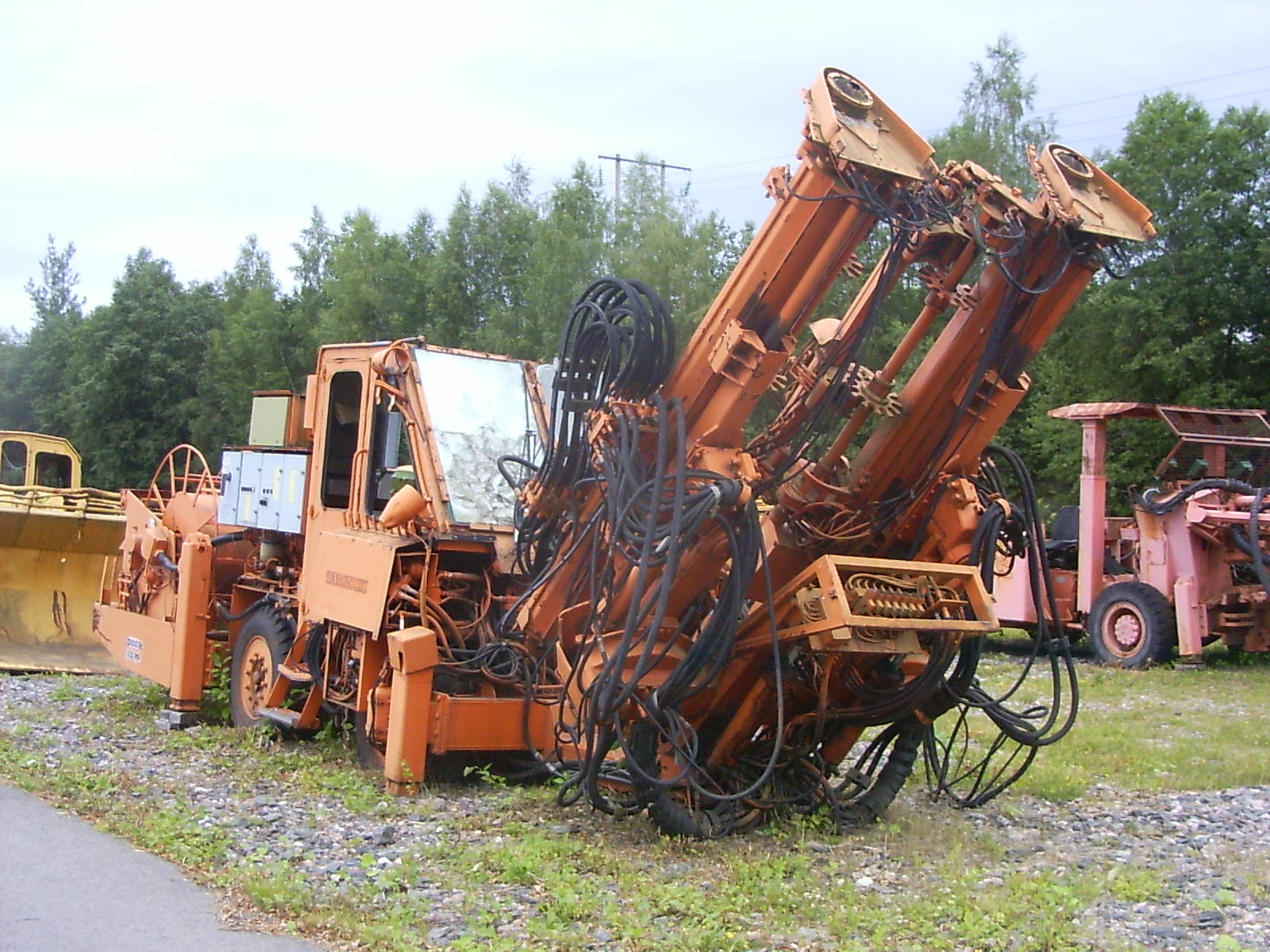
When mining equipment is abandoned it becomes a source of environmental contamination.

The law concerning environmental issues varies according to location.  In the United States the law concerning environmental site assessments is usually enforced by the banks although the individual states are the author of local laws following the environmental laws of the United States. 

The most likely contaminants to be released into the environment resulting from mining activity is petroleum products caused by equipment failure or leaking underground storage tanks.  Further contamination can be caused by the chemicals used to process gold ore including cyanide and mercury.  In its aftermath mining can also cause environmental contamination by acid mine drainage and heavy metal salts.

An aerial view of the Big Pit at Kalgoorlie, Australia showing heaps of mine tailings.


This document was prepared from knowledge gained in over thirty years by the author in conduction Environmental Site Assessments and directing numerous remediation projects involving commercial and industrial properties.  In addition the author is certified by the State of Connecticut as an Environmental Analyst Grades I, II and III.

This is not to be construed as legal advice as we are not attorneys; consult with a lawyer in your jurisdiction for any legal opinions.

Copyright 2011 by John Carter all rights reserved.