Total Pageviews

Showing posts with label buying. Show all posts

Tuesday, April 26, 2011

On Buying Gold Mining Stock

Yes Virginia you can make money with mining stock especially with the so-called penny stocks, or as some people call them the penny awfuls. In other quarters they are also known as cats and dogs; regardless you can still make money from them providing you do a thorough job of research first.

A core drilling rig in action.
Photo by Andrew Wood


When the author first started investing in penny stock he was inexperienced and he sure had his share of cats and dogs before he finally learned the ropes about investing in the stock. Nonetheless, it was a very expensive learning process.

Lesson number one: is that all miners are not equal! Some of these miners have developed the knack of finding valuable mineral deposits; there are others that couldn't find a dog with wet paws by following his tracks across a clean kitchen floor. From this it is quite obvious that the very first thing you should do is to become acquainted with whom those miners are that have the knack of finding a valuable mineral deposit that can be developed into a mine.

Lesson number two: this one came straight from Mark Twain, remember that a mine is nothing more than a deep hole in the ground with a damned fool at the bottom, then another damned liar at the top. You should remember that all Mining reports are based on the idea of attracting investors for the most part. In this case you should do your own due diligence rather than swallowing everything hook, line and sinker that your broker tells you.
The Argo Mine in South Africa


Lesson number three: there are usually two peaks in the life of a mining stock the first one is when the initial announcement of the discovery is made. The other peak is when the discovery actually becomes a producing mine. There are sometimes when the announcement of gaining a large amount of new capital or merging with one of the major mining companies will also produce a peak.

Lesson number four: The majority of the small mining companies are actually involved in exploration that gives them a negative cash flow until they discover something they can go to the bank with. For every 300 mineral deposits that are found by an exploration company there is only one of these discoveries that can eventually be developed into a mine. One almost heartbreaking things to do is to discover a large mineral deposit, as the author did many years ago, that can't be developed into a mine because the cost of transportation is higher than the value of the mineral deposit.

Lesson number five: How you do your due diligence is pretty much up to you, but it is very helpful to at least have a working knowledge of the geology of or deposits. Strangely, the author has discovered that at least in Canada one of the best places to gain mining knowledge is in the local Tim Horton’s. You would be completely amazed at what you can learn over a cup of coffee and donut in one of these places. The author learned of a major gold strike in West Timmins, Ontario a year before it became public knowledge.

Lesson number six: there is a saying among old-time prospectors and miners that the best place to look for new mineral deposits is under the shadow of some old mines headframe. If they are available a great deal of knowledge can be learned by reading local histories. If these are not available you should at least read about as much of the geology of the local area you can find. These reports are available from the geological survey in the area where you are interested.

Yes Virginia, you can make money with mining stocks but the primary thing is to be careful, then perform a thorough due diligence first.

Thursday, January 6, 2011

The Environmental Consequences of Buying or Selling a Gold Mining Claim

The environmental consequences of buying or selling a gold claim is basically the same as they are for any other piece of commercial property.  If the sale is between two parties without any money coming from a bank or other mortgage company the sale can go forward with no environmental work other then a due diligence investigation that should be undertaken in the name of buyer prudence.  If it requires any bank or other source of financing they will in the normal course of business require at least an Environmental Site Assessment Phase I of the property.  If there are no environmental infractions present the Phase I assessment will suffice.  If environmental infractions are discovered in the Phase I assessment will have to be addressed using a Phase II assessment that is used to determine if in fact an environmental infraction has occurred using samples of soil and ground water taken from the site.

An example of acid mine drainage.

If it is determined from the results of the Phase II assessment the environmental investigation will proceed to a Phase III assessment that determines the extent of the environmental infraction and develop a plan for remediating the infraction.

The final step of the remediation process where various techniques are used to eliminate the infraction.  Some of these processes involve the removal of contaminated soil from the site and placing it in a secured landfill.  If the contaminant is an organic chemical the offending chemical can be removed by igniting the soil in a special furnace or incorporated into blacktop.  Ground water is usually remediated by passing it through filters or an ion exchange resin, and is often pumped back into the ground using an injection well.

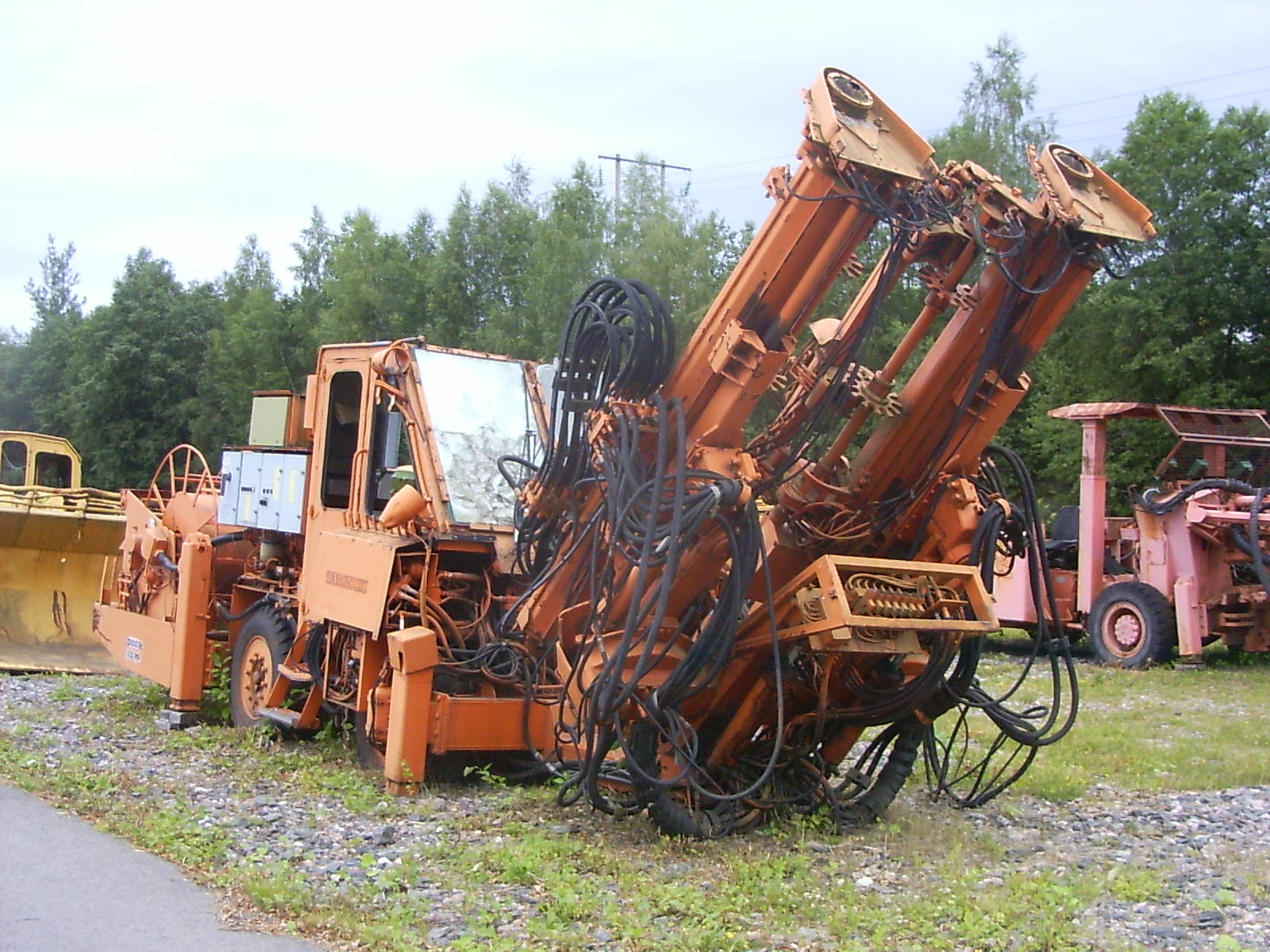
When mining equipment is abandoned it becomes a source of environmental contamination.

The law concerning environmental issues varies according to location.  In the United States the law concerning environmental site assessments is usually enforced by the banks although the individual states are the author of local laws following the environmental laws of the United States. 

The most likely contaminants to be released into the environment resulting from mining activity is petroleum products caused by equipment failure or leaking underground storage tanks.  Further contamination can be caused by the chemicals used to process gold ore including cyanide and mercury.  In its aftermath mining can also cause environmental contamination by acid mine drainage and heavy metal salts.

An aerial view of the Big Pit at Kalgoorlie, Australia showing heaps of mine tailings.


This document was prepared from knowledge gained in over thirty years by the author in conduction Environmental Site Assessments and directing numerous remediation projects involving commercial and industrial properties.  In addition the author is certified by the State of Connecticut as an Environmental Analyst Grades I, II and III.

This is not to be construed as legal advice as we are not attorneys; consult with a lawyer in your jurisdiction for any legal opinions.

Copyright 2011 by John Carter all rights reserved.