
 |
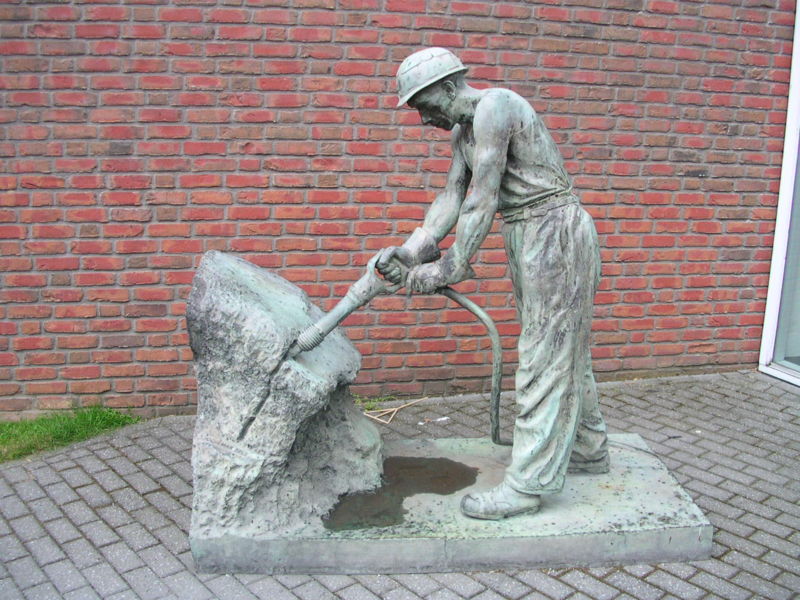
| Hardrock miner Photo by Norbert Schnitzler |
There are several items that over the years we have found to
be handy added to our exploration kit.
Probably one of the handiest and incidentally the heaviest is a steel
anvil 3 inches in diameter by 1 inch thick.
This is used for a simple test for gold.
Gold is malleable and can be flattened with repeated blows with a
hammer. So-called fools gold is brittle
breaking up into several fragments, and if reduced to powder turns black. Gold will retain its true color everything
else turns black or in the case of mica turns white.
A hat to shield your punkin head from the hot sun is one of
the most valuable things you can have during a prospecting expedition. A hat also keeps the rain off your head if it
starts raining. A simple bill cap will help, but a broad brimmed hat like the
cowboy’s wear is even better. The best
one is a hard hat to protect your head from falling objects.
Gloves are another thing you shouldn’t be without because
after a day of shoveling or hammering you are likely to find that one of the
things you’ve got is a good set of blisters among other things. The best work gloves for the prospector are
leather work gloves.
If you are hunting for gold anywhere there are snakes, and
there are always plenty of snakes wherever there is gold you need a pair of
snake proof boots. A rattlesnake can
strike so hard that even with snake boots you can still be bruised through your
boots. A snake bite can ruin your day. If you are messing around in streams one of the
most handiest things you can have is a pair of rubber boots, preferably hip
boots.
One of the handiest things you can have on a prospecting
expedition is a good jeweler’s 10X loup.
Why a 10X because it has a depth of field that is deep enough to bring
things into focus. Loupes larger then a
magnification of 10x have a much shorter depth od field to render them
virtually useless. In the same vein a
pad and pencil also comes in handy for making notes. A surveyor’s pad works best because they have
water-proof paper. You could also
include a ball point pen.
The really most handy things to have is a good handheld GPS
unit. You can set it at your base
station so you will always be able to return.
It is also handy for finding other places where you have been. Another use for one of these is using it for
laying out claims.


