Total Pageviews

Showing posts with label Abitibi Gold Belt. Show all posts

Wednesday, August 24, 2011

Gold Occurrences in Ontario


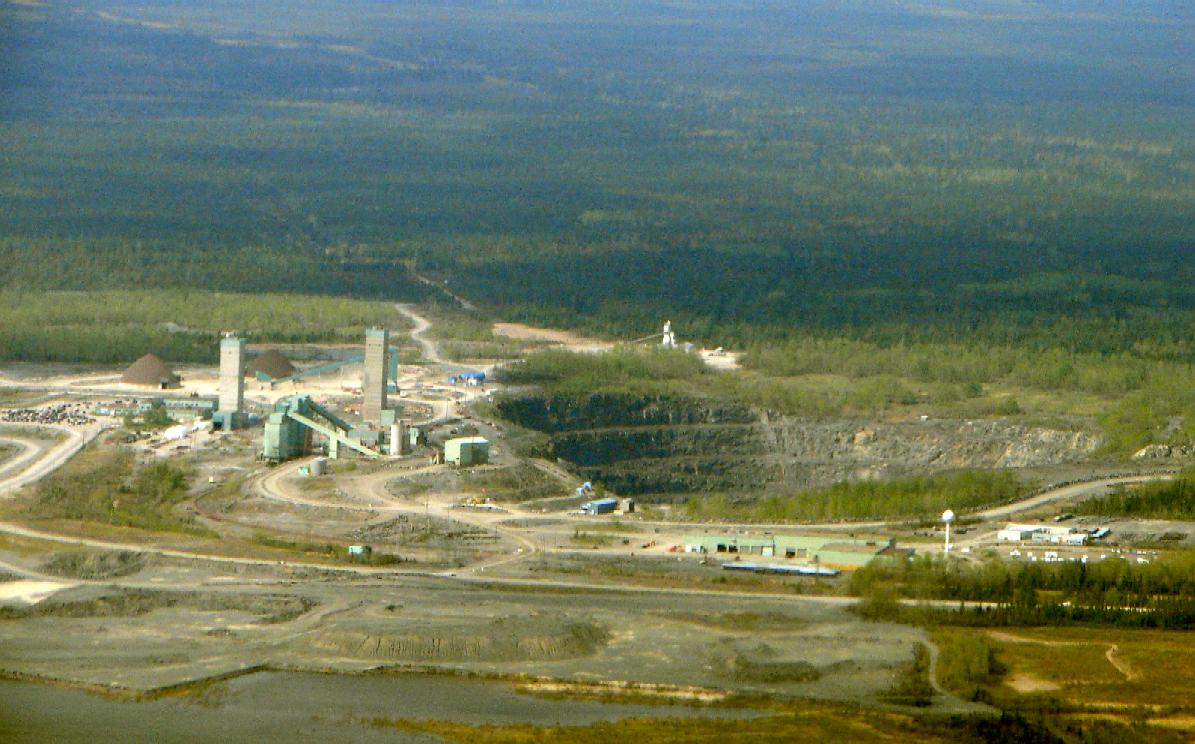
Kidd Creek Mine in Timmins Ontario   P199


The City of Timmins lies about 600 miles north of New York City it is common knowledge to most Americans that the Gold Rush happened in California in 1849, but a far larger gold rush occurred in Porcupine Ontario fifty years later.  Porcupine was later incorporated into the Township of Timmins, but Porcupine still exists complete with a Tim Horton’s shop.  One of the mines, the Dome Mine is still producing gold over a century later from a vast open-pit mine.  The other mines are now closed, but in West Timmins they have recently discovered one of the largest gold deposits of the past century.  It appears they haven’t written the last chapter in the book about Timmins Gold.

Most of the gold found in Ontario is found in the so-called Greenstone Belts the largest of which is the Abitibi reaching all the way from Wawa on Lake Superior into Quebec past Val D’or.  From this one Greenstone Belt there are more then 160,000,000 ounces of gold that have been mined since its discovery in 1909.  This is only one of several Greenstone Belts in the province that has produced gold. 

Gold bearing belts are found in several other localities in Northern Ontario with other notable occurrences at Cochrane, Red Lake, Hemlo, Marathon and so many other places that prospecting for gold in Ontario is practically the same thing as carrying coals to Newcastle. Many of the VMS mines in Ontario produce gold as a byproduct.  One example of this kind of deposit is found in the Kidd Creek Mine to the east of Timmins that was the site of a famous discovery in 1963.  Most of the gold that has been found in Ontario is from hard-rock deposits.

Somebody has said that there has never been a single nugget of placer gold that has been found in the province.  According to an open file report by the Ontario Geological Survey there appears to be a considerable amount of float gold present in the glacial drift of Ontario.  It is probable that placer deposits have not had enough time to develop since the glacier melted.  At any rate the report covers about two hundred pages listing all kinds of places where placer gold and indicator minerals for kimberlites have been found in Ontario.  You can access this document online by going here.

According to the author’s prospecting friends in Ontario all the prospecting done in the province is in hard rock. With the amount of gold that has been discovered that really makes sense. It could be possible that what has worked in the past will work in the future. The possibility of placer mining has not happened because of the scarcity of alluvial gold. Although the Abitibi region of Ontario holds many lode mines, placer deposits are practically non-existent. The glaciers of the past million years took the gold laden soil south and deposited it in states across the American mid-west. These are from New York to Illinois.
Most of the gold of Ontario is found associated with the greenstone belts of the Abitibi and Superior Provinces that span the whole province from Manitoba to Quebec. It is thought that the gold was mobilized from the greenstones that are metamorphosed basalts by hot water. It was deposited in quartz veins that are often found near fault systems.
Another place that gold is found in Ontario is in beds of ancient conglomerate. An example of this type is a large piece of conglomerate on display on the lawn of the library in Timmins. This is probably an ancient placer deposit that has been fossilized. The stones in this piece show little or no sign of having been metamorphosed. It is an example of an Archean sedimentary rock.
Some of the other regions of Ontario that have produced gold is the area around Wawa and Marathon. The Western part of the province is also promising country to prospect. Prospecting in Ontario is not just limited to looking for gold. There is at least one active diamond mine in the James Bay Lowlands, as well as diamond bearing kimberlites found in several places in the province.
Diamonds are often found in the same rivers and streams that carry gold in their sand and gravel deposits. The largest diamond that was ever found in North America was found in a placer deposit.
There are plenty of other minerals that can be found in Ontario as well. These minerals might not be as glamorous as searching for gold, but in many ways they are more important in the modern world. Among them are copper, lead, zinc, nickel, iron, lithium, beryllium, niobium, tantalum and the rare earth elements. The platinum group metals are often found associated with copper, cobalt and nickel.
If there is anyplace where people have looked in Ontario for mineral wealth they have found it. The province maintains a very active geological survey that holds vast amounts of knowledge concerning the mineral wealth of Ontario.

Wednesday, August 17, 2011

Gold Occurrences in Quebec


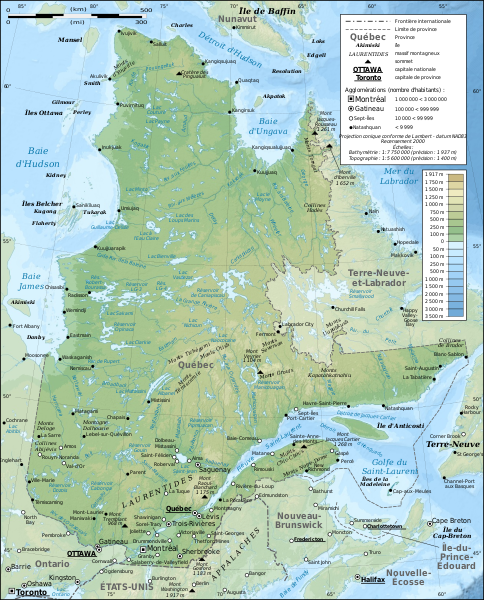
Topographic Map of Quebec   NASA


There are many gold deposits in Quebec many of which are being explored or developed into active gold mines at this moment.  The province is also the eastern terminus of the Abitibi Gold Belt that begins in Wawa Ontario and supposedly ends at Val D’or Quebec.  This is the second largest gold belt on earth only the Witwatersrand of South Africa is larger.  Since it was first discovered in the early 1900s the Abitibi has produced more then 160 million troy ounces of gold, more then there is in Fort Knox.

There are several different parts of the province that contain gold either as native gold or associated with other metals of which copper is one.  This is the case in the copper/gold mines around Chibougmau.  There is a goldmine located about 60 km west of Chibougmau on Rt 113 in the Chapais Mining Camp. Further north these is mining exploration work being undertaken on the Taigus Road that goes from Radisson east to within a little more then 100 km from the Labrador border.  There is also further exploration work being done in the far north of Quebec in the Ungava Bay Territory.  

The Matagami Camp is another hotspot of activity for both gold mining and exploration with several mining and exploration examining the surrounding area for gold and other base metals.  Exploration has reached the level where a surface mine is being opened near the town of Malartic between Val D’or and Rouyn-Noranda.  This site is located in the Abitibi Gold Belt.  A new find of Volcanogenic Massive Sulfides has been reported near Rouyn-Noranda. 

A great deal of exploration and mining activity is found north of the St. Lawrence River especially in Archean aged rocks, but most of the placer activity is found south of the river especially in the rivers and streams that drain the Height of the Land on the Maine Border.  Gold is found in the area centered on Sherbrooke and Thetford Mines as well as along the Chaudiere River.  This is an interesting area because it also displays the same kind of chaotic geology as the rest of the area that is on the seaward side of the Brampton/Baie Verte fault where continental terrane and oceanic terrane collided during the Taconic Orogeny forming the Iapetus Suture Zone.  This entire area in the Eastern Townships warrants further exploration for lode gold.  

Tuesday, July 19, 2011

Gold Occurrences in Tennessee

A piece of gold bearing copper ore from the mines at Ducktown Tennessee
Photo by Brian Stansberry


Most of the gold in Tennessee occurs in a narrow belt found in Monroe and Polk counties where they come into contact with the North Carolina border. For a distance of about fifty miles in the streams draining down from the Smoky Mountains placer gold deposits are formed.  According to reports placer gold has been discovered in the Caney Fork River around five miles below the Center Hill Dam.  Most of the gold recovered is found as small particles that are dust sized.  However, there are reports of larges sized nuggets as large as 2 or 3 ounces.

According to reports there have been a few nuggets recovered around Knoxville and further north in the area around Bristol, Tennessee.  Recent communications report that there is also gold found in the central Smokey Mountains to the northeast of Knoxville.  The author has seen some photographs of microscopic gold deposited in quartzite from this area.  Gold has also been recovered from the copper sulfide ores mined around the Ducktown area as a byproduct of copper and zinc mining.  

The bedrock map of Tennessee shows that the far eastern border of the state is in the Blue Hills province, a known gold producer that abuts the Valley and Ridge province immediately to the west.  The map indicates that the whole Smokey Mountain National Forest probably contains gold the problem is really one of the idea the place has never been properly prospected.

Bedrock Geological Map of Tennessee.  Most of the gold is found close to the North Carolina in the rock shown as brown. USGs


It was from the Valley and Ridge province where the author saw the photographs of gold in quartzite.  This is a perfect place to find gold as the quartzite and quartz pebble was eroded from mountains that were further east in the Piedmont province of North Carolina.  The Piedmont is peppered with gold mines, and it stands to reason some of this gold would have reached the Valley and Ridge province by the processes of erosion.

Gold has also been found at the Tellico plains as small grains eroded from bedrock of the nearby Unika Mountain on the border with North Carolina.  The Unika Mountains is where the gemstone Unikite is found.  This is a variety of granite with pink feldspar and green pisticite that is cut into cabochons.  The gold is found mixed with the soil from near the summit of the mountain in a stratum of soil that is from 10 to 12 inches deep.

Most of the Gold in Tennessee is found along the eastern edge of the state and rocks that are of Cambrian or pre-Cambrian age. Or also called on the western flank of the great Smoky Mountains as well as in the creeks a few miles east of not those Springs. Another place where it is found is in back of Chilhowee Mountain medicine bottle County. Gold is also found in Polk County on Citico Creek, Cane Creek, Coker Creek and the headwaters of Tellico River. Coker Creek in their own County produced nearly all the gold that has ever been found in Tennessee that according to some authorities about into a little less than $200,000 worth of gold.

Some of the best areas to prospect for gold in Tennessee are a narrow belt of stream gravels that are about 50 miles long in the southern part of Blount, Monroe and pull counties where they are alongside the North Carolina border. According to some authorities some of the best prospect in and be found in the rivers and creeks of Monroe County. Goals also found associated with the many copper mines of Polk County around the Copperhill-Ducktown Square is produced as a byproduct from the copper mines. 

Thursday, March 31, 2011

The Abitibi Gold Province of Eastern Canada

During the course of writing the articles about the states in the American Midwest where gold occurrences are we made several references to the Abitibi Gold Belt in Canada located in the provinces of Québec and Ontario. This is what the Abitibi is about.

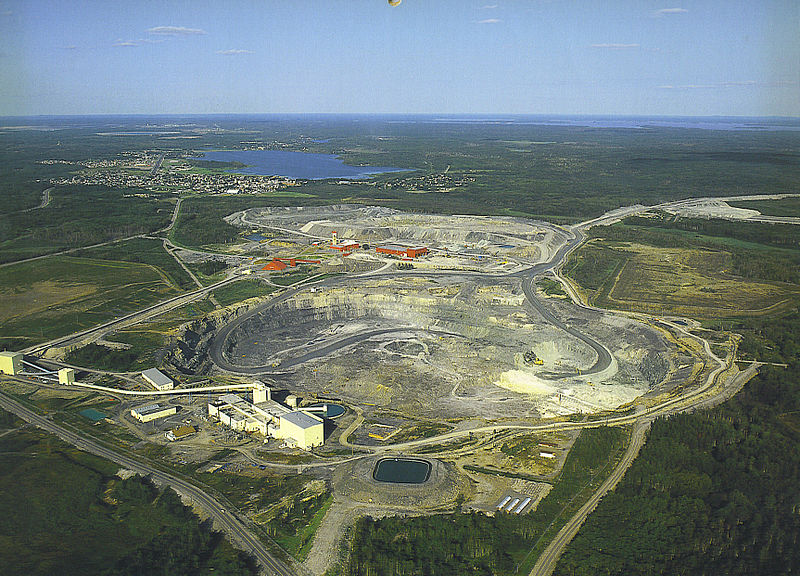
The Dome Mine in Timmins, Ontario one of the original gold mines of the Porcupine Gold Rush

We are taught about the great gold rushes that occurred in the Western United States during the latter part of the 19th century, but we know very little about the biggest Goldrush that ever occurred in North America. Know was that the California gold rush, nor was it the Klondike Gold Rush it was the Porcupine Goldrush that occurred about 600 miles north of New York City in Porcupine, Ontario. 

This Goldrush occurred in the Abitibi Gold belt that has proved to be one of the great gold bearing provinces on earth, and appears to be exceeded in size only by the Witwatersrand of South Africa.  The Abitibi is a continuous band of gneiss, granite and greenstone extending from Wawa, Ontario to Val d’Or, Québec that is the same goes is produced more gold than there is in Fort Knox. Since 1901 the gold mines of the Abitibi region of produced more than 170,000,000 ounces of gold; more than 68,000,000 ounces of them produced in the Township of Timmins, Ontario alone.

The Kidd Creek Mine in Timmins Ontario a leading producer of copper and zinc.  NOAA

During its history of his loss of more than 100 years they have a time he gold belt has produced over 100 gold mines, and from recent exploration it appears that the Abitibi is going to produce even more gold than it has in the past. Gold is not the only metal that is produced in the Abitibi Gold belt it has also been the scene of some very large base metal mines. It is in the same town of Timmins that the fabulous Kidd Creek Mine is located that kicked off a mining rush in early 1964 that today is producing copper and zinc along with other metals at a depth around 9500 feet making it one of the deepest mines in North America. It also produced the base metal mines around Rouyn-Noranda said gave birth to the Noranda Mining Company that during its day was one of the largest mining companies in the world.

Aside from its production of over 170,000,000 ounces of gold the Abitibi has also produced 35,000,000,000 pounds of zinc, 15,000,000,000 pounds of copper and 400,000,000 ounces of silver. In addition there are several minor metals that are also produced like germanium and indium. Even today they keep finding more mineral deposits in the Abitibi.


.