Total Pageviews

Showing posts with label hydrothermal. Show all posts

Friday, July 13, 2012

The Geology of Gulag Gold


Gold mining prisoners in the Kolyma Basin.  They are mining placer gold that is found throughout the area.


The Gulag Ore Field or more correctly the Ducat gold/silver deposit that is located in the central part of the Balygychan-Sugoi trough that is a graben shaped depression that is located near the town of Omsukchan, Kolyma that adjoins to its north the Okhotsk – Chukota a marginal continental volcanic belt.

The deposits of gold are centered on a Cretaceous (ca. 120 million year old) volcanic dome consisting of ultra-potassic rhyolites, ignimbrites and tuff that are interlayered with black argillites.  The whole volcanic complex is intruded at depth by a late Cretaceous (ca. 85 million year old) granite that is from 1,200 – 1,300 meters below the surface.

More gold miners at work in the Kolyma Basin


There were pulses of igneous activity that caused hydrothermal activity to occur in the dome that involved large quantities of fractured, porous and highly permeable Cretaceous rhyolite sills and other steeply dipping subvolcanic bodies to be affected covering an area that covered more then 25 square kilometers.

Most of the known mineralization was later to the younger intrusion that includes tin bearing greisen-type that occurs in the contact zones of the granitic plutons. They ore deposits himself were located at a considerable distance from the granite.

Part of the Kolyma Basin is within the Arctic Circle giving it a sub-Arctic climate having very cold winters that can last for up to six months. Most of the area is covered with permafrost and tundra. During the winter temperatures range from -19°C to -38°C with even lower temperatures found in the interior. Besides gold there are also rich reserves of silver, 10, tungsten, mercury, antimony, coal, oil and peat. It has been estimated that the area contains in addition to gold 1.2 billion tons of oil and one point 5,000,000,000 m³ of gas.

This is the area whose mineral wealth was discovered by Yuri Bilibin in the 1920s that was quickly developed into the infamous Gulag prison camps by Stalin in the 1930s. There was also the area Bilibin used as the model for his theory of Metallogeny and Global Tectonics that has gained much traction sense of the world of geology.

Development began in 1932 and of Joseph Stalin the Kolyma Basin became the most notorious place for the Gulag labor camps. It has been estimated that over 1 million people died en route to the area or in the Kolyma’s between from 1932 until 1954. It was Kolyma’s reputation that caused Aleksandr Solzhenitsyn ferrite his famous book the Gulag Archipelago. In this book Solzhenitsyn came to characterize it as the “pole cold and cruelty.”

Gold and platinum were found in the Kolyma during the time when industrialization began in the USSR under Stalin’s First Five Year Plan in a period when the need for capital that would finance this economic development.  The Kolyma Basin gold was a perfect fit and development of the basin began in 1932 based on prisoner labor. 

In 1932 construction began on Kolyma Highway into the interior those that become known as the Road of Bones because of the number of people in Paris in its construction. This role eventually came to serve 80 different camps that were not have around the region of the uninhabited taiga. The first director of the Kolyma camps was Eduard Berzin who was the Cheka officer that was removed in 1937 and shot during the period of great purges of the USSR.

Far Eastern Russia geologically is North American plate that also includes Kamchatka Peninsula in northern Hokkaido Island of Japan. This being so it is probable that the gold deposits of this part of Siberia are closely related to those found in the Tintina gold belt of Alaska. It also indicates that most landmasses on Earth are really just one supercontinent with the sole exception being Antarctica.

Monday, July 9, 2012

The Upside Down Mine


Sterling Hill Mine in Ogdensburg, New Jersey
Photo by Dmadeo


No, this isn't about a gold mine it's about a zinc mine specifically the one at Sterling Hill, New Jersey that for many years produced zinc and was one of the largest mines and the East Coast of the United States. The ore produced from this mine is noted worldwide for its many fluorescent minerals, but like all mines in eventually came to it in and was closed down although it still operates as a museum. At this mine and the ones in nearby Franklin, New Jersey form a canoe shaped orebody hosted in marble that is been the subject of much controversy over the years as to its origins.

During the 1960s Brian Skinner of Yale University was working for the USGS and with a colleague started speculating on how this ore body was emplaced. Under normal circumstances it is assumed that the ore came from deeper down in the bowels of the earth. However in this case under the marble was a layer of impervious rock that apparently did not allow the ore bearing hydrothermal fluids to rise up from below the marble.

Willemite, Franklinite and Rhodocrosite under Ultra-violet light from Sterling Hill
Photo by Rob Lavinsky


Skinner and his colleague were working in the mine one night when the question of the deposit’s origin came up.  The layer below the marble was impervious, but the marble itself wasn’t.  Many layers of sediments were deposited above the marble including some that were volcano-clastic in nature.  These rocks were also pervious allowing ground water to perk down from higher up that were capable of bearing ore bearing fluids.  They came to the conclusion that the ore bearing fluids came down from above and perked through the marble until they hit an impervious layer below the marble.  Here the ore bearing fluids stopped and gave up their load of dissolved minerals creating the deposit. However there is zinc minerals dispersed throughout the marble above the actual deposits.

This is all theoretical, but there are other examples of this same mechanism at work.  One glaring example can be found in the iron deposits found in northwestern Connecticut.  For almost two centuries the iron mines in Salisbury yielded some of the richest iron ore on earth that had its origin in the overlaying Walloomsac formation of schist interbedded   with marble.

The same specimen as above under normal light
Photo by Rob Lavinsky


The origin of this formation is volcano-clastics that came from an island arc that formed off the then east coast of North America that collided with the continent during the late Ordovician and caused the Taconic Orogeny.  This volcano-clastic material was the source of the iron that formed the famous Salisbury iron deposits, and supplied the magnesium that turned the limestone into dolomite.  The Walloomsac formation extends south from Lake Champlain to Manhattan where it underlies among other things the New York Stock Exchange.  Throughout its length at its base and in the underlying marble iron deposits are sprinkled like plums in a plum pudding.

It is theoretically possible that some gold deposits that are hosted by marble were deposited by the same mechanism i.e. leached from the overlying deposits.  A possible example of this mechanism in action are the gold deposits of the Carlin Trend in Nevada.  Another suspect is the San Pedro mine in San Luis Potasi, Mexico.  Both of these deposits are hosted in marble.  Keeping this mechanism in mind might lead to the discovery of other deposits of valuable metals.

Wednesday, May 16, 2012

Gold Occurrences in the Argentine


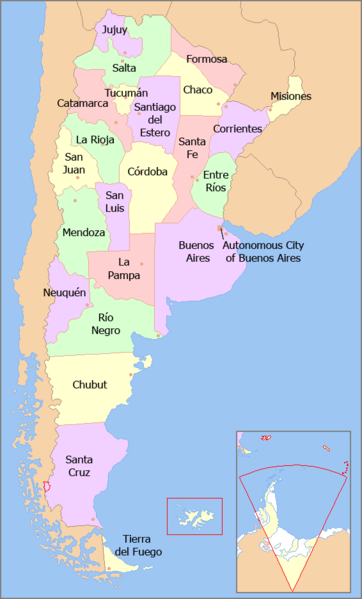
Map of Argentina.  The provinces in the far west of the country are most apt to contain gold
By Bliff


Although an ocean separates them Argentina has a neighbor the country of South Africa that although they were split apart with the opening of the Atlantic Ocean during the Cretaceous millions of years ago they share much in common.  Forty percent of all the gold that has ever been mined comes from the Witwatersrand in South Africa that leaves the question are like gold deposits to be found in the rocks of Argentina.  The very name of the country is derived from the Latin word for silver “argent” hence Argentina.

Argentina overhauled its protectionist mining laws in 1993 causing gold production to rise in a parabolic curve from a mere 36,000 ounces to over 1 million ounces.  This change in the laws has made Argentina the third largest producer of gold in South America.  This number was only exceeded by Peru and Brazil, respectively.  Only Argentina has seen as dramatic a rise in recent years.

Only in Argentina has the level of gold production raised in recent years with the production of gold having peaked in the other countries.  These points out the fact that unlike the others Argentina’s gold fields are from being mature is respect to their development cycles.  Argentina’s wealth of buried gold is yet to see any meaningful development translating into a booming domestic gold industry with a pronounced growth curve.

In area Argentina is the second largest country in South America that is 1,580 kilometers from east to west and 3,460 kilometers from north to south.  To its west it borders Chile along the crest of the Andes.  The country has well over thirty volcanoes that also follow the Andes which have supplied the heat engines necessary to forming deposits of gold dissolved in their hydrothermal waters.

The presence of placer gold in the rivers and streams draining the eastern slopes of the Andes Mountains are known to contain large amounts of placer gold.  Some of the deposits that have been found are supposed to exceed 1 million ounces of gold.  Some of this gold is pristine crystals giving weight that gold nuggets are caused by gold fixing bacteria.  Much of this crystalline gold is as high in content as >98% pure gold, some of the purest in the world.

Lode gold is often associated with arsenopyrite and copper sulfides the normal byproducts of hard-rock gold.  Another element often associated with the gold from Argentina is mercury that may explain why the placer gold has such a high percentage of gold because the mercury left over from past mining operations has dissolved the residual silver.  There are lode deposits the length of Argentina in the spine of the Andes Mountains.

Thursday, February 3, 2011

Finding gold in Quartzite

 Many prospectors in the field would look upon quartzite that doesn't have any gold showing as barren when in reality there is plenty of this overlooked material that can assay as high as 80 ounces per ton without a speck of gold showing to the naked eye. The gold in quartzite occurs when sandstone is metamorphosed by hydrothermal action with gold and silver  bearing hydrothermal waters that further cements the grains together. Sandstone is porous readily giving this water access. It is the silica in the water causes the transformation of sandstone into quartzite by cementing the individual grains together. If you break a piece of sandstone you can still see the individual unbroken grains, but if you break a piece of quartzite the grains of sand are also broken.

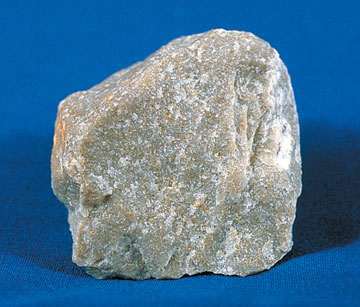
This kind of quartzite with a yellowish color may contain significant amounts of gold. 
Quartzite that is dull white in appearance is generally barren,but quartzite that is glassy in appearance in yellowish in color can often contain significant amounts of gold. We have seen samples of quartzite like this but it actually has assayed to more than 80 ounces per ton without a speck of gold being visible to the naked eye.