Total Pageviews

Showing posts with label South Africa. Show all posts

Tuesday, July 3, 2012

Gold Occurrences in Burkina Faso


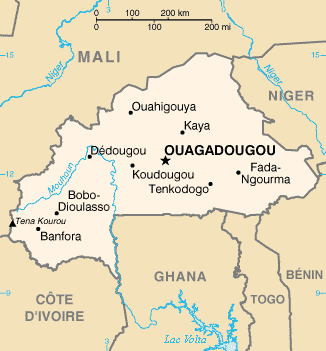
Map of Burkina Faso  -  CIA


In the past 40 years there has been a great deal of interest in gold mining in Burkina Faso. This is a country that is very geologically rich with the Poura region alone accounting for over 25 tonnes gold. As of 2003 the government brought about a new Mining act and immediately after there were more than 30 companies that have undertaken exploration projects in the country. They also created five new mines that are on the point of full production.

As demonstrated by the Abitibi region of Canada some of the richest gold mines in the world are located on greenstone belts.  In Burkina Faso greenstone belts cover about 3,000,000 km² of West Africa the Burkina Faso accounted for approximately 21% of these greenstone exposures. There are about 13 international mining companies that are active in this area now. .

As many as 13 international mining companies are working in the country mainly in the Greenstone belts. These belts account for over 21% of West Africa's Greenstone belt exposures that house on the world's most prolific gold mines. Some of these mines are capable of producing over 100 thousand ounces of gold per year. Much of this gold is produced by the heap leaching process and probably accounts to more than 1,000,000 ounces per year. Although some of these are producing mines, more of them are exploration projects that have been ongoing for some time.

All of the United Nations development program and Burkina Faso indicates that the early Proterozoic (Birrimian) Greenstone belts located at Boromo and Hound consists of steeply dipping volcanic and volcano-sedimentary units that have been intruded by the Eburnean granitoids there about 2 billion years old that have undergone incipient to low grade greenschist metamorphism. Many of the former gold prospects and mines are found in the Greenstone belts including the spell Poura vein gold deposit and the Dossi shear zone prospects. Much of gold that is discovered is associated with scheelite, calcium tungstate that is an ore for the metal tungsten.

Gold mining is one of the newest stories in Burkina Faso in recent years where the gold mining industry has been developing apparently inexhaustible resources.  There are many Australian companies that are already there searching for gold.  Many are finding it.

Most of the primary gold deposits are derived from metamorphic rocks that were developed from auriferous rocks that were eroded away long before the placer deposits bearing them were metamorphosed in the older volcanic and volcano=sedimentary rocks.  In this they are similar to the rocks found in the Witwatersrand district of South Africa and the Abitibi greenstone belts of Canada.

Thursday, May 31, 2012

Gold Occurrences in South Africa


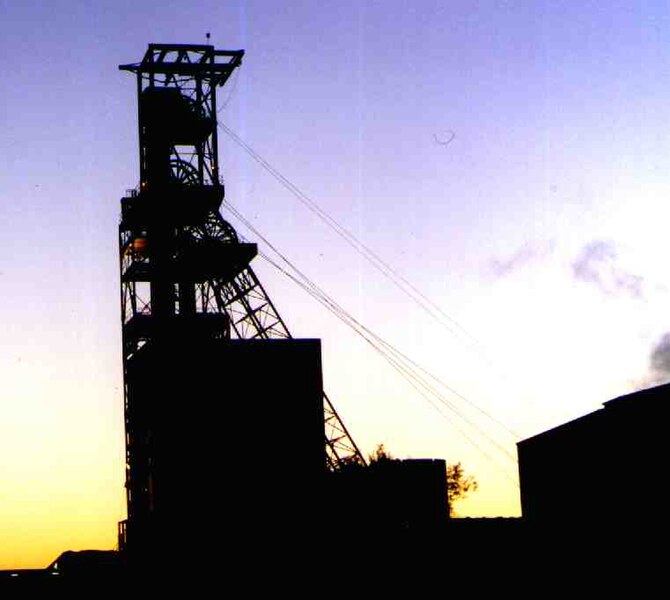
The headframe of a gold mine in Reef City, South Africa
Photo by Nolween


More then 40% of all the gold ever mined has come from the Witwatersrand commonly called “The Rand” since 1870.  The deepest mines in the world are also found in The Rand.  In 2005 it accounted for 12% of the total world’s gold production, but as late as 1993 it accounted to over 30% of the world’s gold.  Overall it has been estimated that greater then 50% of the world’s gold reserves are from South Africa with 40% from the Witwatersrand alone.

The word Witwatersrand in Afrikaans means the ridge of white waters a large range of sedimentary hills in the northeastern part of South Africa.  The range has a height ranging from 1,700 to 1,800 meters although it appears lower then that because its relief is low and the heights are because it is on top of a large mountain plateau.  The ranges run from east to west mainly in the Gauteng province of South Africa.

Geologically it is quite complex composed mainly of quartzites, quartz pebble conglomerate and shale.  These rocks are geologically turbidites that flowed down a Precambrian continental slope.  The Witwatersrand gold and uranium deposits for years have been the center of a controversy as to where they came from.  The controversy was apparently laid to rest with the discovery by analyzing some of the platinum group metals that determined they came from a long lost mountain range to the north.

The rocks of the “Rand” or reef are similar to those found at Elliot Lake and Timmins, Ontario and are very rich in gold and uranium.  So famous is the name Rand even South Africa’s currency is called a Rand.  The name Witwatersrand also attaches itself to the Greater Johannesburg Metropolitan Area.

Gold was discovered in the Rand as early as July 31, 1826 by Peter Jacob Marais on the banks of the Jukskei River; the find was kept secret at the time.  Gold mining really started on the Rand in 1886 although there were sporadic efforts before that.  The Rand sparked a gold rush in the Witwatersrand and later deposits of gold and uranium eventually created the largest urban area in sub-Saharan Africa.

Among the many gold mines in South Africa are two of the world’s deepest mines.  In the East Rand Mine at Boksburg reaches a depth 3,585 meters.  The TauTona mine in Carletonville is 13 meters less then the East Rand Mine.  Plans are afoot to work on an extension of the TauTona mine that will bring its total depth to more then 3,900 meters (12,800 feet). This will break the present by 39 meters (127 feet).  When you get to these depths the rocks can reach 60o C (140o F).

Sunday, December 18, 2011

The World’s Deepest Gold Mine is cooled with Slush

A South African goldmine similar to the one in this article.
Photo by Babakathy

There is a certain amount of argument as to what is the world's deepest gold mine, but there is no doubt it is found in the Witwatersrand of South Africa. The latest contender for the title of world's deepest mine is the Mponeng mine of the West Wits district of the Witwatersrand.  The mine's name is derived from the Sotho word for “Look at me.” At 13,000 feet this presently holds the record as the worlds deepest mine. This record does not only apply to gold but any other product such as uranium that is mined from the deepest recesses of the earth.

This mine is so deep the only way it can be cooled to the highest temperature allowed by South African law of 83°F at the mine face is by refrigeration that makes a mixture of ice and water that we call slush.  There is several refrigeration units deep in the bowels of the mine made by IDE Industries headquartered in Israel that make slush as part of a scheme to make fresh water from sea water . The slush is held in readiness in underground reservoirs until it is piped to the working face of the mine.  After it has done its job of cooling the mine the warm water is pumped back to the surface where it originally came from by large electric pumps using tremendous amounts of electricity where it is allowed to cool off.

The mine contains 230 miles of shafts and tunnels that take the workers as much as 90 minutes to reach the working face of the mine allowing only five hours per shift at the working face.  The shaft is split into two sections causing the workers to have to walk to the second shaft before they can continue their journey to the bottom of the mine.  Most of the trip continues on rails that carry men, equipment and ore.  The final part of the journey is made in low tunnels that cause the men to walk hunched over with their miners lamps to brush the ceiling of the tunnels.  Some of the time they have to go down narrow stairways leading into the depths of the mine.

At present this mine is the deepest on earth, but it is possible to extend the depth of a mine to 33,000 feet with most of the work being done by robots.  This mine makes it too all apparent that no real changes have taken place in deep mining for more then 100 years, a situation that must change if we are going to continue extracting minerals from the depths of the earth.

We welcome comments on this subject!

Saturday, April 16, 2011

Gold Occurrences in North Dakota

Detrital gold has been found in two different occurrences within the state of North Dakota. One of these occurrences is in northern Manitoba over 500 miles north of North Dakota that was brought in by the glacier that receipt of about 12,000 years ago. This formed placer deposits that are scattered across the state. The other gold that is found in North Dakota had an entirely different origin coming from conglomerate that was washed down from the Black Hills of South Dakota. It was subsequently eroded, and brought to the surface by the action of the Sheyenne River where it is now found as cemented gravel. Although the deposits of this sort are most common in the bed of the Sheyenne River it is also found as a cap rock on many of the buttes and ridges found throughout the state.

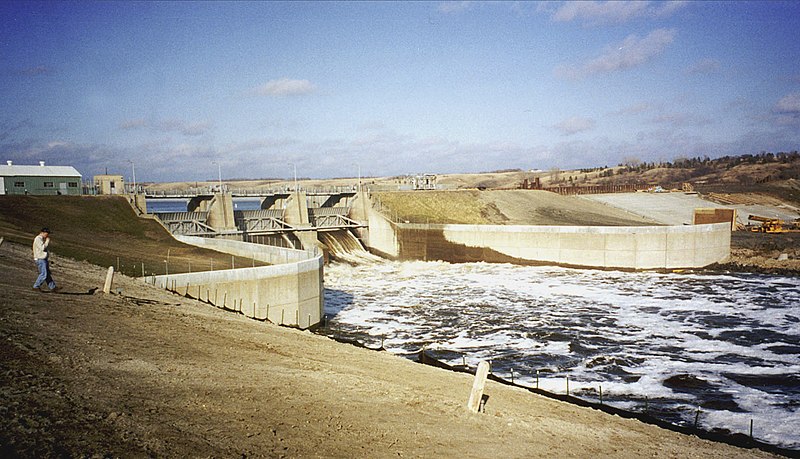
Baldwin Dam on the Sheyenne River in North Dakota.  This river contains detrital gold that is weathered from conglomerates that were washed down from the Black Hills of South Dakota

Conglomerate and other sedimentary rocks are not especially rare places in which detrital gold is found. This is gold that has weathered out of older crystalline rocks and carried away by the action of running water to be deposited as placer gold in stream gravel that later become cemented in place for me in a fossilized placer deposit. The largest gold deposit on earth, the Witwatersrand of South Africa, is gold in a conglomerate matrix. It is been recently discovered that the source for the gold in this deposit came from outwash in braided stream channels from an ancient mountain range. The geologists who pinpointed the origin of this gold used the half-life of an isotope of iridium that was found with the gold. This also explains why the gold was found in stringers throughout the deposit.

It is common to find uranium associated with this type of deposit as well as rare earth elements (REE). It is older of this type that is mind that Elliot Lake, Ontario for its uranium content. This is one of the largest uranium deposits in North America.

The first gold rush in North Dakota was in an area called glacial Lake Souris. This discovery of gold was made about 6 miles north of Fort Ransom in Ransom County. They are still finding small amounts of placer gold there today. It's like the old saying goes, gold is where you find it.

Tuesday, March 1, 2011

Gold in Quartz Pebble Conglomerates

Over 40% of the gold in the world is produced in the Witwatersrand of South Africa that is an ancient bed of conglomerate. It is only been in the past year that the source of the school's been discovered proving it to be a fossilized placer deposit formed when the gold a eroded from even older mountains where it was deposited in an ancient sedimentary basin. Today is the Witwatersrand is the home to some of the deepest mines in the world that either approach or exceed 13,000 feet in depth. Ancient conglomerate deposits are not limited to South Africa as some of the deposits in the area around Timmins, Ontario are hosted in conglomerate too.

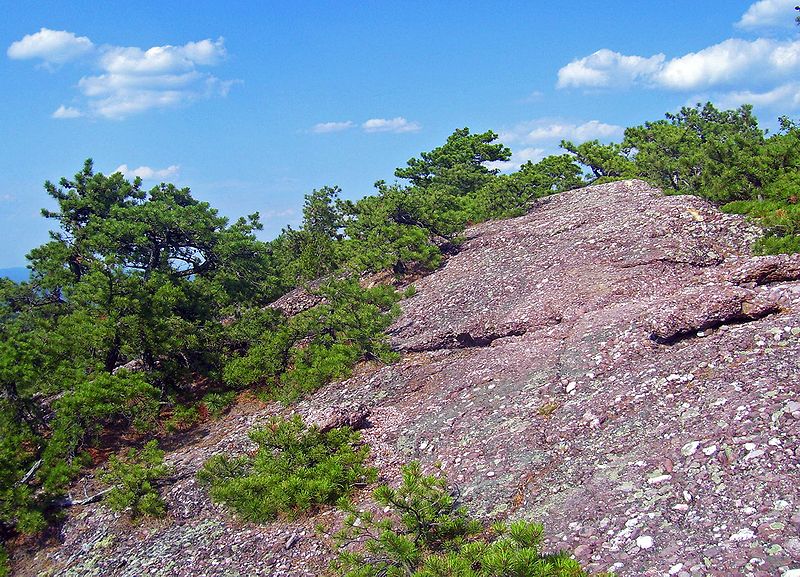
Conglomerate rock in as natural setting.
Photo by Daniel Case

Although gold was discovered in just about any type of rock that is found on Earth prospecting in quartz conglomerates is a pretty good bet. In the eastern United States quartz pebble conglomerates are commonly found in the Queenstown Delta as exemplified by the Schwangunk Ridge of New York and New Jersey. There have been reports of sparse gold deposits associated with this ridge in both states.

There are two different ways that gold can be deposited in conglomerate. One of the ways is by direct precipitation from hydrothermal waters where it forms a primary deposit. The second way gold can be deposited in a conglomerate is as a fossilized placer deposit where the gold has eroded from ancient mountains.

Closeup of conglomerate that sometimes is called "Puddingstone."
Photo ny Roy Parkhouse

Although gold is not found in every conglomerate it is a good idea to check them all for the presence of gold especially if the quartz pebbles show any sign of staining either yellow or green. This is a sure sign that metal bearing hydrothermal waters have penetrated the conglomerate. There are several other interesting minerals found in conglomerate like uranium, thorium and rare earth metals. Conglomerates can also be the host of other metals such as iron, copper, lead and zinc.