Total Pageviews

Showing posts with label gangue. Show all posts

Saturday, May 5, 2012

How to find hard rock gold


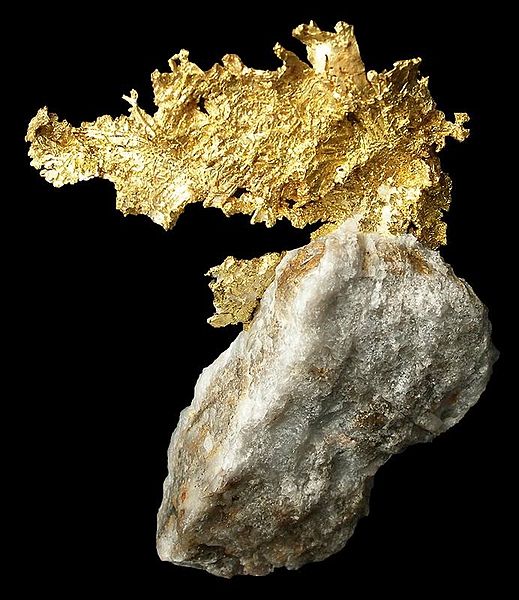
Gold in Quartz
Photo by Rob Lavinsky


Unlike placer gold hard rock or lode gold is much more expensive to locate, but under the right conditions isn’t impossible.  Most lode deposits are found by following placer gold deposits in a stream until the deposit suddenly chokes off then following float up hill until you finally find the Mother Lode.  Most lode deposits are always shedding float that goes downhill in an ever widening fan of the host rock.

Although gold can be found in virtually any rock type its usual home is in white, milky quartz that is readily distinguished from the host rock as termed in the mining industry “gangue.”  The white rock stands out so often pieces of it can be observed washing down mountainsides from its source with the naked eye or by using binoculars.

Although most hard rock gold is found in quartz veins that are usually readily visible, and the thinner the vein often the more gold it contains.  Another prime target for hard rock gold is the rock conglomerate where the biggest of all gold deposits are found in the Witwatersrand in South Africa.  These deposits have produced around 40% of all the gold that has ever been mined.  Deposits of this type also contain uranium and rare earth elements in payable amounts making it entirely possible to find deposits of this nature with a Geiger counter.  The gold/uranium deposits at Elliot Lake, Ontario are of this nature.
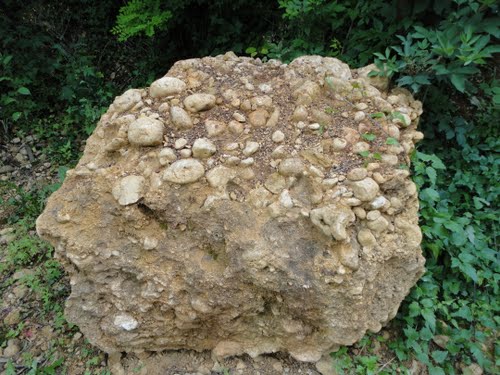
Quartz pebble conglomerate a likely place to find gold
Photo by Wiki-Schack


In many parts of the world it is extremely hard to see float because the area is covered with deep overburden so it is necessary to use other methods of finding hard rock gold; one of the most popular is using aeromagnetic maps or other geophysical methods like ground resistivity.  Aeromagnetic maps work on the principle that gold often occurs associated with the mineral magnetite or other iron bearing minerals like ilmenite causing the prospector to carefully examine the area around magnetic highs on an aeromagnetic map.

An analog multimeter that can be used for several different parameters in geophysical prospecting
Photo by KENPAI


Ground resistivity is one of many different geophysical techniques use to find ore deposits based upon the amount of underground corrosion that takes place in an orebody.  This is done using a multimeter that has high impedance and a strand of wire.  For convenience most of these rigs have 1,000 feet of wire mounted on a reel.  In use an area 1,000’ x 1,000’ is measured out on the land.  Parallel lines are drawn on its surface with readings taken from 100 feet apart to 10 feet apart along the lines.  The highest readings are connected with a line, and each successive lower reading until a map that resembles a topographic map is generated.

Any number of different parameters can be measured using this method, but the best explanation of their use is explained in a book about practical geophysics.  Parasinis authored a book on the subject that is still available today in the 1960s.

Thursday, February 24, 2011

The Price of Tungsten reaches Historic Highs

A metal that has so many unique properties tungsten is invaluable in many industrial applications. Tungsten has the highest melting point of all the elements except carbon, and its density is higher than lead. When you dissolve tungsten in carbon you end up with a product called tungsten carbide capable of being used in the machining trade as cutting tools and drills. In the mining industry is used to manufacture carbon button drills for both petroleum and mining uses. In military applications tungsten carbide is used as the core of armor piercing artillery rounds, and rocket nozzles because it is capable of standing up to the high temperatures involved. This is another metal that the world is coming to depend on China for most of its supply even though its ores that are widespread are considered to be gangue for many other metals including gold.

A sintered tungsten bar.
Photo by Jurgii

Like rare earth metals China has lowered its export quotas for tungsten since 2008. This year it has been lowered to the extent the quota stands at 15,700 tons, this is a reduction of 300 tons over the year 2010. This has resulted in an extremely tight market for the metal along with increased demand has sent the prices as of February 23 to $50 per kilogram representing a new all-time high.

China has ceased exports of concentrate, and Rob materials, but they will export semi-refined and refined powders. In the years 2004 in five the recycling component of tungsten was only around 5%, but it has reached as high as 35%. While the Chinese limited the amount of tungsten coming to the world market the results of this recycling effort has acted as a buffer, but now it has reached the ceiling.

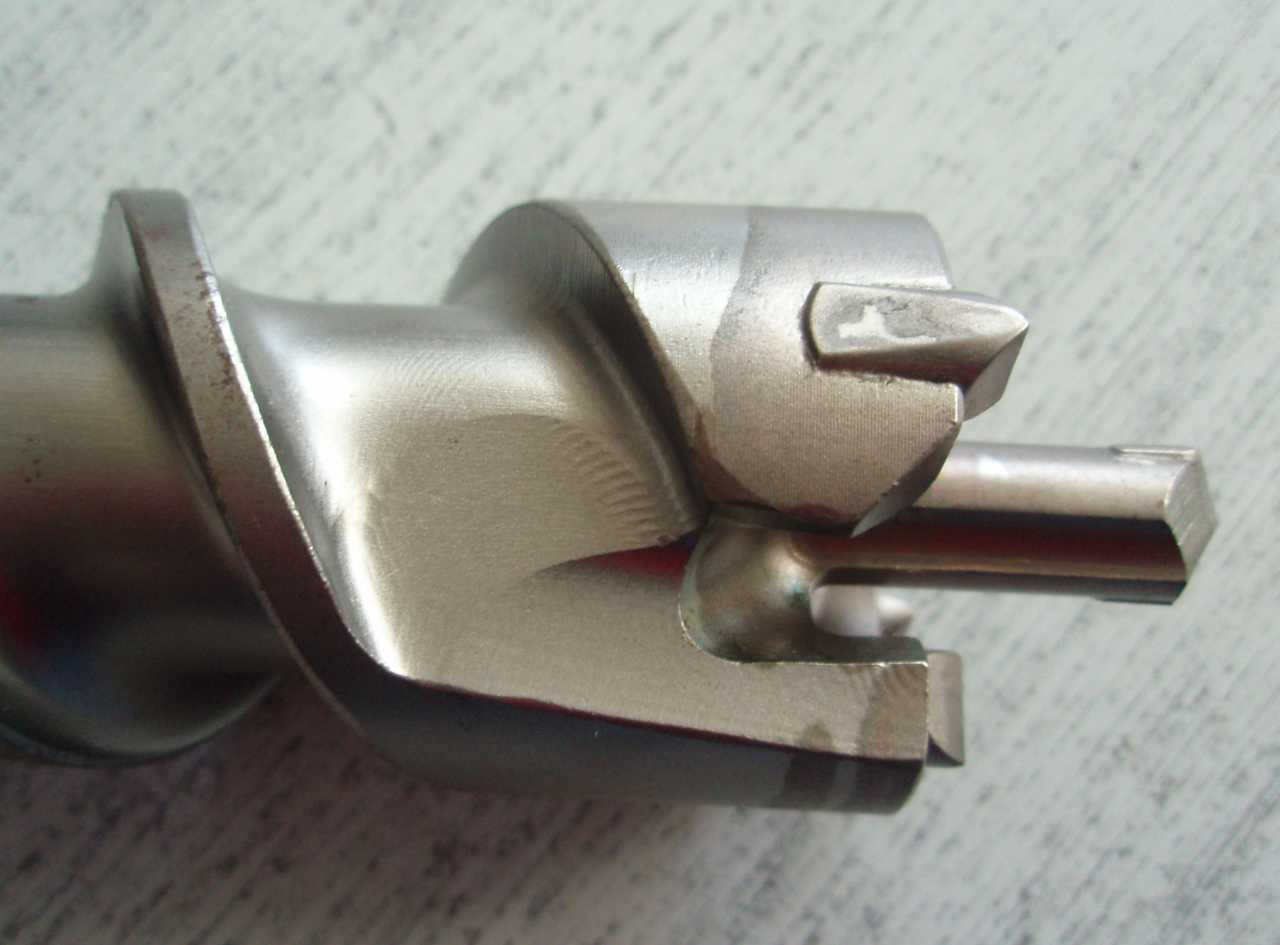
A rotary hammer drill bit with tungsten carbide inserts.

The cause of the present shortages can be laid to low prices as well as a lack of buyers that forced many tungsten miners to cease production. When the market started coming back the inventories of the model were quickly depleted. This caused the initial attempt to restock while the balance between recycled tungsten increased just as the amount of exports from China dwindled. This is caused a sudden spike in the cost of tungsten.

Wednesday, December 15, 2010

Hard Rock Prospecting


Prospecting in hard rock is much different the prospecting in the bed of a stream all though valuable minerals are often found by tracing a trail of specific minerals up a stream until you reach a point where the minerals vanish. When you have reached this point you start looking at the bedrock to see where it had weathered from. Hard rock prospecting is much more complicated than finding placer deposits; it is also much more observational. In this case gold and the other valuable minerals are encased in rock of one sort or another. This enclosing rock is called by the German name “Gangue” a useless rock enclosing the valuable minerals that you are looking for. While quartz is the most common gangue mineral there are plenty of others like calcium carbonate, barite, fluorite and list goes on.

Gold on Quartz     Rob Lavinsky Photo

In many respects hard rock prospecting is a science of whys, why is that rock discolored, why is that water discolored, why is that vegetation stunted are only a few of the many things prospectors look for in the field. A good prospector will examine every outcrop of rock in the area where he is prospecting looking for signs that it might contain a valuable mineral deposit. The basic tools they uses for finding minerals in the hard rock are a geologists pick, and a magnifying glass usually a loupe having 10X. magnification.

The most common indicator of a valuable mineral because it looks exactly like rust, because it is rust, iron oxide that is called a gossen. Just like many other words used in mining and prospecting is derived from German in this case the word gossen means “iron hat.” This is caused by the weathering of iron bearing minerals usually pyrite, but pyrite often contains other metals in what is called a solid solution series. Because they are so obvious finding a gossen nowadays is virtually impossible.

Iron Staining (gossen) on the wall of Kidd Creek Mine Timmins, Ontario   NOAA

The most sought after metal and prospecting is gold, and the old saying goes, “Gold is where you find it.” Although it is usually found in quartz veins and stringers throughout any rock that is been affected by hydrothermal activity gold can also be found in many many other types of rocks. The world's largest gold deposits are found in the Witwatersrand in South Africa. For over a century the source of the gold has been debated, but it has been recently discovered the gold deposits in the Witwatersrand come out of fossil remnants of an ancient mountain range.

When he is in the field the prospector is always looking for rocks that are discolored by the action of hot water, rocks that are deformed, faults in the rock that are often the channel for mineral bearing hot water. When he finally finds an area that looks promising the very first thing he does is to collect several grab samples across the width of the presumed mineral deposit for later analysis in a lab. If the results are promising he will go back and chisel a channel right across the vain in several different places. The samples from each vain are kept separate and are also sent to a lab for analysis.

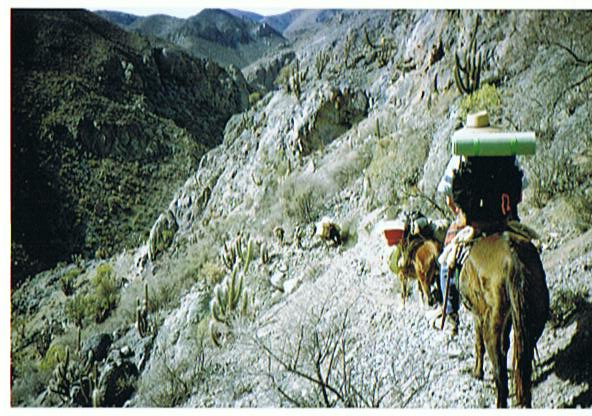
Prospectors in northern Chile

Sometimes it is virtually impossible to find any outcrops of rock in this case the prospector has to dig down through the overlaying soil until he reaches bedrock where he may find some viable mineralization by observing some of the indicators that are visible above the soil.

Although hard rock prospecting can be a one-man job more often it is left up to a team of explorers each of whom has his own specialty that is generally led by a geologist or geophysicist. An exploration team like this is capable of finding deposits of gold and other metals in many places that are beyond the capabilities of the single prospector.

Copper Ore   Hannes Grobe

One of the things the prospector always has to keep in mind is the odds are stacked against them because for every showing of ore only one in about 300 will prove to be viable for constructing a mine. There was a book published in the late 1900s titled, "Gamblers Ruin" a how to book about nine evaluation.although this particular book has been long out of print there are several good books on the subject that are still available with many of them up to date.