Total Pageviews

Showing posts with label New Mexico. Show all posts

Sunday, November 20, 2011

Gold Occurrences in Mexico

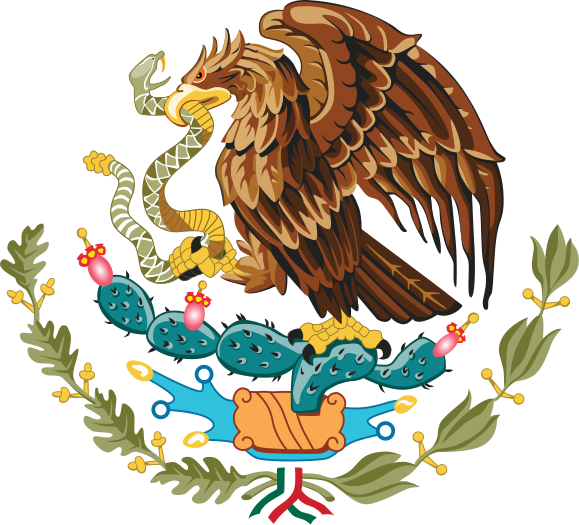
The Coat of Arms of Mexico


There is an old Mexican saying that it takes a silver mine to make a gold mine.  Mexico is blessed with an abundance of both metals.  My first introduction to Mexican gold was when a group of us tried to acquire the San Pedro Mine in San Luis de Potasi.  We couldn’t make a deal for this mine that had been worked since the time of the Aztecs, but it still contained around 12 million tons of low grade ore similar to that of the Carlin Trend in Nevada

Mexico is within the Cordilleras that go all the way from northern Alaska to Tierra del Fuego in southern Argentina.  Throughout these mountains there are abundant mineral deposits some of them have been worked since before the Americas were discovered by Columbus in 1492.  Exploration is still ongoing throughout the Cordilleras to this day with many gold and silver mines being developed.

The best description of mineral occurrences in Mexico including gold is that Mexico is a virtual treasure chest with an abundance of minerals hardly surpassed anywhere on earth.  Some of the mines in Mexico have been continuously worked for over 500 years.  In one place there is virtually a mountain of silver that has been worked since the days of the Aztecs or before.  In another place the workers in a mine stumbled upon a cavity in the rock where they discovered selenite crystals the size of tree trunks.  It is so hot in this cavity you have to wear air conditioned suits to enter.

Poughkite an ore of gold and selenium from the Monctzuma Mine in Mexico
Photo by Rob Lavinsky


There are two mountain ranges running for most of the length of the country named the Sierra Madre Oriental and Occidental with the Valley of Mexico between them.  In many places these mountains are volcanic in nature with the minerals found in them coming from the volcanism.

Lode deposits of gold and bedrock deposits of other minerals are abundant in Mexico, but that is not all.  Throughout Mexico there are many placer deposits of gold found in most of the rivers and streams, and because of the lack of glaciation there are also saprolitic deposits where the bedrock has been turned into clay leaving the lode deposits of gold and quartz behind in place waiting to be mined.

Many mining companies are actively exploring for more gold deposits in Mexico throughout the country, but there are also mines like the San Pedro Mine that has been worked since the days of the Aztecs.  The potential for finding gold and other valuable mineral deposits in Mexico remains very high.

Wednesday, June 8, 2011

Gold Occurrences in New Mexico

A copper mine in El Chino that produces gold as a byproduct.
Photo by Eric Guinther


New Mexico may be billed as the Land of Enchantment, but it is also known for its gold deposits as well as other minerals. These gold deposits generally follow along the crest of the Sangre di Cristo and other mountain ranges of the Rocky Mountains. This gold bearing belt cuts across the center of the state from the Colorado border south to the Mexican border. In this area it is possible to find both placer and lode gold. In much of this area gold is produced as a byproduct of mining other metals particularly copper.

Gold was originally discovered in New Mexico by the Spaniards in 1828, but there is evidence that the Native Americans they have found the gold deposits even earlier. This goal is mainly contained in a gold belt that cuts diagonally across the state from northeast to southwest that ranges from 50 to 100 miles wide. The gold and other metal deposits are closely associated with volcanic rocks found in the same area that can range from quartz monzonite to granodiorite intrusives. Most of these volcanics were produced during the Cretaceous or tertiery times.

There is a fine brochure produced by the New Mexico Bureau of mines and mineral resources that outlines the process of prospecting for gold for both amateur and professional prospectors. Many of the principles of prospecting can be used in other places as well as New Mexico.

There is no longer history of mining in New Mexico a place that had many good mines in the past, but today most of the gold produced in New Mexico is a byproduct of the copper mining industry.

The state also contains extensive placer deposits that have been washed down the mountains in dry washes and streams whenever a flash flood strikes. One authority states that the placer gold found that New Mexico has hardly been scratched because it is so dry that conventional panning methods don't work. To compound this does so-called dry panning methods don't work either because throughout the area the matrix containing the gold is damp and doesn't take kindly to conventional mining methods. Another factor limiting the hunt for placer gold is a layer of concrete subsoil called caliche but also limits the production of gold.

To find placer gold it is best to hunt in areas that have already produced gold. One of the places of interest is where deposits of gravel have come down from the mountains in arroyos, but these he posits are often naturally cemented together forming a stone like deposit that has to be treated like hard rock. Also the placer gold state is found between 3000 and 8000 feet. The higher elevations of least produce enough water for conventional placer mining.