Total Pageviews

Monday, November 29, 2010

How Gold was recovered in the past

Gold was the first metal discovered by man as it is found in nature as a pure metal that is commonly found in the beds of streams as gold nuggets.  The earliest gold miners before the dawn of history limited their production to whatever gold nuggets they were able to find.

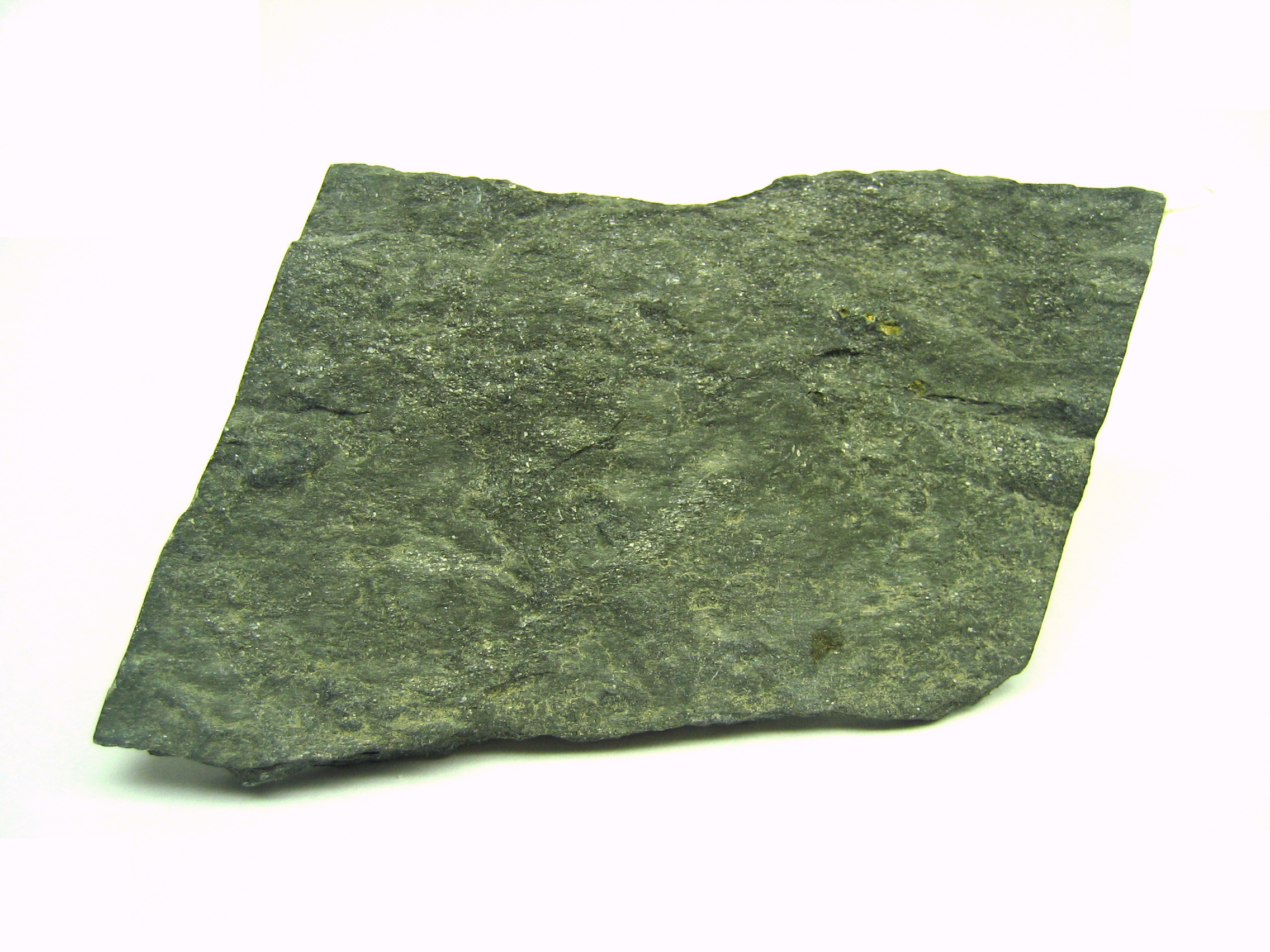
A flat stone like those used in early gold recovery
It didn't take the early miners long to discover that there was much finer gold particles in the sands of the streams as well as nuggets.  It didn't take nearly miners very long to discover they could recover this gold hidden in the sand that because of its weight would remain behind while the lighter sand particles could be washed away by running water.

A goldpan used during the California Goldrush

Man being the ingenious creature he is used a flat stone set at a slight angle to wash the sands leaving the particles of gold behind as the water took the lighter particles of sand.  Gold is 19 times heavier then water while most of the sand had a density of about three times of water.  This was an early demonstration of what is now called gravity separation, a method still in use.

Jason seizing the Golden Fleece
We are all familiar with the Greek Myth of “Jason and the Golden Fleece.  The dwellers living around the Black Sea used to put sheepskins in the bed of streams coming down from the mountains to catch any gold washed down from those same mountains.  This ancient mining method is still made use of in the bottoms of high-bankers and sluice boxes to catch gold particles.  However today they use indoor/outdoor carpet or old conveyor belts to entrap the gold.

In many countries they made use of a shallow wooden box to separate gold from sand, a practice still in use in some countries.  This was their form of a gold pan, and even today the use of square gold pans has made a big comeback.  They are touted to be the latest thing in gold recovery, but in reality they have been in use for centuries. 

The modern goldpan is a recent discovery that was first used by the 49ers during the California Goldrush.  The original goldpans were something knocked together by some nameless tinsmith that were used by the miners to pan for gold along the gold-bearing streams.


Sunday, November 28, 2010

Trace Minerals found with Gold

Forward:

There are many minerals that are found in nature with gold, one of the most common found in placer deposits is small grains of magnetite.  This and other minerals have been used to find gold that can be recovered by the use of the pan.  Other minerals have been used in locating gold in lode deposits.  It seems that gold is often found with other metal bearing minerals including iron. These are called indicator minerals.


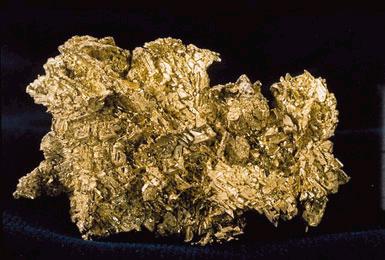
Fig. 1 Crystalline gold


Placer deposits are made from the products of erosion if they can withstand the rigors of the weathering process.  Very few minerals are hard and tough enough to survive whole and remain recognizable when they have been reduced to the size of sand grains, around 2 mm in diameter.  The most abundant mineral found in sand is quartz, SiO2 also known as silica. 

Quartz grains along with other minerals having a hardness of 7 or more on the Mohs Scale of Hardness make up what are called black sands or stream heavies in placer deposits.  Gold is another mineral found in the same environment that doesn’t depend on its hardness to survive in such an environment instead quite the opposite is true.  The ability of gold to survive is its softness and malleability allowing it to survive in placer deposits.

Most of the indicator minerals for gold are . . .

Quartz
Magnetite (Magnetic)
Hematite
Garnet
Beryl
Corundum
Feldspar (Sometimes)
Kyanite
Sillimanite
Topaz
Tourmaline
Mica (Small flakes)
Diamonds
Monazite
Zircon

There are others in the list, but these are the most likely to be encountered.


Lode gold is found in solid rock that is often discovered by tracing placer gold back to its source often using the indicator minerals found associated with gold in the gold train, a scattering of gold found away from its source rock.  The further away gold is from its source the smaller the particles become and the more widespread the individual particles of gold become.

Fig. 2 Gold in quartz

Most gold is found in quartz veins where it has been deposited from hydrothermal waters into the older quartz veins.  Much gold has been found in iron pyrite as a contaminant, and ever rarer it is sometimes discovered a “telluride” where it is combined with the element tellurium.

Many of the same minerals as found in sand can also be found in occurances of lode gold, but there are several other minerals that are just too soft to survive the rigors of weathering, they include . . .

Apatite
Calcite
Biotite Mica
Galena
Sphalarite
Chlorite
Feldspar
Staurolite
Arsenopyrite
Amphobolite
Garnet
Iron Pyrite
Pentlandite
Argentite
Granular Magnetite


These are the most common minerals associated with lode gold; there are others. 

Saturday, November 27, 2010

Raymond A. Kukkee on the Association of Biotite and Gold

As the result of a question somebody asked that was engaged in diamond core drilling on a gold deposit in Canada about the association of biotite and gold prompted me to put the question up to a friend in Ontario.  Mr. Kukkee has been a professional prospector in Ontario for more then thirty years, this is his answer. . .

“As far as I have seen,  and from what I've stumbled across  putzing around in the bush,  I would have conclude that   biotite mica can certainly  associated  with gold,  ( or gold can be found with biotite mica).  I found some, so  the association is most certainly not impossible.   Any time you find thick bands of  biotite in situ  suggests there is high-grade shearing of the rock structures  at hand  --and those contact structures are the most likely targets for gold.  On the other hand you can see flecks  biotite in gneissic rocks at times which doesn't seem to mean much. 

Many people think biotite is only black, but  it can be  black, dark brown, and even green yet! )     It's got a lot of iron in 
it, the green cast  can be  from chromium,  and of course biotite mica  itself  is  a silicate.   Logically, iron and silicates  are often associated with gold.

In prospecting  field work,  and being a persistent type,  I always looked at it this way, gold is where you find it, and it's most likely to be found in contact areas.   Where there are contacts showing   slickensides and schistose rocks  which are often  associated with gold  ( and/or  perhaps sulphide mineralization with  shearing)  , there most certainly can be biotite  in those structures, so why not use the reverse association as well?  It's a good indicator.   

 I would guess that direct gold/biotite association is more likely  found where there is physical metamorphism caused by  shearing,  as opposed to gold solutions being injected into biotitic structures after-the-fact ?   Maybe in the long-term scheme of things-- D-2 and even D3 events ( is there such a thing as a D3?) ,  maybe  that  could happen too ?  
 
 One of my old  low-grade gold finds had a  band  or dike  of rotten biotite (maybe  a foot across)  between  silicate/quartz  gold-bearing rocks  and a structure, (I interpreted it as  foot rock)  that had sections full of garnet ( the garnet-bearing layers were metamorphic rock).  The adjacent  biotite-bearing rock did carry some gold. 
That's about all I know about gold and biotite, I've probably forgotten more than that I imagine..LOL


It's interesting that prospectors might  overlook biotite as a barren mineral , it's not really very  exciting stuff, but if you happened to  find a big enough  deposit,   the vermiculite industry would be interested in it. 
China exports vermiculite for up to about  200-$400  USD/metric tonne,  at least they were  a couple of years ago.  The key is to find the stuff without any asbestos content.   I wonder if the Chinese worry about that?   the expanded vermiculite/perlite/agricultural/construction  market is huge if you can find just  the right stuff.”

That's about it,  how's the weather down there?  It quieted down here, about -10 C,,,,stopped snowing, not bad for Nov. 27th.


Friday, November 26, 2010

Biotite as an Indicator Mineral for Gold

Introduction:

There are many minerals used for gold, but until recently I was unaware of the use of biotite as an indicator mineral for gold.  It seems however that under some circumstances that is exactly what role biotite plays.  In a minerologically diverse set of amphibolite schists coming from altered metavolcanics both amphibole and biotite in the gold bears veins.  It is felt by many geologists that any gold present has been leached out of the surrounding greenstone making it younger then the rock it is contained in, this is true of the Abitibi Gold Belt and other greenstone belts that are found throughout the Canadian Shield


Biotite is a common rock forming mineral found in abundance in both igneous and metamorphic rock. The mineral is a member of the cyclosilicate family of minerals characterized by perfect cleavage parallel to the C-axis that produces flakes or thin layers.  Its fracture is indistinct and uneven. 

  • Hardness = 2.5
  • Specific Gravity = 2.9 – 3.4+ a bit above average.
  • Streak = white
  • Associated minerals: quartz, feldspars, apatite, calcite, hornblende, garnets and schorl, (a black variety of  tourmaline.)
  • Other distinguishing features = its sheets can be bent and will flex back into shape, meaning its cleavage sheets are flexible.
  • Occurrences = worldwide in igneous and metamorphic rocks.
  • Color: = Black to brown shading into yellow with weathering.
  • Luster: Vitreous to Pearly.
  • Transparency = Transparent to translucent.
  • Crystal System = monoclinic; 2/m.
  • Crystal Habits = tabular to prismatic; many of its crystals are pinicoid termination forming books of mica like muscovite another member of the cyclosilicate family.  It is a lamellar to granular in appearance giving gneisses and schists their characteristic glitter.
  • Cleavage = Perfect in one direction.
  • Fracture = Not distinct and uneven due to its cleavage.

Gold Association:

Biotite is often found associated with lode gold deposits.  Because it contains iron it might be looked on where the biotite takes the place of granular magnetite where gold is often found.  It is well known that gold colors glass red so does it also affect biotite causing the presence of gold to increase the red hue found in some biotites. 

Tuesday, November 23, 2010

A Tool for Prospecting: The Gold Cube

Introduction to the Gold Cube:

The shores of Lake Superior contain gold in the form of small flat flakes that are hard to recover this is what Mike Pung while on a prospecting trip discovered in July 2009 while mining gold from the beaches of Lake Superior.  Instead of complaining Mike decided to do something about that gold.  From this trip to Lake Superior Mike invented a new way to recover virtually 90% of the placer gold in the world called the “Gold Cube.”

Mike’s invention is not a stand alone device, but is used with other gold mining equipment such as a high-banker or sluice box.  The final cleanup from the Gold Cube is a common gold pan.  The Gold Cube is used for the clean-up at the end of a gold mining expedition or used at home to process gold bearing sand at your leisure you have brought back from your last gold mining expedition.  The Gold Cube is made from a series of nesting trays that are 5 x 12 x 15 inches that are stacked in a zigzag fashion usually three segments high.  The Gold Cube is designed to work in about 90% of all gold bearing sands in the world.        

How it was invented:

When most people think of prospectors their minds turn right away to California during the 1849 gold rush, but they have plenty of modern compatriots these are people that hold another job, but go gold prospecting or mining during their time off. 

One of these gold miners was Mike Pung while prospecting for gold along the shores of Lake Superior in Upper Michigan.  Like all small scale gold miners Mike doesn’t want to say where, because it would quickly attract other miners possibly starting a gold rush like the one in Hemlo, Ontario a few years ago that is across Lake Superior on its opposite side.

The gold that is found on the beaches of Lake Superior was brought there by the great continental glaciers having their origin in Ontario where one of the great gold provinces of the world is located, the Abitibi Gold Province.  This is where most of the placer gold found in the northern mid-western states had its origin.

While working with a high-banker and a sluice box Mike had a bright idea to make the  gold miners life easier.  The result was the invention of the Gold Cube that was dreamed-up during a prospecting trip in July, 2009. 

What it does:

The Gold Cube is not a panacea for gold mining it is just one of many tools that have been developed over the years making the gold miner’s life easier.  As a tool the Gold Cube has been designed to recover a kind of gold that occurs as small flat flakes one of the most common kinds of placer gold in the world accounting for about 90% of all the placer gold in the world.  It will allow the miner to process about 1,000 pounds of gold bearing sand per hour with a very rate of gold recovery. 

How it works:

The gold cube has three stackable components made from low density polyethylene (LDPE) whose decks are permanently covered with a type of fabric used for making conveyor belts.  This particular fabric is one of the most effective gold traps in use.  The whole unit weighs about 20 pounds making it completely portable with three sections that are stackable in a zigzag configuration.  The top section has a built in hose connection using from 800 to 1,100 gallons per hour making completely usable in the field for cleanup mining operations.

Once the unit is setup with water running the gold bearing sand is fed into the Gold Cube one scoop at a time.  The running water carries the sand down through the zigzags trapping the gold on the fabric covered decks on the way down.  The unit has a further trick for the recovery of gold before the sand and water slurry can reach the next section a baffle on the bottom of section forces the mixture to rise up before it can reach the next segment.  This has a space in its bottom where gold can settle, and the lighter sand is carried on to the next segment.  The assembled Gold Cube will process about 1,000 pounds of gold bearing sand at 8 mesh size per hour.  

After the gold sand has been run the Gold Cube is disassembled and the individual segments are washed out in a tub of water.  What little is left in the bottom of the tub is mainly gold with some other heavy minerals that can be separated with a conventional gold prospectors pan.

How to get a Gold Cube:

Gold Cubes can be bought directly from their website goldcube.net The website has an excellent video showing the Gold Cube in action as well as many other sites of interest to placer gold miners.     


Sunday, July 18, 2010

The Carlin Trend in Nevada has invisible gold

One of the premier gold producing areas in the United States is the Carlin Trend of northern Nevada. This small area covering 6 by 35 kilometers produces more gold then any other area in the US. The gold here is found associated with pyrite crystals in sizes ranging from single ions to masses containing only a few atoms of gold. This kind of gold is invisible to the naked eye and is not detectable to an ordinary microscope but becomes visible under an electron microscope.

This was country that was heavily prospected during the nineteenth century by typical prospectors with a gold pan and donkey. Although some small amount of placer gold was found these prospectors had no idea of what they were walking over since they couldn’t see much gold there. The Carlin type gold deposit is a recent phenomenon that was discovered during the 1960s by Newmont Mining although gold deposits like this were just becoming to be known during the late 1920s.

Gold in this kind of deposit is found in limestone deposits disseminated throughout the whole deposit. The gold itself is actually found as single ions or small aggregates of gold atoms that can be seen only by the use of an electron microscope. When this type of deposit is mined it involves tearing down whole mountains. It is in a mine like this that are the home of giant machines like trucks capable of holding 350 tons of ore at once and shovels that can fill one of these trucks with three shovels full.

Getting the ore out of the mine is only the beginning of a long and arduous job because the next step in the process of producing gold is crushing all the ore into pieces that do not exceed one-quarter inch in size that is then trucked to an asphalt pad covering several acres that slopes in to the center to a drain that removes any gold charged liquid. This is called the heap leaching process.

The heap leaching process works on a simple principle that gold is dissolved in a solution of alkaline cyanide. It is this solution that drains into the center of the asphalt pad for recycling onto the heap of stone once again. The cyanide solution is sprinkled onto the top of the heap using sprinklers similar to lawn sprinklers. This solution makes several circuits through the heap dissolving a small amount of gold during each circuit.

After several months the cyanide solution is finally drawn off when it is charged with dissolved gold. The gold is usually recovered from the solution by being precipitated using powdered zinc. The precipitate falls out of solution collecting on the bottom of the vat as a black powder where it is removed for further processing. The cost of recovering gold using the heap leaching process is about $320 per ounce.

References:

Carlin type gold deposits, Steve Castor, Nevada ureau of mines and geology, http://www.smedg.org.au/oct01.html

Heap Leaching, Wikipedia, http://en.wikipedia.org/wiki/Heap_leaching


Friday, July 16, 2010

Telling gold from fools gold!

The problem of identifying real gold in the field to separate it from fools gold often arise. There are several minerals that mimic gold in appearance like iron pyrite and weathered biotite mica that both have a gold-like appearance.

The easiest field test for gold is simple its density is 19 grams per cubic centimeter that is far denser then any of its mimics. Some genius in antiquity developed the “touchstone” test for gold based on what color its streak is when left on a dark colored stone. In practice this is usually a piece of black slate. Gold will leave a gold-colored streak on this stone its mimics will not. For ages this was the definitive test for gold until it was replaced by the “Purple of Cassius” test during 1685 by Andreas Cassius.

Another ancient test used frequently was based on the fact gold is malleable. You can bend it, and it keeps its bend. You can also bend weathered biotite, but unlike gold it quickly snaps back into shape. The other method based on malleable gold is hammering it into a flat sheet all of those minerals that mmimic gold are brittle and will break-up into a powder if hammered.

The acid test works because gold is unaffected by all strong acids except aqua regia, all the other minerals that mimic gold are affected by acids and are dissolved. A possible exception to this is weathered biotite mica.

The Purple of Cassius’s history goes back to the fourteenth century where it was described as an artist’s pigment however Andreas Cassius gets the credit for its invention. The principle behind the purple of Cassius is the ability of Aqua Regia a two to one mixture of concentrated nitric and hydrochloric acids to dissolve gold.

Just by its dissolution in aqua regia gold produces a rough-and-ready test because the gold charged aqua regia assumes a golden-yellow color. This test is not accurate enough however to be definitive. The purple of Cassius is however. Until the invention of the modern science of spectrometry developed during the nineteenth and twentieth century’s the purple of Cassius was the recognized definitive test for gold.

The test works by adding a few drops of the gold charged aqua regia to 100 ml of clean water, then adding twice as many drops of a solution of tin chloride to the solution. The tin will cause the gold to precipitate from the solution forming a colloid that ranges in color from pink thru dark purple. The darker the color the more gold is present.

The science of “spectroscopy” has supplanted most of the chemical tests for gold in the laboratory, but not in the field where because the various manifestations of the spectroscope are just to bulky. Many of the old chemical tests for gold and other minerals are still being used.

References:

The creation of color in eighteenth century Europe, Gutenburg.org,
http://www.gutenberg-e.org/lowengard/C_Chap33.html

Acid test (Gold), Wikipedia, http://en.wikipedia.org/wiki/Acid_test_(gold)

Spectroscopy, Wikipedia, http://en.wikipedia.org/wiki/File:Light_dispersion_conceptual_waves.gif