Total Pageviews

Showing posts with label density. Show all posts

Thursday, February 24, 2011

The Price of Tungsten reaches Historic Highs

A metal that has so many unique properties tungsten is invaluable in many industrial applications. Tungsten has the highest melting point of all the elements except carbon, and its density is higher than lead. When you dissolve tungsten in carbon you end up with a product called tungsten carbide capable of being used in the machining trade as cutting tools and drills. In the mining industry is used to manufacture carbon button drills for both petroleum and mining uses. In military applications tungsten carbide is used as the core of armor piercing artillery rounds, and rocket nozzles because it is capable of standing up to the high temperatures involved. This is another metal that the world is coming to depend on China for most of its supply even though its ores that are widespread are considered to be gangue for many other metals including gold.

A sintered tungsten bar.
Photo by Jurgii

Like rare earth metals China has lowered its export quotas for tungsten since 2008. This year it has been lowered to the extent the quota stands at 15,700 tons, this is a reduction of 300 tons over the year 2010. This has resulted in an extremely tight market for the metal along with increased demand has sent the prices as of February 23 to $50 per kilogram representing a new all-time high.

China has ceased exports of concentrate, and Rob materials, but they will export semi-refined and refined powders. In the years 2004 in five the recycling component of tungsten was only around 5%, but it has reached as high as 35%. While the Chinese limited the amount of tungsten coming to the world market the results of this recycling effort has acted as a buffer, but now it has reached the ceiling.

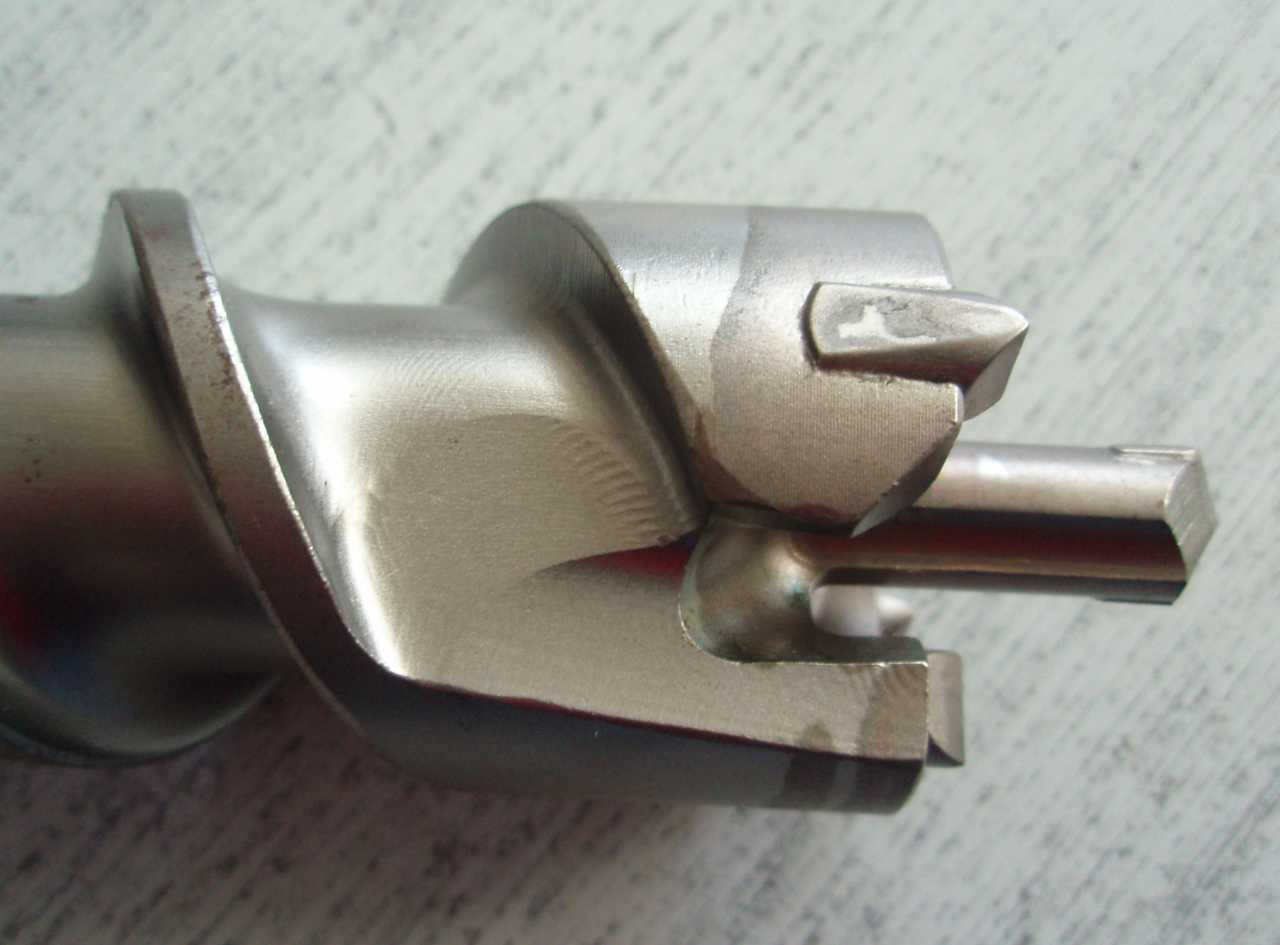
A rotary hammer drill bit with tungsten carbide inserts.

The cause of the present shortages can be laid to low prices as well as a lack of buyers that forced many tungsten miners to cease production. When the market started coming back the inventories of the model were quickly depleted. This caused the initial attempt to restock while the balance between recycled tungsten increased just as the amount of exports from China dwindled. This is caused a sudden spike in the cost of tungsten.

Friday, July 16, 2010

Telling gold from fools gold!

The problem of identifying real gold in the field to separate it from fools gold often arise. There are several minerals that mimic gold in appearance like iron pyrite and weathered biotite mica that both have a gold-like appearance.

The easiest field test for gold is simple its density is 19 grams per cubic centimeter that is far denser then any of its mimics. Some genius in antiquity developed the “touchstone” test for gold based on what color its streak is when left on a dark colored stone. In practice this is usually a piece of black slate. Gold will leave a gold-colored streak on this stone its mimics will not. For ages this was the definitive test for gold until it was replaced by the “Purple of Cassius” test during 1685 by Andreas Cassius.

Another ancient test used frequently was based on the fact gold is malleable. You can bend it, and it keeps its bend. You can also bend weathered biotite, but unlike gold it quickly snaps back into shape. The other method based on malleable gold is hammering it into a flat sheet all of those minerals that mmimic gold are brittle and will break-up into a powder if hammered.

The acid test works because gold is unaffected by all strong acids except aqua regia, all the other minerals that mimic gold are affected by acids and are dissolved. A possible exception to this is weathered biotite mica.

The Purple of Cassius’s history goes back to the fourteenth century where it was described as an artist’s pigment however Andreas Cassius gets the credit for its invention. The principle behind the purple of Cassius is the ability of Aqua Regia a two to one mixture of concentrated nitric and hydrochloric acids to dissolve gold.

Just by its dissolution in aqua regia gold produces a rough-and-ready test because the gold charged aqua regia assumes a golden-yellow color. This test is not accurate enough however to be definitive. The purple of Cassius is however. Until the invention of the modern science of spectrometry developed during the nineteenth and twentieth century’s the purple of Cassius was the recognized definitive test for gold.

The test works by adding a few drops of the gold charged aqua regia to 100 ml of clean water, then adding twice as many drops of a solution of tin chloride to the solution. The tin will cause the gold to precipitate from the solution forming a colloid that ranges in color from pink thru dark purple. The darker the color the more gold is present.

The science of “spectroscopy” has supplanted most of the chemical tests for gold in the laboratory, but not in the field where because the various manifestations of the spectroscope are just to bulky. Many of the old chemical tests for gold and other minerals are still being used.

References:

The creation of color in eighteenth century Europe, Gutenburg.org,
http://www.gutenberg-e.org/lowengard/C_Chap33.html

Acid test (Gold), Wikipedia, http://en.wikipedia.org/wiki/Acid_test_(gold)

Spectroscopy, Wikipedia, http://en.wikipedia.org/wiki/File:Light_dispersion_conceptual_waves.gif