Total Pageviews

Showing posts with label field. Show all posts

Friday, August 3, 2012

Using the Mineral Identification Chart for Identifying Gold in the Field

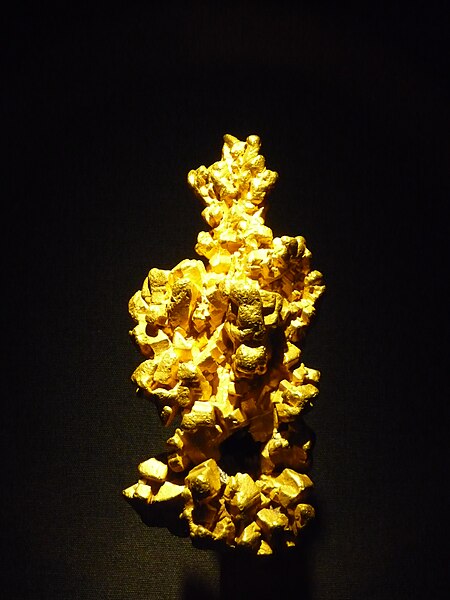
Gold Nugget
Photo by Rob Lavinsky


Sample No.
100
101
102
103
Color
Gold
Brass-Yellow
Pale Brass/Yellow
Brownish/Gold weathered
Luster
Metallic
Metallic
Metallic
Glassy
Crystal System
Isometric
Tetragonal
Isometric
Monoclinic
Composition
Au +Ag
FeCuS2
FeS2
X2Y4–6Z8O20(OH,F)4
Form
Nugget
Crystalline
Crystalline
Crystalline
Hardness
2.76
3.75 Avg.
6.25 Avg.
2.25
Streak
Gold
Greenish-Black
Greenish-Black
White
Sp. Gravity
17.8 Avg.
4.18 Avg.
4.9 Avg.
2.8
Cleavage
No
Poor/Indistinct
Poor/Indistinct
Perfect
Fracture
Hackly
Uneven
Concoidal
Micaeous
Florescent
No
No
No
No
Phosphorescent
No
No
No
No
Sectile
Yes
No
No
No
Malleable
Yes
No
No
No
Brittle
No
Yes
Yes
Elastic
Ferro-Magnetic
No
No
No
No
Para-Magnetic.
No
Yes
Yes
No
Non-Magnetic
Yes
No
No
Yes
Transparent
No
No
No
Yes
Translucent
No
No
No
No
Opaque
Yes
Yes
Yes
No
Mineral
Gold
Chalcopyrite
Iron Pyrite
Weathered Mica

As you can see from the chart gold has entirely different characteristics then “fools gold.”

According to Mindat.org gold has a specific gravity ranging from 16 to 19 depending on how pure it is.

Hardness is 2.5 to 3.

Friday, July 16, 2010

Telling gold from fools gold!

The problem of identifying real gold in the field to separate it from fools gold often arise. There are several minerals that mimic gold in appearance like iron pyrite and weathered biotite mica that both have a gold-like appearance.

The easiest field test for gold is simple its density is 19 grams per cubic centimeter that is far denser then any of its mimics. Some genius in antiquity developed the “touchstone” test for gold based on what color its streak is when left on a dark colored stone. In practice this is usually a piece of black slate. Gold will leave a gold-colored streak on this stone its mimics will not. For ages this was the definitive test for gold until it was replaced by the “Purple of Cassius” test during 1685 by Andreas Cassius.

Another ancient test used frequently was based on the fact gold is malleable. You can bend it, and it keeps its bend. You can also bend weathered biotite, but unlike gold it quickly snaps back into shape. The other method based on malleable gold is hammering it into a flat sheet all of those minerals that mmimic gold are brittle and will break-up into a powder if hammered.

The acid test works because gold is unaffected by all strong acids except aqua regia, all the other minerals that mimic gold are affected by acids and are dissolved. A possible exception to this is weathered biotite mica.

The Purple of Cassius’s history goes back to the fourteenth century where it was described as an artist’s pigment however Andreas Cassius gets the credit for its invention. The principle behind the purple of Cassius is the ability of Aqua Regia a two to one mixture of concentrated nitric and hydrochloric acids to dissolve gold.

Just by its dissolution in aqua regia gold produces a rough-and-ready test because the gold charged aqua regia assumes a golden-yellow color. This test is not accurate enough however to be definitive. The purple of Cassius is however. Until the invention of the modern science of spectrometry developed during the nineteenth and twentieth century’s the purple of Cassius was the recognized definitive test for gold.

The test works by adding a few drops of the gold charged aqua regia to 100 ml of clean water, then adding twice as many drops of a solution of tin chloride to the solution. The tin will cause the gold to precipitate from the solution forming a colloid that ranges in color from pink thru dark purple. The darker the color the more gold is present.

The science of “spectroscopy” has supplanted most of the chemical tests for gold in the laboratory, but not in the field where because the various manifestations of the spectroscope are just to bulky. Many of the old chemical tests for gold and other minerals are still being used.

References:

The creation of color in eighteenth century Europe, Gutenburg.org,
http://www.gutenberg-e.org/lowengard/C_Chap33.html

Acid test (Gold), Wikipedia, http://en.wikipedia.org/wiki/Acid_test_(gold)

Spectroscopy, Wikipedia, http://en.wikipedia.org/wiki/File:Light_dispersion_conceptual_waves.gif