Total Pageviews

Showing posts with label mineral. Show all posts

Friday, August 3, 2012

Using the Mineral Identification Chart for Identifying Gold in the Field

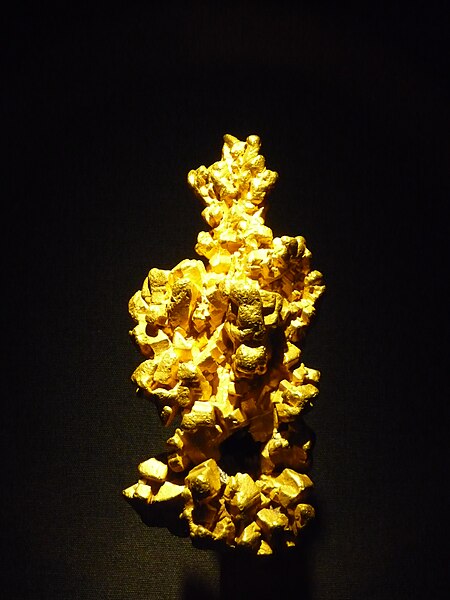
Gold Nugget
Photo by Rob Lavinsky


Sample No.
100
101
102
103
Color
Gold
Brass-Yellow
Pale Brass/Yellow
Brownish/Gold weathered
Luster
Metallic
Metallic
Metallic
Glassy
Crystal System
Isometric
Tetragonal
Isometric
Monoclinic
Composition
Au +Ag
FeCuS2
FeS2
X2Y4–6Z8O20(OH,F)4
Form
Nugget
Crystalline
Crystalline
Crystalline
Hardness
2.76
3.75 Avg.
6.25 Avg.
2.25
Streak
Gold
Greenish-Black
Greenish-Black
White
Sp. Gravity
17.8 Avg.
4.18 Avg.
4.9 Avg.
2.8
Cleavage
No
Poor/Indistinct
Poor/Indistinct
Perfect
Fracture
Hackly
Uneven
Concoidal
Micaeous
Florescent
No
No
No
No
Phosphorescent
No
No
No
No
Sectile
Yes
No
No
No
Malleable
Yes
No
No
No
Brittle
No
Yes
Yes
Elastic
Ferro-Magnetic
No
No
No
No
Para-Magnetic.
No
Yes
Yes
No
Non-Magnetic
Yes
No
No
Yes
Transparent
No
No
No
Yes
Translucent
No
No
No
No
Opaque
Yes
Yes
Yes
No
Mineral
Gold
Chalcopyrite
Iron Pyrite
Weathered Mica

As you can see from the chart gold has entirely different characteristics then “fools gold.”

According to Mindat.org gold has a specific gravity ranging from 16 to 19 depending on how pure it is.

Hardness is 2.5 to 3.

Wednesday, August 1, 2012

Mineral Identification Work Chart


You can print this out and use it for your mineral identification needs:

Mineral Identification Work Chart

Sample No.


Color


Luster


Crystal System


Composition


Form


Hardness


Streak


Sp. Gravity


Cleavage


Fracture


Florescence


Phosphorescent


Sectile


Malleable


Brittle


Ferro-Magnetic


Para-Magnetic.


Non-Magnetic


Transparent


Translucent


Opaque


Mineral


This is enough to identify four minerals.  Most of the questions can be answered by a simple yes or no.  By answering these questions you will be able to identify most minerals from a simple handbook of minerals that are available at any bookstore.  Mineral identification is done by a process of elimination. What doesn’t match the description of your mineral is not what you have found.

Sunday, July 8, 2012

Streak Plates for Mineral Identification

Black and white streak plates showing colored streaks for pyrite and rhodocrosite on black & white streak plates

One of the most important tools in the arsenal used for mineral identification is the streak plate.  This aid to mineral identification is usually a piece of unglazed porcelain. The two colors most commonly used are black and white with white used for dark colored minerals, and black used for light colored minerals.

Black colored stones are often called touchstones for testing gold that leaves a golden colored streak that when treated with nitric acid can be used to tell the karat of the gold being tested.  If you draw a line with gold on a black piece of unglazed porcelain it leaves a golden streak that can be tested by applying different concentrations of nitric acid to the streak thereby finding its karat or quality.  24 karat gold is unaffected by the acid, but as the amount of gold in a sample decreases you are able to determine how much gold there actually is in the sample.  Different karat values have different colors.  For ages this was the definitive test for gold but it has been replaces by more accurate tests based on electronics.  In the test 24 karat gold is unaffected, but lesser grades of gold show increased chemical activity.

The black streak plate is used for testing for other precious metals belonging to the platinum group metals (PGM).  In most cases it is used to test light colored minerals.  Conversely the white colored streak plate is used for testing light colored minerals.

For our prospecting and mineral collector friends we have made available a streak testing kit composed of one each black and white 2”x 2” test plates for $10.95

Individual streak plates are available for $5.75 each.

They can be ordered online with instructions for their use included.

Full set black and white: $10.95 

Streak Plate Set (B and W)


Single black streak plate $5.75: 

Black Streak Plate


Single white streak plate $5.75: 

White Streak Plate


Connecticut residents please add 6.35% sales tax.

Shipping is included on all orders.

From time to time we will be adding other items useful for the mineral collector or prospector.

Photo by Ra'ike

Sunday, October 23, 2011

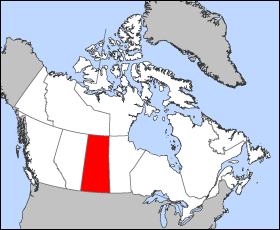
Gold Occurrences in Saskatchewan


Many of the people living in Saskatchewan don’t realize that the province is the largest producer of Uranium in Canada but also has or had some world class gold deposits that are found in the northern part of the province. The starting point for all this mining activity is the city of Saskatoon where many of these mining companies are headquartered. The potential of the province where the surface geology has barely been scratched is vast with many mineral deposits yet to be found.

Rumors of gold being found by trappers on the North Saskatchewan River started filtering out in 1859. These rumors claimed there were one ounce and larger nuggets being found were prevalent during the building of North Battleford. Flour gold can still be recovered by panning the river from Churchill west to Edmonton Alberta and beyond. Some stories even tell of seeing businessmen with their pants rolled up panning gold from the river during lunch hour around Edmonton Alberta.

Gold was first discovered in Saskatchewan near Prince Albert in 1859 in the North Saskatchewan River. The province began producing gold in small quantities in the early 1900s from placer deposits along the North Saskatchewan River and its tributaries. Today there five gold mines have been brought into production since 1987 with additional production coming from base metal mines mainly from around Flin Flon. There are an additional 200 gold occurrences in the province that are not being worked presently.

During the 1980 although gold had been produced since the early 1900s marked the first time that there had been a significant gold exploration program had been used in the province. Most of these occurrences are in the Precambrian shield area except for some small placer deposits draining off the Canadian Shield.

According to the Saskatchewan Geological Survey (SGS) there are still large areas in the Province that haven’t been explored especially in the Canadian Shield. To search for Saskatchewan occurrences of gold, use the Saskatchewan Mineral Deposits Index searchable database, or the Geological Atlas of Saskatchewan. Or open the Mineral Resource Map of Saskatchewan.http://upload.wikimedia.org/wikipedia/commons/2/2b/Saskatchewan-map.png

It has been pointed out to me by one of my Canadian prospectors whose mother was born in Battleford, SK that they mined placer gold along the Saskatchewan River flowing between Battleford and North Battleford.  Some of the miners reported they were able to recover as much as an ounce a day.

Tuesday, August 30, 2011

The National Instrument 43-101 (the NI 43-101 or the NI


This is a mineral resource scheme that is used in Canada for the public disclosure of information about mineral properties in Canada or by extension all over the world if securities in the companies promoting such properties are sold to the Canadian Public.  In practice the NI 43-101 is a strict guideline about how companies whose stock is traded in Canada can disclose both scientific and technical information about mineral projects on bourses under the supervision of the Canadian Securities Administrators.  The list includes the Toronto Stock Exchange (TSX) or the TSX Venture Exchange (TSX-V).  Many of these companies are listed on other stock exchanges outside Canada, such as the Johannesburg Stock Exchange, Australian Securities, the London Stock Exchange and all the exchanges headquartered in New York City.

There are many different types of reports that are covered including press releases, reports, the reporting of resources and reserves, presentations, oral comments and websites.  Included in the classes of minerals covered are metalliferous deposits, precious metals, coal, bulk minerals, dimension stone, precious stones and mineral sands (placer deposits).  For TSX listing purposes the NI 43-101 Technical Report would have to be accompanied by a report that is prepared in accordance with NI 43-101 specifications.

The NI 43-101 grew out of one of the biggest mining scams in history, the Bre-X (Busang) scandal to protect investors from mineral project disclosures that weren’t substantiated.  The Bre-X scandal occurred when it was claimed there were over 200,000,000 ounces of gold in the deposit or 8% of the total world’s supply.  It was all smoke and mirrors and a huge fraud.  Its chief geologist committed suicide by jumping from a helicopter over the mine-site.  The whole thing was a massive fraud with no gold.  The core samples had been salted with gold, and after analysis in an independent lab many of them proved to be scrapings from jewelry.  The investors lost their shirts!

Bluntly, the purpose of the NI 43-101 is to protect investors from misleading, erroneous or fraudulent information or claims relating to mineral properties is not published or promoted to investors on stock exchanges that are overseen by the Canadian Securities Authority.  This includes stock issued by foreign corporations selling securities in Canada.  

The NI 43-101 stipulates and codifies the form and content of a compliant report (i.e.; a report that complies with the Reporting Standard).
Prescribed disclosure within the National Instrument relates to;
§                    All disclosure of scientific or technical data, including disclosure of a mineral resource or mineral reserve, concerning a mineral project on a property material to the issuer must be based upon information prepared by or under the supervision of a qualified person

§                    What the National Instrument is to be used for, such as which types of mineral properties must be covered by a compliant report
§                    Prescribes the terminology to be used to describe various features, both geologically and financially, within the report
§                    Stipulates the type of information to be discussed and the technical data which must be portrayed, for various levels of reporting
§                    Prescribes a list of approved Competent Persons, and the definition of Groups and Associations which may qualify to certify such a person as "Qualified"
§                    Prescribes that a Qualified Person vouches for the accuracy and completeness of the contained information and the manner in which it is presented
§                    Provides guidance on reporting Historical mineral resource estimates
Proscribed disclosure within the National Instrument precludes a company from reporting;
§                    quantity, grade, or metal or mineral content of a deposit that has not been categorized as an inferred mineral resource, an indicated mineral resource, a measured mineral resource, a probable mineral reserve or a proven mineral reserve
§                    results of an economic analysis that includes inferred mineral resources
§                                allows for the potential grade, quantity and metal or mineral content of an exploration property, provided that a qualifying statement is made as to this being conceptual in nature
§                    the term preliminary feasibility study, pre-feasibility study or feasibility study when referring to a study unless the study satisfies the criteria set out in the National Instrument