Total Pageviews

Showing posts with label hydrothermal metals. Show all posts

Monday, November 29, 2010

How Gold was recovered in the past

Gold was the first metal discovered by man as it is found in nature as a pure metal that is commonly found in the beds of streams as gold nuggets.  The earliest gold miners before the dawn of history limited their production to whatever gold nuggets they were able to find.
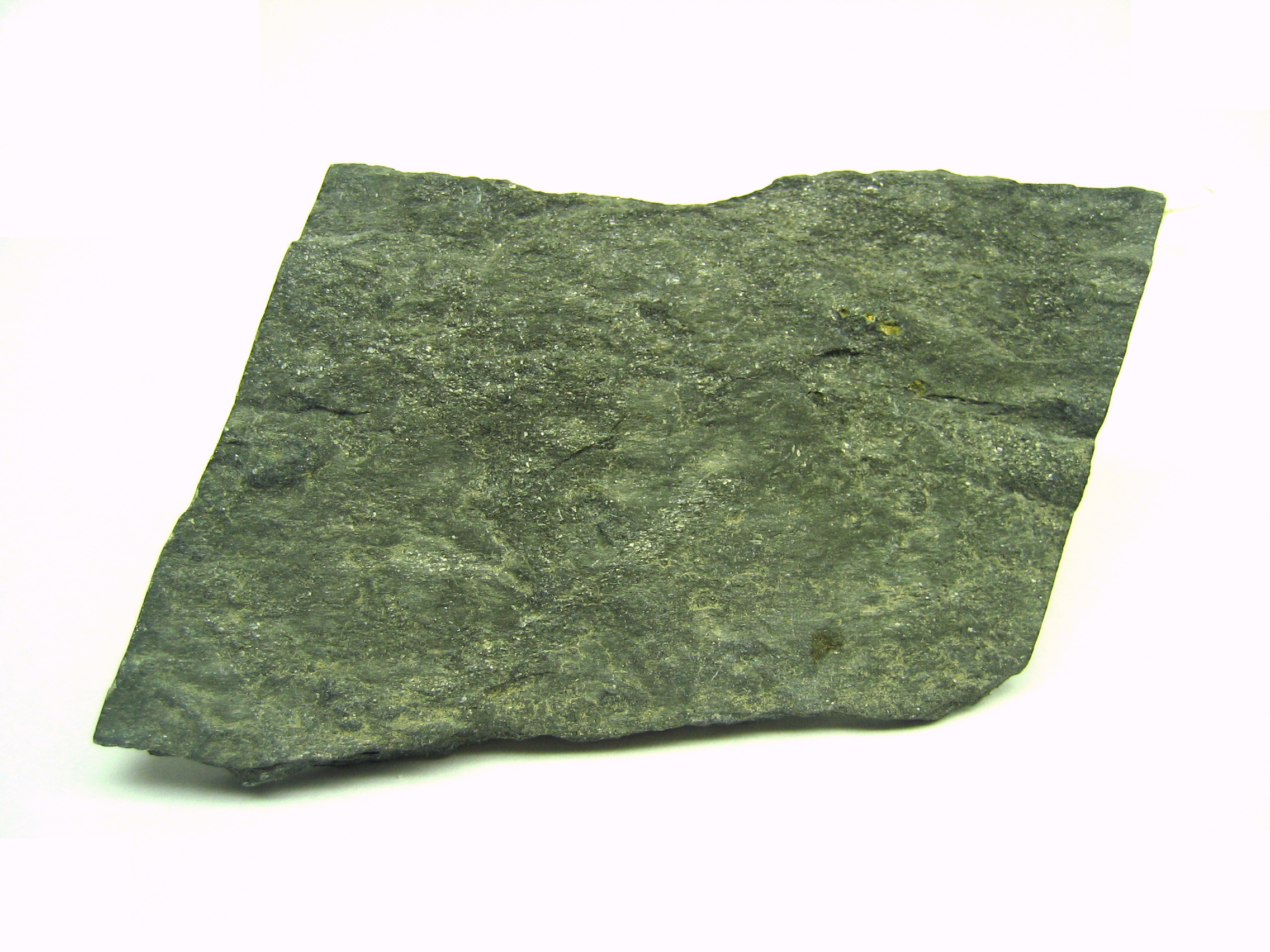
A flat stone like those used in early gold recovery
It didn't take the early miners long to discover that there was much finer gold particles in the sands of the streams as well as nuggets.  It didn't take nearly miners very long to discover they could recover this gold hidden in the sand that because of its weight would remain behind while the lighter sand particles could be washed away by running water.

A goldpan used during the California Goldrush

Man being the ingenious creature he is used a flat stone set at a slight angle to wash the sands leaving the particles of gold behind as the water took the lighter particles of sand.  Gold is 19 times heavier then water while most of the sand had a density of about three times of water.  This was an early demonstration of what is now called gravity separation, a method still in use.

Jason seizing the Golden Fleece
We are all familiar with the Greek Myth of “Jason and the Golden Fleece.  The dwellers living around the Black Sea used to put sheepskins in the bed of streams coming down from the mountains to catch any gold washed down from those same mountains.  This ancient mining method is still made use of in the bottoms of high-bankers and sluice boxes to catch gold particles.  However today they use indoor/outdoor carpet or old conveyor belts to entrap the gold.

In many countries they made use of a shallow wooden box to separate gold from sand, a practice still in use in some countries.  This was their form of a gold pan, and even today the use of square gold pans has made a big comeback.  They are touted to be the latest thing in gold recovery, but in reality they have been in use for centuries. 

The modern goldpan is a recent discovery that was first used by the 49ers during the California Goldrush.  The original goldpans were something knocked together by some nameless tinsmith that were used by the miners to pan for gold along the gold-bearing streams.


Tuesday, July 13, 2010

Gold in quartz veins

Gold is often found associated with milky hydrothermal quartz that is called “bull quartz. Although gold has many other associations with base metals this is its association with iron pyrite (fool’s gold). Gold is found with many other metals and ores. One common association is with iron ore where it is often found in association with granular magnetite. This is a common occurrence in places like Nova Scotia and the Cornwall, Pennsylvania iron mines.

The common way gold in quartz is found is when hydrothermal water with both gold and quartz percolate up through the fissures in bedrock that is hot enough to hold both minerals dissolved in solution. Both minerals drop out of solution when the water cools. Quartz falls out of the solution first. The speed of the dissolution can be judged by the size of the quartz crystals. Basically, the larger the crystals the slower the hot fluids cooled. Gold is one of the last minerals that to come out solution. Gold is one of the last minerals the last minerals to be deposited out of solution.

There are several other minerals that are likely to fall out of the solution first, quartz is only the first of many. Other common minerals that are apt to be deposited ahead of gold are galena lead sulfide, sphalarite zinc sulfide and bornite a sulfide of copper and iron that is called peacock ore. Gold is usually found as an encrustation on other minerals that form in the spaces in the quartz matrix. Quartz containing gold is called by miner’s “bull quartz” a milky quartz having the crystal faces obscured in the body of the rock.

They are there none-the-less you just can’t see them with the naked eye however, they can be seen by using an X-ray Diffraction Spectrometer. These are usually called “Powder Cameras” by the geologists that use them. They work by mixing the powdered mineral with caladium, a mixture of acetone and nitrocellulose. They are then formed into small rods containing the powdered mineral that are placed in the X-ray beam. By photographing these rods with a special X-ray camera using a photographic plate that shows the resulting diffraction patterns of each mineral. Every mineral has a distinctive diffraction pattern that is used to identify it just like fingerprints.

Gold can be found in just about any rock, sometimes in specks that are too small to be seen with a conventional microscope. They are only seen with an electron microscope. These deposits are diffused into the rock and weren’t discovered until the 1970s. These deposits hold enough gold as tiny specks to be economically viable.

One such mine is the Carlin mine operated by Newmont Mining in northern Nevada. Another mine is one the author tried to get control of in Mexico years ago where the gold was diffused through marble as equally tiny specks. We discovered the deposit had the potential of producing several billion dollars worth of gold, except the owners were not willing to sell the property.

References:

Gold Reef Mining, Wikipedia, http://en.wikipedia.org/wiki/Quartz_reef_mining

Igneous Geology of the Carlin Trend, Michael W. Ressel, et al, Geoscience World, http://econgeol.geoscienceworld.org/cgi/content/abstract/101/2/347

gold,