Total Pageviews

Showing posts with label acid mine drainage. Show all posts

Thursday, January 20, 2011

Gold Occurrences in Rhode Island

Gold occurrences in Rhode Island are not the subject of many reports, however there is the story of the Durfee Hill Gold Mine in Glocester, Rhode Island where there are reports of the remains of a stamping mill and cyanide vats on the site.  There are also some mine shafts that are sunk into the ground nearby.  There are no apparent reports of gold in quartz veins. There are however, reports of gold with pyrite in the quartz veins. The reports of the latter is from Kent County, to the west of Warwick.

Gold bearing pyrite crystals in quartz.
Photo by Rob Lavinsky

Gold that occurs in Rhode Island in three different types of deposits:

One type of gold is found in veins of hydrothermal deposits where the gold often occurs as the native metal in quartz veins.

The second type of gold is often found in his placer deposits in sand and gravel on the beds of streams or on beaches fronting on the ocean. Gold is often panned from this type of deposits by taking advantage of its great density in relation to other minerals. Gold is 19.3 times as dense as water and most of the minerals that occurs with our only three times as dense as water. Placer gold can be found in virtually any stream or river in the world in quantities large enough to see what it looks like.
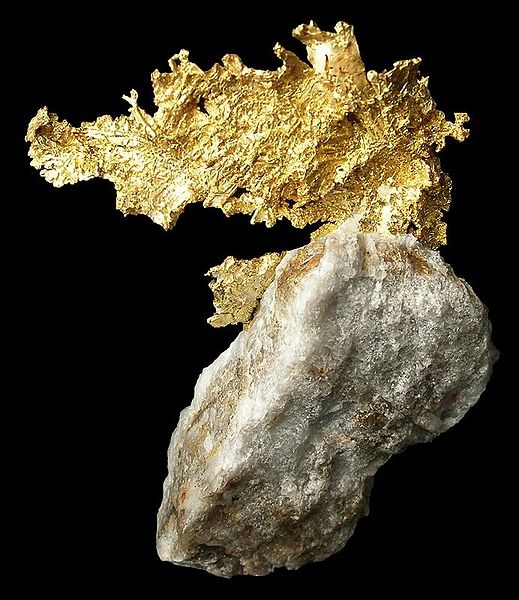
Gold in quartz.
Photo by Rob Lavinsky

In a 1927 issue of the American Mineralogist by Lloyd Fisher and Charles G. Doll of Brown University in volume 12, pages 427 to 436 you can find a listing of the different minerals that are found in the state of Rhode Island.

This is what they said about the area around Durfee Hill, “Glocester (Durfee Hill) epidote, molybdenite, pyrite and phyrottite are present.


The third type of deposits are found in generally associated with pyrite and other metal sulfides where the gold actually appears as a thin film between the crystals of sulfide. 

Another area where gold was then reported in the past is around Johnstown where there are also some old mine workings were a dibase dike cuts across the granites and schists. This is another area that still has old cyanide vats and sluice boxes. When the local chemists reports that the locality has shown a trace of platinum group metals in the mine tailings.

Finally there has been Gold reported at the old South Foster gold mine locality where gold was produced mainly from pyriteferous quartz veins.  There are said to be still visible at this locality four open pits that are now filled with water along with the ruins of a large stamp mill.

One of the areas in Newport, Rhode Island, Purgatory Cliffs, has attracted the attention of the author because the cliffs are made out of a quartz pebble conglomerate with crystals of magnetite in the binding material between the pebbles. There is often an association between gold and magnetite. Another area is found in the black sands of the beaches in southern Rhode Island west of Narragansett Bay.

Although these last places are strictly speculative the geology is right for finding gold, and as far as that goes the entire set of rocks along the western side of Rhode Island where borders with Connecticut is another area that geologically is a good place to search for gold especially in placer deposits in the streambeds of the area.

Thursday, January 6, 2011

The Environmental Consequences of Buying or Selling a Gold Mining Claim

The environmental consequences of buying or selling a gold claim is basically the same as they are for any other piece of commercial property.  If the sale is between two parties without any money coming from a bank or other mortgage company the sale can go forward with no environmental work other then a due diligence investigation that should be undertaken in the name of buyer prudence.  If it requires any bank or other source of financing they will in the normal course of business require at least an Environmental Site Assessment Phase I of the property.  If there are no environmental infractions present the Phase I assessment will suffice.  If environmental infractions are discovered in the Phase I assessment will have to be addressed using a Phase II assessment that is used to determine if in fact an environmental infraction has occurred using samples of soil and ground water taken from the site.

An example of acid mine drainage.

If it is determined from the results of the Phase II assessment the environmental investigation will proceed to a Phase III assessment that determines the extent of the environmental infraction and develop a plan for remediating the infraction.

The final step of the remediation process where various techniques are used to eliminate the infraction.  Some of these processes involve the removal of contaminated soil from the site and placing it in a secured landfill.  If the contaminant is an organic chemical the offending chemical can be removed by igniting the soil in a special furnace or incorporated into blacktop.  Ground water is usually remediated by passing it through filters or an ion exchange resin, and is often pumped back into the ground using an injection well.

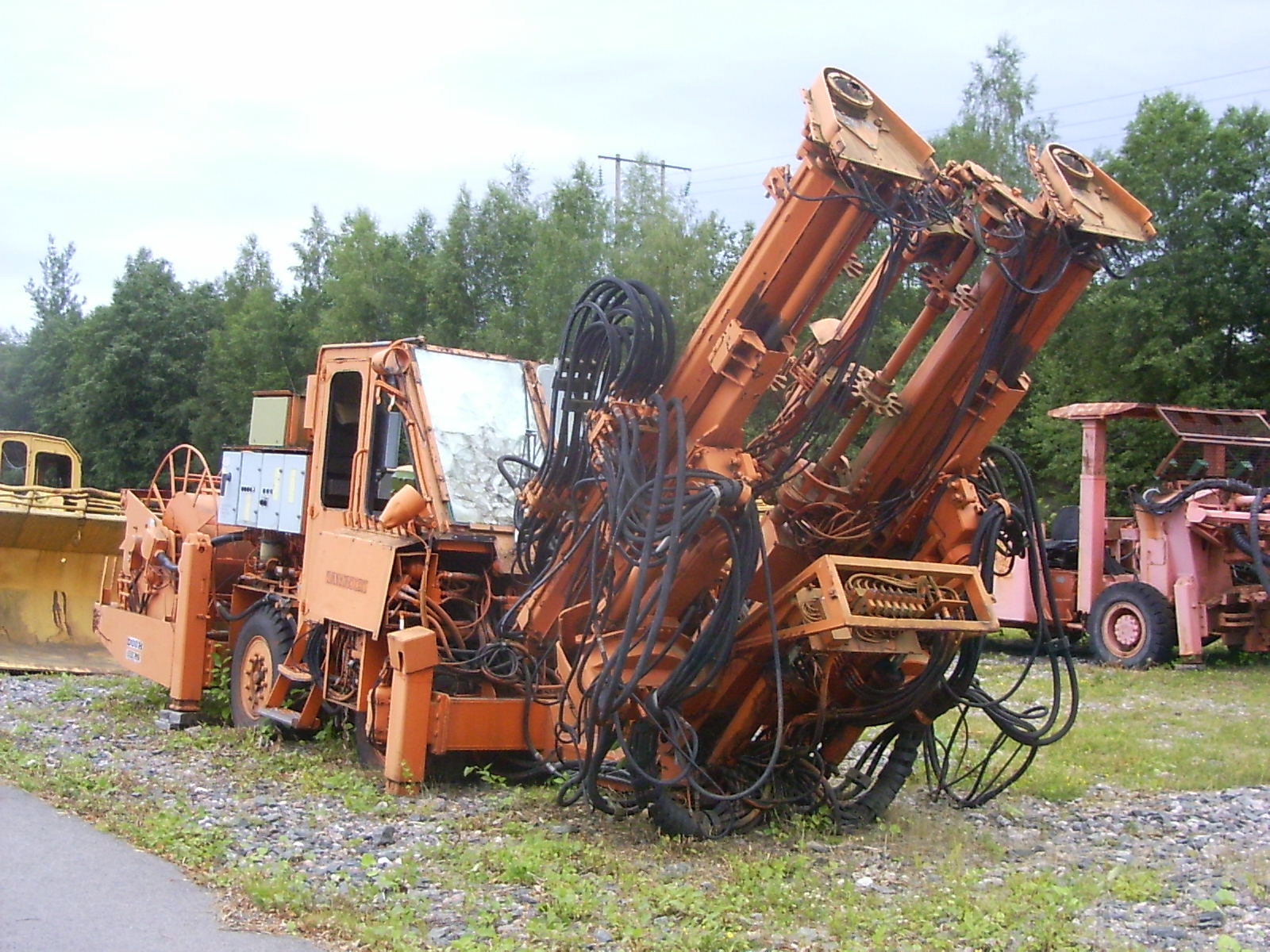
When mining equipment is abandoned it becomes a source of environmental contamination.

The law concerning environmental issues varies according to location.  In the United States the law concerning environmental site assessments is usually enforced by the banks although the individual states are the author of local laws following the environmental laws of the United States. 

The most likely contaminants to be released into the environment resulting from mining activity is petroleum products caused by equipment failure or leaking underground storage tanks.  Further contamination can be caused by the chemicals used to process gold ore including cyanide and mercury.  In its aftermath mining can also cause environmental contamination by acid mine drainage and heavy metal salts.

An aerial view of the Big Pit at Kalgoorlie, Australia showing heaps of mine tailings.


This document was prepared from knowledge gained in over thirty years by the author in conduction Environmental Site Assessments and directing numerous remediation projects involving commercial and industrial properties.  In addition the author is certified by the State of Connecticut as an Environmental Analyst Grades I, II and III.

This is not to be construed as legal advice as we are not attorneys; consult with a lawyer in your jurisdiction for any legal opinions.

Copyright 2011 by John Carter all rights reserved.