Total Pageviews

Showing posts with label Connecticut. Show all posts

Saturday, June 23, 2012

Tales of the Devil: Was it really a Gold Mine?


This is the end of the tunnel and with all the quartz veins exposed it sure makes you a believer, but subsequent tests failed to show any concentration of gold that exceeded the normal background level of gold.
Photo by Landowner


The question really arises is this thing actually a mine? The history of the area suggests that it may be something else; a tunnel excavated for the purpose of aging cheddar cheese. During the early 19th century the cheddar cheese production in the United States was in Goshen, Connecticut and spread out over several other towns in Western Connecticut. The most popular cheese that was produced was made in the shape of a pineapple that at the time was called pineapple cheese. This cheese whether it was made to look like a pineapple or simply cheddar cheese wheels. This cheese was so popular that it enjoyed a worldwide distribution being exported to the Caribbean, Europe and the Far East notably China.

The shaft and tunnel were recently rediscovered revealing a mine shaft that was about 40 feet deep with a tunnel going off from the bottom of the shaft that was 6 feet wide, 7 feet high and 10 feet deep. At the time of its discovery we all thought it was probably an abandoned mine but subsequent work that was performed on the mine with an x-ray fluorescence spectrometer (XRF) reveals no apparent minerals associated with gold or gold in this shaft and tunnel. So this left the question of what were they mining?

John Carter brought up the possibility that this was actually used for aging cheese. This hypothesis brought up one major objection from the landowner, and so far the other investigators are not aware of this possibility that what we thought was a mine was actually an underground tunnel used for aging cheddar cheese.

The major objection was the simple fact that this alleged mine was making quite a bit of water into the tunnel as well as part of the shaft. At first this seemed like a valid objection but further research reveals that they had hoses capable of carrying water clear back to 400 BC. Depending on the age of this feature it could have used hose made from leather that was secured by copper rivets, or a type of hose made from knitted linen fibers that were invented in the early 1800s. Either of these hoses was capable of being used as a siphon that would've kept the water in the tunnel under control.

In the early 1800s cheddar cheese was covered by a thin layer of cotton cloth then covered with lard causing the cheese to become waterproof. At the same time this covering of cotton cloth and lard allowed the gases that were being generated as the cheese aged to escape through the covering that kept the water from coming back into the cheese as it aged. However the cheese still had to be aged in a cool dry place which this was far from; it made water that was capable of filling the shaft about three quarters full. Without continually pumping the shaft and tunnel this complex was useless.

There was another kind of pump that have been used since ancient times called the Archimedes screw it used a helical screw turning inside a tight fitting to that was capable of raising water up to 10 m or close to 40 feet the depth of the shaft. It is possible they used a device like this for keeping the water out of the tunnel and shaft.

Had the complex been able to be used for aging cheese there would have been a series of shelves for storing the cheese, but once again these were missing so it has to be assumed that the whole complex was abandoned once the diggers were convinced it was useless for aging cheese.  The fact that further work was intended is attested to by a series of drill holes inside the tunnel.  Ultimately the vast amount of water entering the complex caused its abandonment.  This waterflow has been estimated to exceed twenty gallons per minute.  It would have been a pretty good well, but no place to store cheese.

Wednesday, June 6, 2012

Tales of the Devil: The Whodunit Mine


Typical Landscape at the Whodunit Mine
Photo by P. L. Chadwick


No this isn’t a tale of the nether regions it is the story about the discovery of a long abandoned mine in western Connecticut.  For lack of a better name we might as well call it the “Whodunit Mine.”  The mine is on private property, and its owner is in the business of raising big dogs.  He will loose the hounds on anyone who goes trespassing on his property, so let that be a warning.

The old mine was discovered by the owner when he wanted the zoning classification of his property changed from residential to farming.  There were several old pits in the ground the zoning enforcement officer wanted filled in as part of the change.  This got the curiosity of the owner that led to the discovery of several acres covered with pits and several hundred feet of trenching giving the property the appearance of a battlefield.

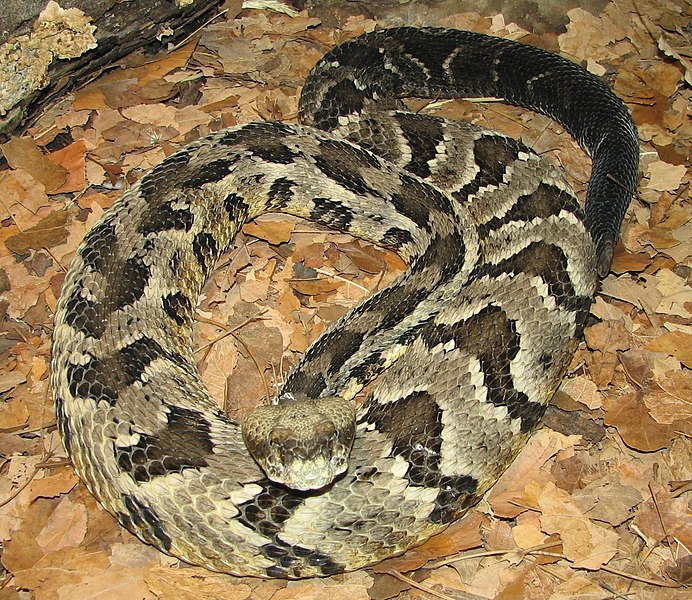
The site also contains timber rattlesnakes
Photo by Trisha M. Shears


Somewhere in the process last April 2012 he contacted me because I operate a school for prospectors teaching the fundamentals of prospecting that I try to tailor to the individual.  The owner already knew how to pan for gold, what he was really curious about was what he had on his property.  We made a trip to the site where we looked the site over and discovered plenty of evidence of prior mining activity with many prospecting pits and several hundred feet of trenching.  This activity covered several acres of the property.  From prior experience I know what this kind of work costs in money and labor.

In the past I had some involvement with Robert J. Altamura who worked for the Connecticut Geological and Natural History Survey when he prepared a map of the Bedrock Mines and Quarries of Connecticut.  Since I had a copy of the map and its accompanying booklet I checked and the site wasn’t on the map.  With that I contacted Margaret Thomas the state geologist and told her I’d found an unlisted mine.

Another creepy-crawler found on the property is the copperhead
Photo by Trisha M. Shears


Because the owner was a contractor he had some construction equipment including a backhoe that he used to explore the old mine.  He called me on the phone one morning in early May to tell me he had dug into what turned out to be an apparent mineshaft and had discovered many old bottles and other artifacts.  I told him to stop digging and I’d contact the state archeologist.  The state archaeologist told me he couldn’t come until May 24.

In the meantime I also contacted the Yale Peabody Museum who put me in touch with their mineral collection manager.  A bit later I contacted the geology department chairman at Hofstra University a personal friend to tell him what we had discovered.  Ultimately both the mineral manager and the chairman of the department agreed to come to the site on May 24.

What happened on the 24th was the meeting of a blue ribbon panel consisting of one archaeologist, three geologists and two engineers.  The net result of the meeting was we couldn’t determine what they had been mining.

The mine contains the following minerals: amphibolite, beryl, corundum, ilmenite, kyanite magnetite, pyrites talc and other minerals that are yet to be identified.  We also found one small speck of gold.

My own theory of this is:

The digging probably happened in the 1850’s after somebody came back from the California Gold Rush and decided there was gold on this property and went looking for it.  The debris filling the mineshaft has been dated to the post Civil War Era by the state archaeologist.  The mineshaft yielded what appears to be a cast iron ladle that could be used in assay work.

This tale is going to be continued!

Tuesday, May 22, 2012

The Mine that made America


Portrait of George Washington - Peale 1776


By the looks of the place today you’d never suspect that Salisbury, Connecticut made it possible for us to be a free nation rather then a colony of Great Britain this was because nestled in the hills of Salisbury was a deposit of iron ore so rich they mined it for almost two centuries from 1736 to 1923 when the mine suddenly was flooded by rushing waters.  The mine itself never did produce any gold but it did produce the best iron ore in the world, and this iron was perfectly suited for the production of cannon.  In fact they called it ordnance iron.

The iron deposits at this mine called “Ore Hill” hundreds of millions of years ago when an island arc formed in the Iapetus Ocean, the father of the Atlantic Ocean, off the east coast of what then was North America.  From these volcanoes rained eruption debris that rained down onto a vast coral reef that fringed North America forming a sediment made up of volcanic ejecta and weathering products from island arc.  The island arc was very similar to today’s Japan that formed a back arc basin between the islands and the mainland similar to today’s Sea of Japan.

This sediment was very rich in iron, and was also interbedded with limestone that eventually underwent metamorphism during the Taconic Orogeny forming the Walloomsac formation of schist stretching along the eastern border of New York State from Vermont to New York City where it underlies the New York Stock Exchange.  Throughout its length this formation is studded with rich iron deposits like plums in a plum pudding.  There were many iron mines along its length with the largest at Ore Hill in Salisbury, Connecticut.  Year’s later scientists from the Smithsonian Institute in Washington declared the ore from Ore Hill was the finest ore in the world.

It was in 1728 when a group of surveyors from Hartford that first noted the presence of iron in Salisbury, but it was Ezekiel Ashley and John Pell from nearby Sheffield, Massachusetts that discovered the ore on Ore Hill in 1731.  Mining began almost immediately with the ore going to a furnace established by Robert Livingstone in Ancram, New York seven miles to the north.

The Salisbury blast furnace was built by Ethan Allen of Ticonderoga fame, Samuel and Elisha Forbes and Col. John Hazeltine built the first blast furnace in Salisbury at the outlet of the lake in Lakeville.  The furnace changed hands several times finally falling into the hands of Richard Smith an Englishman who also had a “Finery” in Robertsville, Connecticut, the first place in America to make steel on a commercial scale.  Smith was in England when the Revolutionary War broke out forcing him to stay there until the war was over.

The Connecticut Colony seized the mine and furnace in the name of the Committee of Public Safety and the governor of Connecticut, Jonathon Trumbell persuaded Squire Samuel Forbes to come out of retirement to cast cannon for the colonial army.  Squire Forbes agreed, and in the first six months of the war cast 850 tons of cast iron cannon for
George Washington.  Throughout the war the Salisbury Furnace cast around 850 cannon ranging in size from four pounders to thirty-four pounders.  None of them ever burst!  The rest of the colonies produced six cannon most of which burst when they were fired.  

Molly Pitcher swabbing a cannon made at Salisbury, Connecticut - The Arsenal of Democracy


When George Washington took over command of the Continental Army there were a total of six cannon in the whole thirteen colonies, and they were up against the British Army the most powerful in the world at the time that had plenty of cannon of all sizes.  Were it not for the effort of the iron workers from Salisbury the chances of beating the British Army and gaining independence were virtually nil.

The mine went on to produce the guns and fittings for the USS Constellation and Constitution that fought in the war of 1812.  The mine produced the iron for the US Arsenals at Springfield, Massachusetts and Harpers Ferry, Virginia.  Later the same mine produced the iron that made railroad wheels that put the entire nation on wheels, and a good share of the world too.  The final moments for the mine were when it flooded with a sudden inrush of water in 1923.  Today the mine is a small pond on the right side of Rt. 44 between Lakeville and Millerton, New York.

For a more detailed discussion see: http://salisburyirondistrict.blogspot.com/


Sunday, May 20, 2012

The Copper Mine in Bristol Connecticut

Bornite was the principal ore produced at Bristol, there are museum class specimens all over the world from this source.
Photo by Ra'ike

The copper mine at Bristol, Connecticut started in 1937 and continued in dribs and drabs until 1953.  It is a study in how not to operate a mine.  The owners always managed to spend more of their shareowners money then they could get out of the mine.  This mine was located along the contact between the Mesozoic sandstones of the Hartford Basin and the schists of the western uplands of Connecticut.  World class specimens of chalcocite and bornite much to the consternation of the operators were collected at the mine that are still found in many museums and in the hands of private collectors.

The early part of the 19th century was marked by many mines in Connecticut, the latest survey by the Connecticut Geological and Natural History pegs the number at over six-hundred, an online source has raised this to 1,246 mines.  The first mention of this mine was by Shepard in 1837, but later it was noted by Percival in 1842.  The mine itself lies about 4 miles northwest of the center of Bristol at an elevation of around 350 feet.

Although work on the mine began in 1837 it was worked in such a desultory way that only about 125 tons were shipped to England for refining.  From 1847 to 1853 the mine was at its most active and was more vigorously worked.  It was during this period that over half a million dollars were spent developing the mine.  The workings were extended to 240 feet and to 500 feet along the vein.  This and other tunnels gave the mine a maximum width of 120 feet.

During the same period the mine produced nearly $200,000 worth of ore weighing 2,200 tons with the picked ore having a copper content of 33%.  For years the mine was abandoned after the collapse of a heap of mine tailings destroyed a dam on Poland Creek precipitating a wall of water that almost wrecked the Forestville part of Bristol.

The mine was originally discovered by a farmer, one Theophilus Botsford became curious about why a spring on his property ran green, so he took a plow and team and uncovered a vein of copper ore.  Sure enough this was the source of the green water that stained the rocks in Poland Creek and killed the vegetation along the brook.  Finding the copper ore satisfied his curiosity and it wasn’t until 1800 when Asa Hooker, a brass founder in Bristol leased the land from the widow Sarah Yale.  She was a descendent of the founder of Yale University in New Haven.  She made a deal to be paid a percentage of any ore mined, but there was little mining done until 1836 long after she had died.

After 1836 the mine was worked on a large scale but never made a profit eventually falling into the hands of John M. Woolsey of Yale.  Under the hands of Prof. Silliman who was a good professor, but a lousy miner caused the most extravagant schemes and experiments were undertaken.  Hundreds of thousands of dollars were poured into the mine with far less coming out with the Bristol Mining Company that was incorporated in 1855 was bankrupt by 1857.

According to the Tunxis Valley Herald for December 17, 1886.

"The collapse which came was caused by the grossest mismanagement, and
not from any fault in the mine. The manager's crowning impulse seems to have
been to spend the most money in the shortest possible time. Large and expensive
buildings were for some trivial cause torn down and used for fuel, and new ones
erected which if reports are true, were liable to meet a similar fate.
"The agent resided in Farmington Street and kept eight or ten fast horses
at his stables in Farmington and others at the mine. The superintendent occupied the house near the mine. The office furniture and fittings were of an expensive style. Once a dance was given in the store room which had been provided with steam pipes for heating it on this occasion as it was winter. Sibley*s Band, of Hartford, the best in the State at that time, was hired for $100; the supper was a costly one, wine of several kinds being  furnished. That this wine was not an imitation may be  inferred  from the  f a ct that those at the  supper table amused themselves by throwing turkeys and chickens at each other.”

The mine also had gold that was associated with the copper ores.

Thursday, May 17, 2012

John Winthrop the Younger and the Golden Rings


John Winthrop the Younger - Public Domain from the CT State Library


Thomas Jefferson, the third President of the United States is credited with finding the first gold on his estates in Virginia in 1797, but the first gold in the Colonies was discovered in Connecticut by John Winthrop the Younger, Connecticut’s first governor in the mid-1600s.  John had a great interest in metallurgy and was one of the driving spirits behind the Saugus Iron Works in Saugus, Massachusetts.  During this period he tried to interest the settlers of Massachusetts in the mineral wealth of the colony.

In 1635 after he returned from England he went to the Connecticut Colony as governor of Connecticut for one year under the Saye and Sele Patent where he sent out a party to build a fort at Saybrook at the mouth of the Connecticut River.  After a year he returned to Massachusetts where he studied science for a time.  He then returned to Connecticut when he received title to lands in 1645 to lands in south-eastern Connecticut where he founded in 1646 New London.

In 1662 he obtained in England the charter from the Crown that united the two colonies of Connecticut and New Haven.  At the time he was also the governor of Connecticut and in 1675 one of the commissioners of the United Colonies of New England.

Winthrop was also a member of the Royal Society in London to which he submitted two papers, “Some Natural Curiosities of New England” and “Description, Culture and Use of Maize.”  It was in the first that he recounted his trip to Great Mountain in Cobalt, Connecticut with his man-servant where for a period of three weeks they mined gold then cast the proceeds of their mining trip into gold rings.

It is quite possible that J.R.R. Tolkien heard about the gold rings Winthrop cast and incorporated the tale into his Trilogy “The Lord of the Rings.”  Tolkien was also a member of the Royal Society, and had access to their archives.

In 1984 Anthony Philpotts a geology professor from the University of Connecticut and his class discovered gold at the cobalt mine in Cobalt that assayed at 6 ounces per ton in roughly the same area as where Winthrop had worked almost three hundred years ago.  The gold was found in a quartzite formation that extends from Great Mountain, Connecticut northwards to western New Hampshire.    

According to the president of Yale Stiles, “Winthrop came back to New London with plenty of gold.”

Sunday, April 10, 2011

Towns in Connecticut where Gold has been Reported

Although today there isn’t much interest in the gold that has been found in Connecticut, but during the 19th century there was more interest in mining in the state.  This listing of gold is from a booklet published by the Connecticut Geological and Natural History Survey in 1951 as Bulletin No. 77 by Julian A. Sohon and edited by Alexander N. Winchell a mineralogy professor at Yale.  For many of us that are interested in geology and minerals this thin booklet has acted as a bible for many years; today it is out of print, but is available in the reference section of many libraries throughout the state.

The Connecticut State Capital's Dome that reportedly is covered by gold that was mined in Connecticut.

This is a list of the towns reporting gold in addition the author has found gold in additional towns in western Connecticut, these towns will be marked with an *.

Barkhamsted*              Bristol              Cheshire           Cobalt              E. Hampton

East Litchfield* Glastonbury*    Harwinton*      Litchfield          Middletown

Munro                          Montville          Mt. Caramel     New Britain*    New Hartford*

New Haven                  Newtown         Portland*         Ridgefield         Sandy Hook

Southbury                     Thomaston*     West Haven     Woodbury

If you see any streets or roads in your travels then have the name “mine” in them you had better find out why. A good example of this is the town of Canton where there was really a silver mine in the 19th century just north of Route 44. There is a full write up about the old silver mine in the history of Canton that is kept at the Canton Historical Society. You can gather a great deal of material about old mines and the mineral resources of Connecticut by reading town histories.

Although gold is a metal that attracts many people it is not the only mineral that is found in Connecticut that exceeds the value. Virtually every river in the state contains a small amount of gold capable of being recovered with a gold pan.

Saturday, March 26, 2011

Learn how to Prospect for Gold

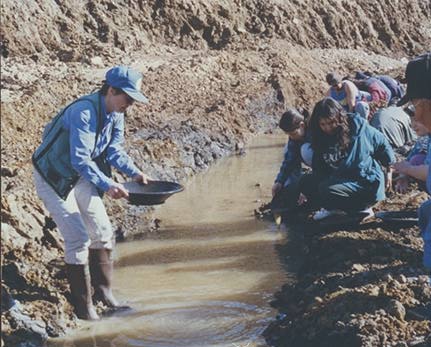
Panning for Gold


We are going to teach a class on prospecting for placer and lode gold at the Log House Restaurant on US Route 44 in Barkhamsted, Connecticut on May 21, 2011 starting at 9:00 AM and lasting until 3:00 PM.  This class will give you information about both placer and lode gold prospecting methods.  Emphasis will be on placer gold although a great deal of information will also be taught concerning lode gold in NW Connecticut that has some of the most complicated geology in the world.

In addition to the classroom studies we will spend part of our time in the field examining some of the situations and places where gold can be found.  We will also teach you some of the tricks of the trade. 

Each participant in the class will receive a Garrett Gravity Trap Gold Panning Kit, Model #1651-300 as part of his tuition fee.  This is a $29.95 value.

Please make all checks payable to John Carter.  Payments can be made by check or money order or by credit card via PayPal at: geotekllc@gmail.com 

Address:

John Carter
11 Meeting House Rd.
Suite 21a
Barkhamsted, CT 06063
Tel:  860-469-4804
Cell: 860-605-0475

About your instructor:

John Carter has been an avid prospector since childhood having prospected extensively in the gold bearing areas of Canada notably in the Abitibi Gold Province of Quebec and Ontario.  He also has prospected for placer deposits throughout New England and Maritime Canada.  John holds a degree in geology and has been a guest lecturer at the New School in New York, and Northwestern Connecticut Community College in Winsted, CT.  John has also been an army drill sergeant, so watch your step or he will write your name down.  He underwent 8 levels of instruction in the Army Instructors School, and is rated an expert in instruction. 

About the area:

Northwestern Connecticut contains some of the most complicated geology in the world, and although the gold deposits are sparse they are enough for you too see what gold looks like.  The paucity of placer deposits in the area may have been caused by the last period of glaciation having swept most of the potential gold and carried it further south to Long Island.  There has been at least one gold rush in East Litchfield when they were building the railroad bridge across Spruce Brook in 1849.  We had our own 49ers, but gold has also been found in Leadmine Brook in Thomaston, and along the Naugatuck River from Winchester South.  Gold is also found in the Farmington and Housatonic Rivers and their tributaries. 

Lode gold in the area:

Lode gold has also been found in the general area of Northwestern Connecticut by John Carter in East Litchfield during the construction of Rt. 8.  The fact that there are few reports of lode gold here is more apt to be related to lack of looking rather then lack of gold. Finding lode gold is much more difficult then finding placer gold.

Registration Form

Cutoff Here

Name: ________________________________

Address 1: _____________________________

Address 2. _____________________________

City: __________________________________

State: ___________ Zip: ___________

Tel: _________________

E-mail: _________________________

Please enclose registration fee or E-mail registration form to geotekllc@gmail.com

Tuesday, March 1, 2011

Is there Gold in Northwest Connecticut?

The possibility of gold being found in northwestern Connecticut is much higher than most people think. The mineralogy of the older pre-Cambrian rocks that make up the core of the Northern Appalachians outcrops into areas within Litchfield County. These ancient rocks are found in several towns in the county in two different groups. One group includes the towns of Colebrook, Norfolk, Winsted and Torrington. The other group includes the towns of Cornwall, Goshen, Kent, and New Milford.

Bedrock of the Winsted, Connecticut Quadrangle.  The magnetite deposits are mainly found in the member marked Ygh.

Rocks of pre-Cambrian age that were laid down during the Grenville orogeny around 1.2 billion years ago crop out along the crest of the Appalachian Mountains reaching from Maine to Alabama where they all have one thing in common, and that is deposits of magnetite an oxide iron. It has been estimated by the Pennsylvania Geological Survey said the iron mines around Cornwall, Pennsylvania have produced an estimated 40,000 ounces of gold that is associated with the deposits of magnetite that are found in the area.

This illuminates a great deal of rock types that do not have to be searched for gold, rather it narrows the search to a particular type of mineral deposit namely magnetite. These deposits are easy to find because they create what are called magnetic highs on a specialized type of map called an Aeromagnetic Survey Map that are available at the DEP bookstore at 79 Elm St., Hartford, CT. There are several other good maps that are available from the same source. They also sell bedrock maps of all the quadrangles in the state. Another useful set of maps are the radioactivity maps that were done several years ago when the state of Connecticut performs a radiation anomaly map from the air.

All of the towns mentioned have at one time or another produced iron ore based on these deposits of magnetite. There were at least two of these mines in Winchester; the first one that was only active during the Revolutionary war was located at the top of Street Hill. The other mine was in the Danbury Quarter section of Winchester. But both of these mines produce about 50 tons over each, but from the records it appears they were never checked further gold content.

This is the kind of magnetite ore found around Winsted with abundant sulfides in the form of chalcopyrite.  The gold often occurs as thin film between the crystals of chalcopyrite.  Photo by Rob Lavinsky

The aeromagnetic map displays it extremely high anomaly right under Gilbert school that is strong enough to deflect a compass needle. There are several other areas in the town of Winchester that cause similar effects. One of these areas is right at the top of the borrow area for the Mad River Dam off old Route 44.

Gold deposits that are associated with granular magnetite tend to be low grade and disseminated through the rock is so little that it is normally not visible to the naked eye. The grade can be from grams per ton up to 4 ounces per ton. This is not bonanza ore, but the amount of ore that is available can be vast and capable of producing large amounts of gold.

This is not the type of gold prospecting where you are going to be able to find gold with the naked eye; instead all of these magnetic anomalies are going to have to be drilled, and the resulting cores are going to have to be carefully analyzed. This is not the kind of job that is normally undertaken by a single prospector instead it is going to require mounting an entire exploration team. Whether this ever happens the one thing you can be sure of this type of effort is going to cost several million dollars.

References:

If you want to learn more about gold mining and prospecting go HERE


The Author’s personal experiences 

Friday, January 21, 2011

Gold Occurrences in Connecticut

Gold has an early history in Connecticut where it was discovered and mined by the first governor ot the state, John Winthrop Jr. and one of his servants.  According to the story left by Winthrop they spent three weeks at Great Mountain near Cobalt, Connecticut mining, roasting, and assaying the ores from which they cast several gold rings.  Then he returned to his home in New London, Connecticut.  This was reported in the literary diary of Ezra Stiles the president of Yale University from 1778 to 1795.

Bedrock Geological Map of Connecticut
During the 1980s Prof. Anthony Philpotts and his geology class from the University of Connecticut discovered gold that assayed as high as 6 ounces per ton in the shaft of the old cobalt mine in Cobalt.  The discovery was made in the quartzite that overlies the cobalt deposit.  The assay work was done by the USGS.  The old time miners cut straight through the quartzite with no idea the gold was even present.

Dr. Philpotts got the credit for being the first discoverer of gold in Connecticut in modern times several years before that the author working with Newmont Mining that had a lab for assaying ores in Danbury, Connecticut found gold in the city of New Britain as an assessory mineral in a rock cut at the Columbus Avenue exit from Route 72.  The sample also contained several other metal sulfides including copper, lead, zinc and cadmium. The assay was performed at Newmont’s assay lab in Danbury.

Gold in Quartz, this is similar to a specimen that came from Leadmine Brook in Thomaston, Connecticut
Photo by Rob Lavinsky 

In the period starting about 1968 to present the author has sampled most of the streams in western Connecticut and is found virtually all of them contain gold. The quantity of gold discovered in the streams is small, and not enough to make a living at, but they do contain enough gold so you can see what it looks like.

Winthrop's alleged success has caused virtually every part of the state of Connecticut to be explored and dug into by some would-be prospector who is absolutely confident he would find a rich deposit of gold. One of the many traditions of course concerns a lost mine, but a very rich deposit of gold in the town of Ridgefield. On Mt. Carmel in Ridgefield there is an excavation that reportedly has had gold taken from it, and our Mt. Sanford in the same town there is a man who swears he has a gold mine in his backyard.

In at least two or three cases there have been companies formed that sold stock, but apparently no gold was ever found. In 1886 one prospector by the name of August Prehn picked up a piece of quartz on Mill Road in West Haven upon which he got an analysis that showed traces of gold. On the strength of this report Mr. Prehn’s son quit his job in Pittsburg and returned home where he organized a mining company that sank three shafts.. The stories differ about the amount of ore those taken from this mine, or even if any was taken at all. The only thing the townspeople can agree on was that after a short time all mining efforts at the mine were abandoned.

This is interesting because on the bedrock geological map of Connecticut this area is mapped as having contained greenstone that is considered by many geologists to be the source for hydrothermal gold deposits where the gold is leached from the stone. According to the New Haven register there was another gold rush that occurred in West Haven during the 1930s.

Most of the gold bearing rocks in Connecticut are discovered to the west of the Connecticut River an area in which there are abundant crystalline rock deposits many of which may be the source of gold. There is gold to be found in Connecticut, but it appears that any placer gold is going to be sparse. It is also obvious that although gold is present there probably isn't enough to make anyone rich, let alone make a living.

Monday, January 3, 2011

Nancy Twinkie Strikes it Rich

Nancy Twinkie Strikes it Rich:

After near freezing to death in the bottom of the Satan’s Kingdom gorge looking for gold on the coldest day of the winter with Nancy Twinkie I came home and put my gold panning gear away until warm weather.  I honestly thought I had seen the last of Nancy and the whole collection of the camera crew from NBC.  I was wrong! 

For those that didn’t read the first of this series Nancy Twinkie and the Frozen Pan of Gold, Nancy Twinkie is a cute little blond TV Newscaster.

Several months passed the snow melted away, the birds returned and the next thing I knew summer had arrived.  Now in mid-summer the world of news practically comes to a standstill because not much is happening.  With this happy thought I was sitting at my desk one morning when the phone rang – it was Nancy Twinkie who wanted to do another story about gold panning now that the weather had improved.  So, we set up an appointment for two days later in the same place under the Satan’s Kingdom Bridge.

Satan’s Kingdom is a gorge on the Farmington River in New Hartford, Connecticut where the stagecoach robbers used to wait to waylay the Hartford stage when the days of the Wild West were back East.

We all met at the coffee shop, from there we drove over to the river where the whole collection of TV people debarked from their cars, so help me this time it looked like a convoy.  This time the crew looked more like the 8th Army then a camera crew.  There must have been at least thirty of them; it looked like the whole studio came this time except the janitor.

During the summer the Satan’s Kingdom Gorge becomes the haunt of a pack of nature lovers and tree huggers who go floating down through the gorge riding on old inner tubes; this lot is called tubers, and there must have been a couple of hundred of them milling around or floating down the river.  It became immediately obvious there were more people in Satan’s Kingdom then there needed too be.

We poked through the masses to our place under the bridge next to the river where I filled one of my gold pans with about twenty pounds of river sand and gravel.  As I started to work the pan down to see if there was any gold Nancy Twinkie asked me how hard it was to pan for gold, so I told her after I finished this pan full I’d teach her how to pan for gold.  I worked the pan down to just a swirl of black sand, and sure enough there were a few small colors of gold showing at the end of the swirl.  Nancy became real interested then.  Little did I realize she was beginning to suffer from a case of gold fever!

If you have never had gold fever it is one of the more serious illnesses you can catch.  Your breathing becomes labored, your eyes pop out, nothing will cure your sickness except finding more gold. Not even black flies!

I taught Nancy Twinkie how to use a gold pan, and where to look for gold.  By the time we had finished there was a whole crowd that gathered around us watching.  We had spent several hours panning for gold, and I’ll be huckleberried if Nancy didn’t find more gold then I did.  By that time she was thoroughly hooked on gold panning, so as we left I gave her one of my new plastic gold pans, and wished her luck.

Since I wasn’t married, I casually asked her if she would like to join me for a day of panning in the Berkshires the following Saturday.  She accepted, and I was in trouble, just how much I didn’t know until later!

Tuesday, December 14, 2010

Nancy Twinkie and the Pan of Frozen Gold

Back in the last time when the price of gold took off in 1980 in the coldest day in February I got a call from NBC-TV asking if I could give a demonstration of gold panning for NBC News.  I agreed to meet them the next morning to put on the demonstration under the Satan’s Kingdom Bridge in New Hartford one of the few places in Connecticut where you can always find some gold. The gold here is flour gold, and darned sparse, but enough to show people what it looks like.

If it was cold, below zero when they called the next morning so it was positively frigid.  The temperature was way below zero with a wind blowing straight down from North Pole gusting up to fifty miles per hour.  The camera crew was waiting for my grand appearance at the local coffee shop just up the road from the bridge.

How Satan’s Kingdom got its name was it was there in a deep gorge through which flows the Farmington River where the stagecoach robbers used to hide whenever they wanted to waylay the Hartford Stage in the days when the Wild West was back East.  The gorge is walled with steep rock on both sides through which the river makes its way. 

The old bridge at Satan's Kingdom that was destroyed in the Flood of 1955 at the entrance to the gorge.  It is under this bridge where small amounts of gold are found in the gravel providing just enough to show what gold looks like. 

When the wind is blowing like the Bull of Barney these steep rock walls channel the winds through the gorge causing a venture effect.  Nancy Twinkie, the newscaster was a pretty little blond, and the rest of the crew were not dressed for what they were about to get into.  Since I was going to be on national TV the best thing to do is make a good show, so I was dressed up in a Hudson Bay jacket, a fur hat, rubber boots and a pair of bight red waterproof gloves while carrying a gold pan and shovel.

We all left the coffee shop and advanced on the river, we made quite a spectacle no doubt, all the cars and trucks slowed down to have a look at this wild looking bunch heading towards the river with all kinds of strange looking gear.  It only takes an announcer and cameraman, but when you are dealing with a TV network it always looks like an army platoon on the march.  There must have been about a dozen friends, well wishers and passersby in that parade.

When we finally made it to the river containing vast riches in gold the cameraman set up his minicam, and Nancy Twinky took up her position next to me while I was trying to dig a hole into the gravel.  The gravel was frozen solid and it took some hard work to dig out enough gravel to fill up the goldpan.

The sign for the State Recreation Area at Satan's Kingdom

While all this was going on the wind was blowing down the gorge so hard it was actually blowing sheets of water off the surface of the river.  By that time I was ready to demonstrate the proper vway to pan for gold.  Everything would have been fine except the water in the gold pan kept freezing from the bottom up in the gold pan every time I lifted the pan out of the water.

We never found any gold that day, but at least we had put on a good show for national TV.