Total Pageviews

Showing posts with label Abitibi Gold Province. Show all posts

Thursday, March 31, 2011

The Abitibi Gold Province of Eastern Canada

During the course of writing the articles about the states in the American Midwest where gold occurrences are we made several references to the Abitibi Gold Belt in Canada located in the provinces of Québec and Ontario. This is what the Abitibi is about.

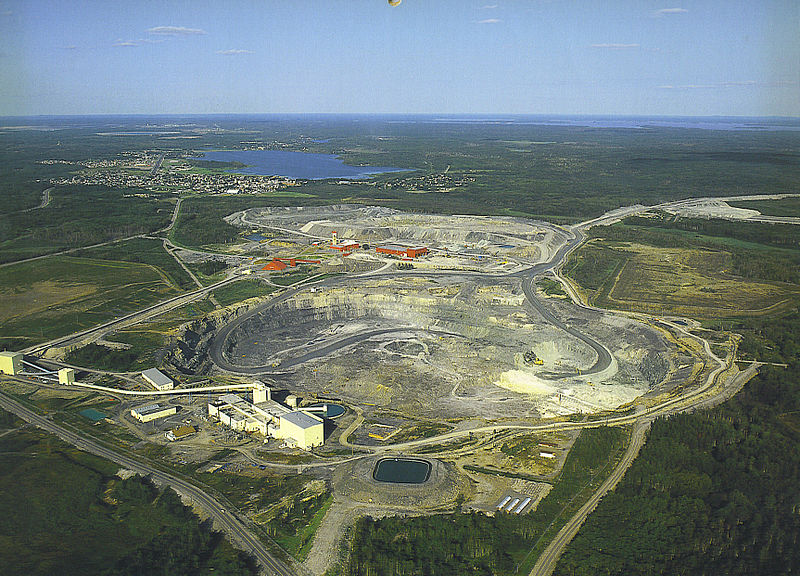
The Dome Mine in Timmins, Ontario one of the original gold mines of the Porcupine Gold Rush

We are taught about the great gold rushes that occurred in the Western United States during the latter part of the 19th century, but we know very little about the biggest Goldrush that ever occurred in North America. Know was that the California gold rush, nor was it the Klondike Gold Rush it was the Porcupine Goldrush that occurred about 600 miles north of New York City in Porcupine, Ontario. 

This Goldrush occurred in the Abitibi Gold belt that has proved to be one of the great gold bearing provinces on earth, and appears to be exceeded in size only by the Witwatersrand of South Africa.  The Abitibi is a continuous band of gneiss, granite and greenstone extending from Wawa, Ontario to Val d’Or, Québec that is the same goes is produced more gold than there is in Fort Knox. Since 1901 the gold mines of the Abitibi region of produced more than 170,000,000 ounces of gold; more than 68,000,000 ounces of them produced in the Township of Timmins, Ontario alone.

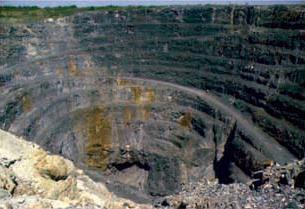
The Kidd Creek Mine in Timmins Ontario a leading producer of copper and zinc.  NOAA

During its history of his loss of more than 100 years they have a time he gold belt has produced over 100 gold mines, and from recent exploration it appears that the Abitibi is going to produce even more gold than it has in the past. Gold is not the only metal that is produced in the Abitibi Gold belt it has also been the scene of some very large base metal mines. It is in the same town of Timmins that the fabulous Kidd Creek Mine is located that kicked off a mining rush in early 1964 that today is producing copper and zinc along with other metals at a depth around 9500 feet making it one of the deepest mines in North America. It also produced the base metal mines around Rouyn-Noranda said gave birth to the Noranda Mining Company that during its day was one of the largest mining companies in the world.

Aside from its production of over 170,000,000 ounces of gold the Abitibi has also produced 35,000,000,000 pounds of zinc, 15,000,000,000 pounds of copper and 400,000,000 ounces of silver. In addition there are several minor metals that are also produced like germanium and indium. Even today they keep finding more mineral deposits in the Abitibi.


.

Sunday, March 27, 2011

Gold Occurrences in Minnesota

Making sense of the geology of Minnesota requires that you also consider that of Ontario to the North bordering Minnesota.  Looking at the western end of the Abitibi Gold Province located in Wawa, Ontario from the air you see a series of fault lines can be distinguished that from the air that appear to dive under Lake Superior. 

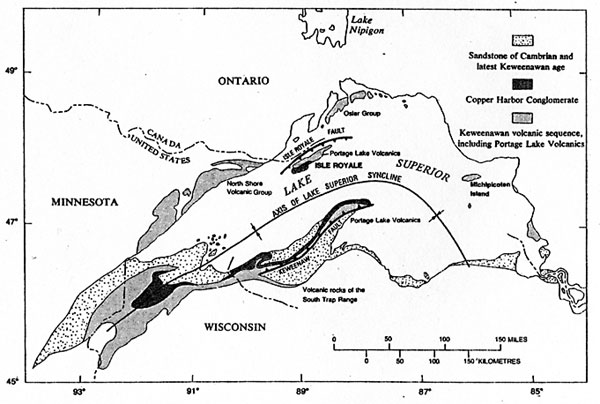
Geology of the Lake Superior region.  USGS

The question to be answered is the Vermilion Greenstone Belt that lies to the east of Lake Vermilion a western extension of the Abitibi Province.  The Vermilion Greenstone Belt is within the age range of the Abitibi at about 2.7 billion years old.  

Starting in the early 1990s a drilling program was undertaken that suggests that this may be the case. In the past twenty years finding gold in Minnesota has drastically changed not only by the findings in the Vermilion Greenstone Belt, but also by the findings associated with the Duluth Gabbro in the Ely district of the Arrowhead of Minnesota.  There have been millions of ounces of gold that are associated with the volcanogenic massive sulfides that have been discovered there by Duluth Metals and other mining companies.

Prospecting for gold in Minnesota goes back to the 19th century when some of the 49ers returned from the California Goldrush.  It was some of the early gold prospectors that discovered the Mesabi Range while searching for gold.

Gold in quartz typically lode gold.
Photo by Rob Lavinsky

Like all the other Midwestern States the glaciers have brought down gold from the gold regions of Manitoba and OntarioPlacer Gold is found throughout the state with the best prospecting is in the rivers and streams. Another place where placer gold may be found is along the shores of Lake Superior. There is an active gold prospecting community located in Minnesota. This is not counting the lode gold deposits.