Total Pageviews

Showing posts with label byproduct. Show all posts

Friday, March 30, 2012

John Carter on Martian Gold Mining


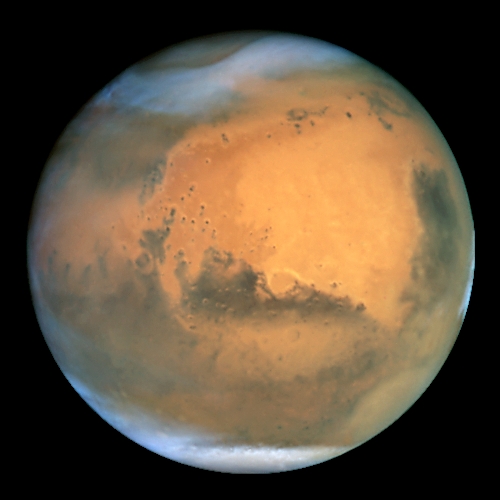
Mars from the Hubble Telescope   NASA


It may be a long time before we have prospector’s boots on ground on Mars, but we already know the Red Planet has gold deposits.  Gold and other valuable minerals on Mars will be associated with such geologic features as volcanoes, lava flows and impact craters.  Because the Red Planet has a totally different history, atmosphere and chemistry then Earth it is certain that many of the minerals found on Mars will be different then minerals found on Earth.  Another thing that is certain it will be a long time before any of these minerals and ores will find their way back to Earth.

Since all the elements in the universe other than hydrogen and helium are the results of atomic fusion that has taken place inside of stars and is a byproduct of supernova's gold can be found throughout the universe as a universal substance. You might consider gold and the other elements as leftovers from the formation of a supernova.
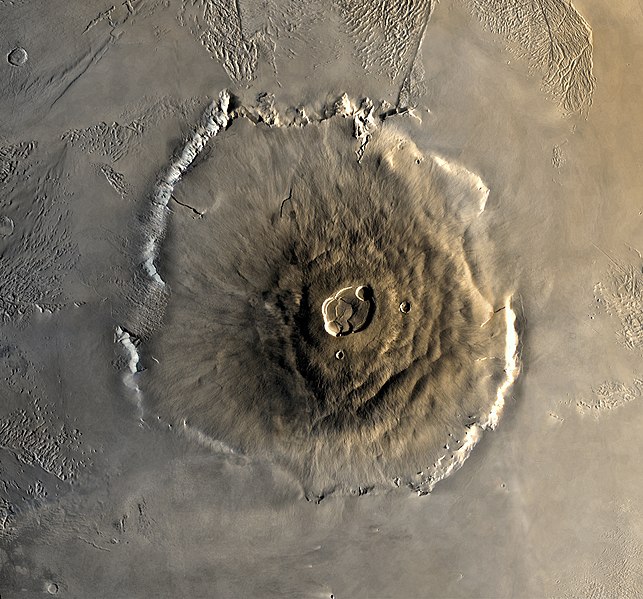
Olympus Mons the largest volcano on Mars and the largest known volcano in the Solar Ststem   NASA


Future prospectors on Mars are likely to find valuable mineral deposits in some usual locations according to planetary scientists that have been studying different ways to valuable deposits of metal ores can be concentrated on the red planet Mars as well as all the other planets in the universe.

The only environment that we have observed so far are those found on Earth or surface waters, ground waters and even chemicals left by lifeforms have played a major role in leaching, concentrating and depositing different kinds of valuable metal deposits including gold, silver, nickel, copper, iron and all the rest of the valuable minerals.

Victoria Crater, Mars showing its distinct scalloped edge caused by erosion.  This is a typical impact crater caused by a large asteroid that collided with Mars.  Both volcanoes and these features would be prime targets for prospecting.  Notice the large field of sand dunes in the center of the crater.   NASA


At present there is no surface water visible on Mars but there is plenty of evidence visible themselves this used to be running water across the surface of Mars. This fact indicates that there is ample evidence to support the idea of finding place or deposits on the surface of Mars where gold and other metals have been concentrated by the action of running water as well as wind. Other than these placer deposits question is raised where else does the starving prospector look for gold and other valuable metals on Mars.

Valleys and canyons on the surface of Mars as seen from the orbiter HiRise   NASA


According to planetary scientist Michael West of the Australian national University in Canberra and the Mars Institute is desirable minerals would be found around volcanoes and impact craters. One of the great differences in prospecting on Mars versus the planet Earth is that on Mars the planet is so cold that even groundwater is turned to ice as permafrost so that it functions little more than as another mineral in the ground.

Yes, there is gold to be found on Mars but don't count on putting any evidence of it in Fort Knox for a few more years at least.

Thursday, April 21, 2011

Gold Occurrences in Montana

Most of the Gold in Montana is found in the western half of the state where it was discovered in 1852 on Gold Creek in Powell County. Very rich deposits were found in 1863 in Creek near Virginia City created a gold rush. Since that discovery Montana has produced over 17,752,000 ounces of gold that is ranked as the seventh largest gold producing state in the United States. Most of the gold produced in Montana is a byproduct of the copper industry. Some of the best places to prospect for placer gold in Montana are located in Broadwater County on the eastern slopes of the Elkhorn Mountains in the rivers and streams that flow toward the east.

Elkhorn Mountain in Montana. Placer gold is found in the rivers draining the eastern slopes of the Elkhorn Mountains.
Photo by Fraser Harris

There is a great deal of information about mining for gold in Montana from the Bureau of Mines and Geology located at Montana Tech in Butte, Montana. The state is one of the signatories to the Mining act of 1872 that recognizes the right to file a claim on public lands belonging to either the state or federal government.

Western Montana is divided into two sections the Northwest and the Southwest in the northwest part of the state gold is found mainly in recent glacial moraines. During the early days when gold was selling for $20 per ounce of gold deposits found here were not considered to be economic although it was always possible to find gold. With today's prices the gold in these glacial moraines may become economically viable at $1500 per ounce.

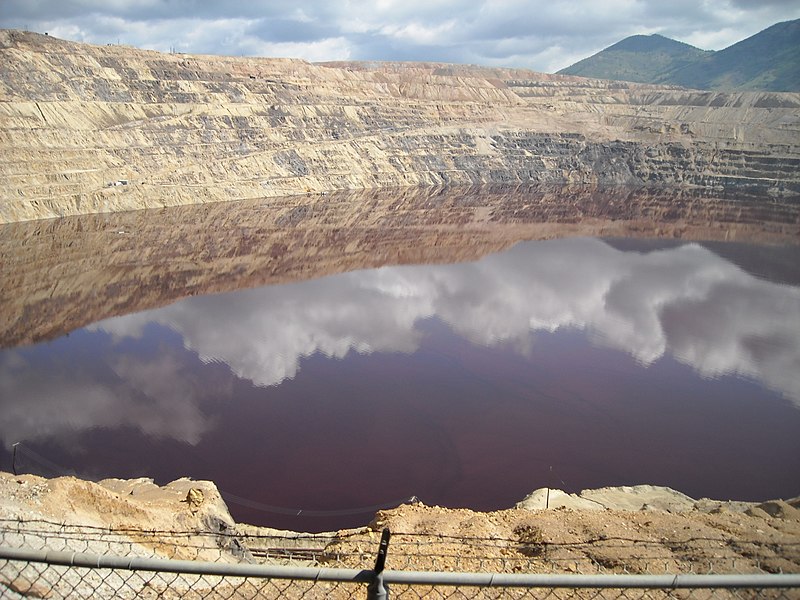
The Berkley Pit in Butte Montana an abandoned copper mine where gold was produced as a byproduct.
Photo by Cybergrl

Most of the gold in this thing however is found in the southwestern part of the state where many of the rocks are of Archean age is similar to those in the Abitibi region of Canada were mostly gold was laid down between 2.8 and 2.6 billion years ago.

Some of the greatest mines in the United States are located in western Montana there were copper mines many of them produced gold as a byproduct from refining copper. The greatest of these copper mines was the Anaconda Mine located near the city of Anaconda. This mine was discovered right after the Civil War by an Irish prospector that was looking for gold, and found copper instead.
The Anaconda mine was actually named because of a newspaper headline the Irishman saw while he was serving in the Union Army near the end of the Civil War. The headline read, “Grant encircles Richmond like a giant Anaconda.” Both the mine and the city were named after this giant snake found in the Amazon basin.

Gold is found throughout Western Montana wherever there are mountains. The best place to look for placer gold is in the rivers and streams draining those mountains. According to one source is doubtful that the old time prospectors ever found all the gold that is deposited there. There are now many prospecting tools that were unavailable to the early prospectors, one of the most useful of these is the metal detector.

The metal detector that is capable of detecting gold in hard rock or placer deposits. The best tool for finding gold is one that the old time prospectors were very familiar with it is the gold pan. To this day no one has ever devised a better the way of discovering gold deposits.

Aside from gold prospecting Montana also affords the prospector the chance to find sapphires along the Missouri River. There are many areas along this river that are open to fee prospecting. In addition there are several other localities in the state where you can find various gemstones for a fee.