Total Pageviews

Showing posts with label Venezuela. Show all posts

Thursday, March 15, 2012

Gold Occurrences in Venezuela


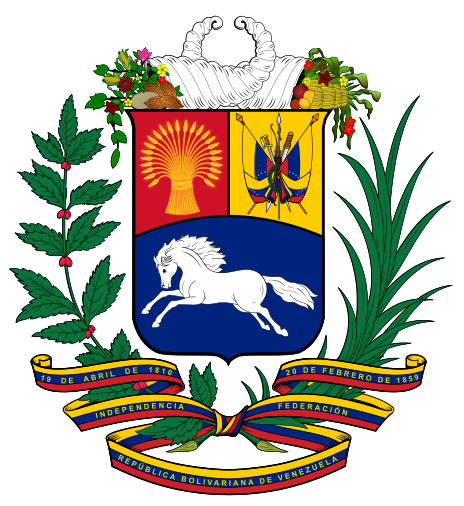
Coat of Arms of Venezuela
By Sigge Kotliar

President Hugo Chavez has nationalized the gold mining industry in Venezuela as of August 23, 2011 after he has signed a decree.  In the terms of the decree all mining companies will have to sell the gold they extract from Venezuelan soil to the government.  This decree insures that the government boosts the government control of all gold mining operations.  Under the terms of the decree private mining companies will be able to participate in mining operations in Venezuela only as minor partners of the government.  This law took effect with its publication in the Official Gazette that says all gold mined in Venezuela will be sold or turned over to the government.

It was revealed that over 40,000 hectares of land and over 15,000 people were freed from conditions of slavery as part of Plan Caura as part of the Venezuelan plan to curb illegal mining.  The chief of Venezuela’s Operational Strategic Command that was formed in 2010 when the Bolivarian Armed Forces were given the task of stopping illegal mining in the southeastern part of Bolivar state.

A great deal of the gold found in Venezuela is associated with the Guyana Shield that is a Precambrian Shield that extends into Brazil, Guyana, Surinam and French Guiana.  The shield itself consists of several distinct geological parts that can be correlated to tectonic events that occurred in West Africa.  This consists of several rock types with gneiss, amphibolite, itabirites along with intrusive granites that are all found in the Imataca Complex of Venezuela. Collectively the whole complex is called the Amazonian Shield that is between 3.6 and 2.7 billion years old.  It is in this complex of rocks where gold is found in Venezuela and surrounding areas.

In the 1950s Venezuela had a large gold rush that was due mostly to the placer deposits found along the Caroni and Paragi rivers and in the area close to its border with Brazil.  Briefly the output of gold rose as high as 20 tonnes per year with most of the gold going to the Banco Central de Venezuela who in turn sold the gold abroad.  After these deposits were worked out several foreign mining companies attempted to work other gold deposits in Venezuela but were prevented from doing so by restrictive mining laws, bureaucracy and law suits brought against them. 

The best of these projects was located at Las Cristinas in south-eastern Venezuela where the Canadian Mining Company, Placer Dome.  They partnered with Corporacion Venezolana de Guyana (CVG) the Venezuelan industrial and mining company.  The partnership was plagued with constant delays and at the time low gold process until in 1999 Placer Dome threw up its hands and closed the mine even though it had the potential of producing at least 16 tonnes of gold.  In the end the government revoked the license to proceed at Las Cristinas.  

Tuesday, January 24, 2012

Gold Occurrences in Colombia


Plate tectonics found in Colombia.


It doesn’t happen very often, but Colombia was the subject of a whole section in Engineering and Mining Journal (E&MJ) all about the boom in minerals there.  Colombia is the northern terminus of the Andes Mountains that is also one of the last areas in the Andes to be explored for minerals.  Even the author is interested in the goings on in Colombia because his friend Nick is developing a mine that is located between the Pig Pen and the Old Man in the northern Andes.  We have been consulting on this mine for the past year and although it is beyond the range of the internet Nick gives us regular reports on his progress whenever he gets into town.

Colombia has three different distinct areas where gold is found.  One of these areas is in the Andes proper where it is found as epithermal deposits in shear zones.  The area also contains placer gold. The second area is in the Sierra Nevada de Santa Marta Mountains in the northeast of Colombia.  These mountains are not part of the Andes, but rather are a distinct mountain range in their own right that has the distinction of being the highest coastal range in the world at 5,700 meters (17,760 feet).  Although these mountains are reported to contain much gold it is protected by a tribe of Indians that were never conquered by the Spaniards that take a dim view of gold seekers that are after their gold.  The third area is in the Guyana Shield a large group of Precambrian Rocks that are found in the southeastern part of the country where they continue into Brazil, Guyana and Venezuela.

E&MJ considers Colombia as the last frontier of the Andes Mountains because so much has already been discovered in the Andes further south.  Gold is the least of the mineral wealth of Colombia the country is already the home of the largest deposits of emeralds on earth with finds dating back to the days of the Incas.  Colombia also contains coal measures that are largely being exported to Europe.  One company Xstrata produces high grade coal from its Cerrejon mine the largest in Colombia.

Getting back to my friend Nick in his prospecting he has discovered a pegmatite in the part of Colombia where he is prospecting that contains crystals of aquamarine of euclase,   This will show you that much more then gold can be found in Colombia.