Total Pageviews

Showing posts with label Meguma Terrane. Show all posts

Saturday, August 13, 2011

Gold Occurrences in Nova Scotia


Nova Scotia gold in quartz
Photo by Rob Lavinsky


A gold province is contained in the Meguma Terrane of Nova Scotia that has been worked since the mid-19th century. According to geologists that have studied the Meguma Terrane they have discovered over 300 gold occurrences are deposits found in the Cambro-Ordovician group of rocks found in southern Nova Scotia, Canada. This group of rocks consists of two formations that contain several classic examples of both turbidite and mesothermal veined gold deposits. The first formation is a lower sand dominated flysch that is billed as the Goldenville formation that has been subdivided into several mappable units that is leading to a better understanding of what stratigraphic constraints are imposed on gold mineralization. Detailed investigations of the stratigraphy are still ongoing in all the major gold producing areas. The gold deposits found in the Steve's Road-Beaverbank long with the Mt. Uniacke are the major gold producing formations in Nova Scotia having produced over 47,000,000 g of gold in the past.

In the gold producing areas the Meguma rocks display a variable deformation ranging from into upright gently to moderately double plunging folds having multiple cleavages. Gold in the Meguma is divided into three major groups: 1 hi-grade that averages up to 15 g per ton; 2 low-grade averaging from 0.5 to 4 g per ton and 3g per ton gold that is hosted in meta-sandstone. A combination of either two can also occur.

Most of the historical production of 47 million g has come from hi-grade deposits found less then 200 m from the surface. The majority of the gold has been produced from a variety of veins ranging from bedding concordant, to fissure and stockwork veins. The veins were emplaced by the migration of metamorphic fluids during the late Acadian Orogeny of the Devonian. The Meguma is a good example of

Most of the gold in the Meguma is found in two formations: the Halifax formation and the Goldenville formation where it occurs in quartz veins and is often associated with the mineral magnetite.

The erosion products of the Meguma are found in the coal measures of Nova Scotia where it might be found in conglomerate as fossilized placer deposits.  Coal measures can be found in a belt extending roughly from New Glasgow under the Gulf of St. Lawrence to Glace Bay on Cape Breton Island.  Conglomerate in this area deserves a close look.


Friday, April 22, 2011

Meguma Gold of Nova Scotia, Canada

Meguma gold is why I live in the United States instead of Nova Scotia because during the Goldrush that occurred in Nova Scotia in the 1860s my great grandfather as a young man was prospecting for gold in a place where he shouldn’t been prospecting on the Queensland.  The Queensmen took a dim view of these proceedings, and old stories handed down in my family were to the effect that the Queensmen wanted to invite him to a “necktie party” he was to be the guest of honor. Needless to say he left Nova Scotia quite hastily for New York where he worked as a miner at the Tilly Foster iron mine.

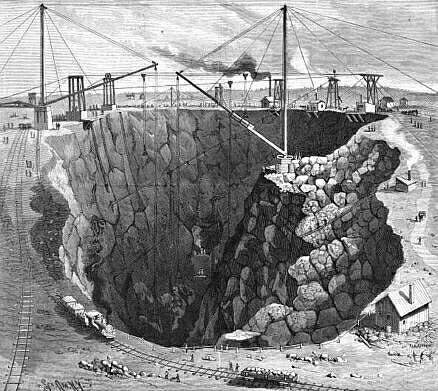
The Tilly Foster Iron Mine in Brewster, NY as it appeared in the 1880s.  This is the mine my great grandfather worked in when he arrived in the US from Canada.


The Meguma terrane is one of the suspect terrenes that is exposed in the southern part of Nova Scotia when it became attached to the North American craton during the Appalachian orogeny where it is joined in Nova Scotia along the Minas Fault Zone that runs east and west across Nova Scotia from Chedabucto Bay to Cobiquid Bay and the Minas Basin. Throughout the area there are a number of granite intrusions that range in age from Devonian to Carboniferous. Although the extent of the Maguma is not clear there are many geologists who believe that a magnetic anomaly that runs along the coast of Cape Cod in Massachusetts may represent a suture zone between the Maguma and Avalon terrenes.

Unlike the Avalon terrane since been definitely associated with land across the Atlantic Ocean the Maguma terrane the Maguma terrane remains a mystery that has not been associated with any land on the other side of the Atlantic Ocean. Even today there are many competing theories as to their origins that are prevalent among geologists. Many of these theories seem to feel that it was separated from Gondwana although there are plenty of other competing theories that it may have been a part of Portugal and Spain.

This is the Ccharbon Mine at Glace Bay NS where my great grandfather worked as a mine rigger before he came to the States.  The product being mined was bituminous coal.  


This area appears to be of interest geologically not only to students of geological history, but because the attendant metamorphism has produced gold deposits that were mined extensively during the latter part of the 19th century, and which remain even today as a source of potentially viable gold deposits.

One geologist that is a friend of mine had for his first assignment in the field as a geologist after graduating from college had to make an assessment on one of these old gold mines. It appeared that the Nova Scotia highway departmental head used the tailings from the mine to pave the roads in the area. His final report to the Mining Company stated that, “The roads in Nova Scotia are paved with gold.”

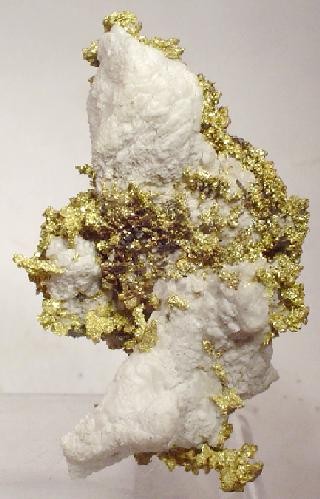
Gold crystals found on quartz.
Photo by Rob Lavinsky


Gold founded the Maguma terrane according to geologists that have made it a study represent concentrations of a wide variety of gold bearing quartz veins that are found in lower Paleozoic metaturbidites that are found in Southern Nova Scotia where there have been over 30 deposits of this type. Extensive studies of the fluid inclusions found in the quartz indicate that the mineralization occurred at about 370 million years ago that was related to widespread incursion of both mafic and felsic magnetism into the crust at the same time when a sub vertical shear zone was developing. This was during a time that post dated the Acadian Orogeny making them at least partially exotic to the Maguma group. Much of the mineralization in the group is considered to be either late stage magmatic fluids, then infiltrated the Maguma groups that are sedimentary rocks as the sole source of vein components that invalidated earlier sources of hydrothermal fluids.