Total Pageviews

Showing posts with label Civil War. Show all posts

Wednesday, May 16, 2012

The Lost Cabin Gold Mine


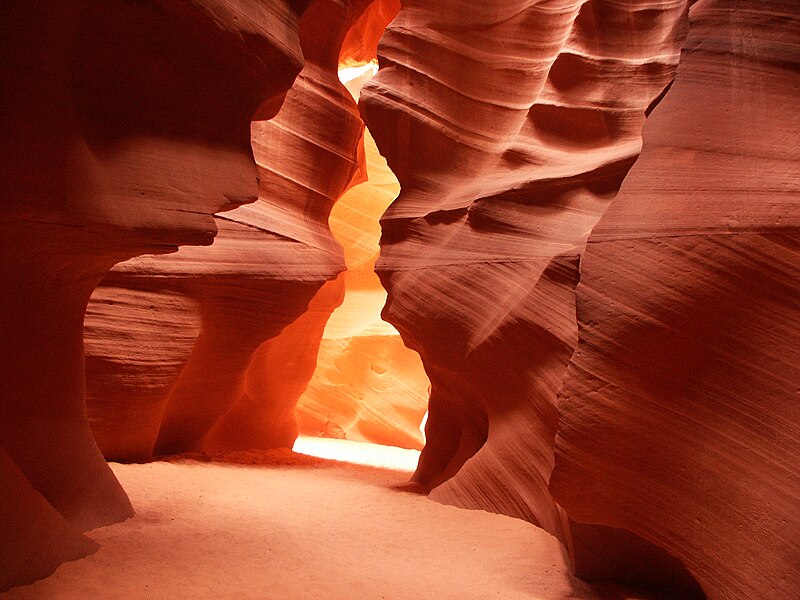
A canyon like the one with the Lost Cabin Gold Mine
Photo by Meckimac


There are countless stories of lost mines in all the gold producing areas of the world, but the “Lost Cabin Gold Mine” has the distinction of being the most sought after lost mine in the world.  This lost mine has been known by many names as Lost Adams, Gold Canyon, Sno-Ta-Hay, Zigzag Canyon and the Lost Cabin Mine.  There are claims that it is the richest source of gold in the world that is untouched.

The story of this lost mine started while the Civil War still raged in the East when a teamster named Adams, his first name is lost to history, along with some prospectors in Gila Bend, Arizona.  A Mexican Indian with the unlikely name of “Gotch Ear” approached them, and offered to show them a canyon filled with gold that was only 10 days ride away.  The miners took Gotch Ear at his word so together they rode away to get the gold.  On the way they crossed a road that Gotch Ear told them went to Ft. Wingate, Arizona and they should remember it in case they had to go for supplies at the fort.  True to Gotch Ear’s story at the end of 10 days they came upon a canyon having a blind entrance.  At the bottom of a “Z” shaped narrow canyon they found a creek that was rich in gold.

The men paid Gotch Ear off, and began panning the creek for gold when they were interrupted by a force of Apache warriors led by a chief Nana.  Nana told the miners they could look for gold in the creek as long as they did it below the waterfalls.  Eventually several of the miners began mining at the base of the waterfalls where they discovered two rich veins of gold.  It quickly became apparent to all of them these digging were extremely rich with some of the nuggets they found being the size of hen’s eggs.

There was so much rich gold they kept it under a stone in the hearth of the cabin they had built except one miner, a German who kept his gold separate.  Once he had collected all the gold he wanted he left the camp and was never heard from again.

After several days when the supplies started to run low a group of miners set out for Ft. Wingate to get more supplies.  After eight days when they hadn’t returned Adams and another miner named Davidson rode out to see why.  When they reached the top of the Z-shaped trail, they found five of the miners had been murdered along with three of their horses.  That was all of the party that has set out for supplies.  Adams and Davidson returned to their cabin when they discovered that in their absence the Apaches had returned, murdered the remaining miners and set fire to the cabin burning it down.

After a harrowing walk across the desert that lasted 12 days Adams and Davidson narrowly escaped when they finally stumbled on an army patrol that took them to the nearest fort where after 10 days Davidson died.  It took a decade before Adams finally lost his fear and returned to New Mexico to look for his lost mine.  Adams spent the rest of his life looking for the lost canyon that was packed with gold.   

Sunday, October 23, 2011

Discovery of Gold sparks mini Gold Rush in southeast United States

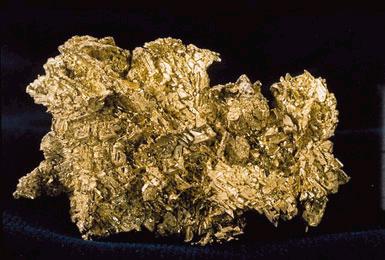
Crystalline gold   USGS


According to a report from Reuters recently a Canadian Mining Company along with a tiny town in South Carolina are leading the charge to what could become a modern gold rush in the southeastern United States.  The company from Canada is Romarco Minerals Inc. that has reopened the old gold mine at Kershaw, S.C. and by 2014 should be pouring its first gold bar.  The name of the mine is the Haile Mine.  The author originally became aware of this exploration project at the PDAC Show in Toronto in 2008.    

The Haile mine once environmental studies and the permitting process is completed will be the first modern gold mine is the Mississippi River since the Kennecott Minerals Mine that was in Ridgeway, South Carolina in 1999. Based on proven gold reserves that were found in the samples it is estimated that 3.1 million ounces of gold still remains in the ground at Haile. It is estimated this gold mine will produce an average of 150,000 ounces of gold for the next five years.

The slate belt that winds its way through the southern Appalachians from Maryland to Alabama was the site of the first gold rush in America before gold was discovered in California in 1848. It is interesting to note that this Slate belt north all the way to Quebec. Gold is been reported that sparked a gold rush in Columbia County and adjoining parts of Saratoga County, New York, and western Vermont in the northern extension of the slate belt. It's one of the most significant gold belts in the United States and sparked one of our first gold rushes in the early 1800s.

This is the first time that the southern gold belt has been explored using modern methods, an area that many people have forgotten how significant gold production was in the past. Most gold mines in the area were discovered by following placer deposits to their source. The glacier that destroyed the placer deposits in the northern United States and Canada has acted to prevent the discovery of gold deposits in the northern extension of the Slate belt.

Finding the gold left it daily has sparked renewed interest throughout the Slate belt in the southeastern United States. The gold found here is embedded in microscopic flecks in the volcanic rock in the so-called Carolina Slate Belt that extends from Alabama through northern Georgia, the Carolinas, Virginia and Maryland. In early October another Canadian mining company from Vancouver, Revolution Resources started investigating other old gold mines in the slate belt including the first mine, the Reed Mine in North Carolina.

During the period after the discovery of gold in North Carolina and the Civil War there were hundreds of gold mines scattered throughout the piedmont region of the southern states. Many of these gold mines were destroyed by the Union forces during the Civil War, others remained in production until 1942 when the federal government closed all the gold mines in the United States. There was even the working gold mine at the Great Falls of the Potomac River just upstream from Washington DC that was included in the shutdown of all the mines. Very few of these mines ever reopened and for the most part have been forgotten.