Total Pageviews

Showing posts with label process. Show all posts

Tuesday, February 14, 2012

Recovering Gold with Cyanide


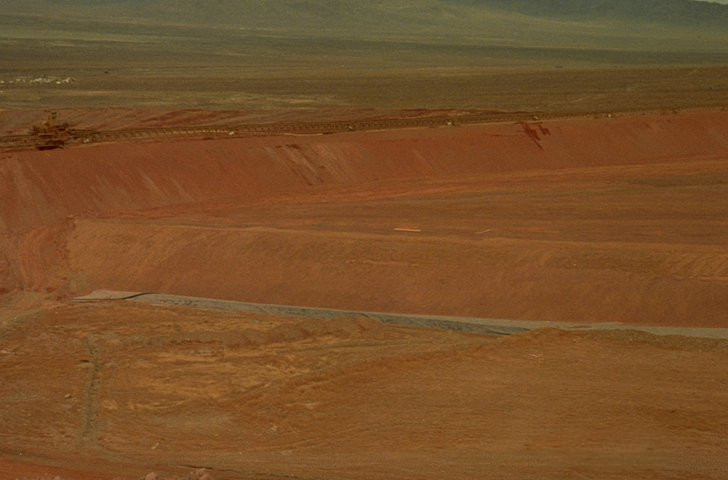
A heap leach pile for extracting gold with cyanide in Elko, Nevada
Photo by USGS


How do you like that one of my relatives invented the MacArthur-Forrest process for recovering gold in the process that is more commonly known as the cyanide process.  This is one of the many techniques used to recover gold from low grade ore that works by dissolving gold and other metals is a solution of water and cyanide that causes gold to become water soluble.  Chemically this is called a water soluble coordination complex that is the most commonly used technique to recover gold.

Fifteen percent of the cyanide produced is used for gold recovery the balance is used in other industrial processes for such things as adhesives, plastics and insecticides.  Although both sodium and potassium cyanide are used the most commonly used is calcium cyanide.  Because of its extreme toxicity cyanide has been outlawed in many countries, but efforts are being made to replace its use in mining by less toxic chemicals.  One of these is sodium ferricynide that has been used under the name “hypo” in photography to dissolve silver in photographic materials.  Hypo also dissolves gold, but not as rapidly as cyanide.

Gold mining uses cyanide for both the MacArthur-Forrest Process for which it was originally developed and for the later heap leaching process that was developed for recovering gold from disseminated ore like that found in the Carlin Trend in Nevada.  In the MacArthur process the gold ore is first ground into a powder in a ball mill, a large tumbling barrel where the grinding action is provided by large steel balls.  The ore is then transferred to a vat where it is mixed with cyanide solution and agitated with compressed air.

The other place where cyanide is used is the Heap Leach Process here the ore is ground to ¼ minus and heaped up in huge piles usually covering several acres.  A solution of cyanide is sprinkled onto the pile with sprinklers where it seeps down through the heap dissolving the gold in the process.  This process goes on for a considerable time with the cyanide solution being recirculated several times until all the gold is dissolved.

In both processes the gold is precipitated from the pregnant solution with powdered zinc although in some cases it is recovered using activated charcoal filters.  The powder is black because it contains more then gold that is cast into a Dore bar and sent on for further refining to remove the impurities.

Friday, March 11, 2011

How to use Mercury to recover Gold

The use of mercury to recover gold probably dates back to the Romans this was written about in De re Metallica by Georgius Agricola during the 16th century. In this book the recovery of gold using mercury was also described. Gold and Mercury will combine into a substance called an amalgam, and once again the gold can be separated from the mercury by the application of heat by heating the amalgam in a retort that recovers the mercury by distilling its vapor back into metallic mercury. This is a process that has been known for centuries. Using mercury in a sluice box required cleaning the riffles every few hours making it necessary to close down the sluicing operation while this was done.

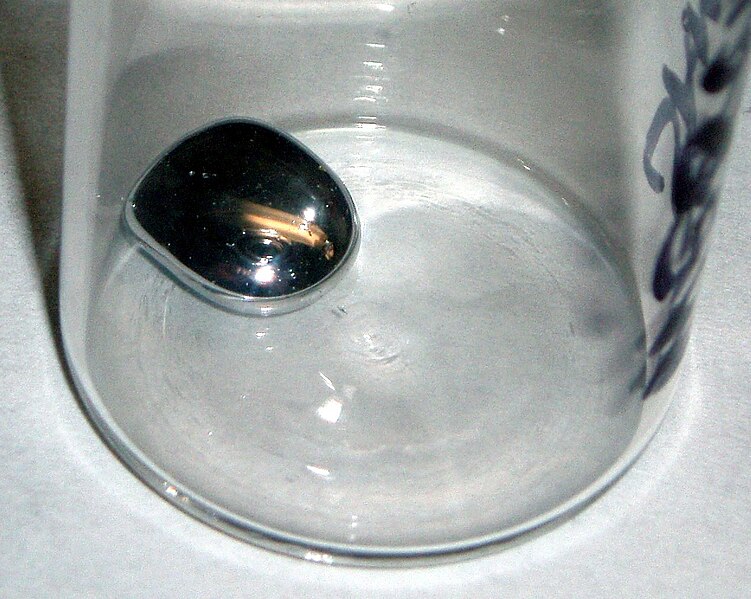
A drop of mercury in a beaker.

During the gold rush days of the 19th century large amounts of mercury were used in sluice boxes where large quantities of mercury were placed behind the ruffles in the box to catch gold particles in the black sand. In some of the larger sluice boxes the miners would use several 76 pound flasks of mercury as a gold trap. It was also very damaging to the environment causing pollution that linger. on to this day.

Although it is still used in some places the use of mercury is now frowned upon because of its damaging effects on the environment. In some jurisdictions its use is highly restricted, so that it can only be used under tight controls to prevent it from causing contamination.

Hydraulic mining in California.  The sluice box is at the lower left that used mercury in the gold recovery process.

The use of mercury for gold recovery is highly controlled in most countries although it is used by some artisanal miners in Third World Countries.  In the United States it is regulated under the terms of the Resource Recovery and Recycling Act (RCRA).  In Canada its use is prohibited within 109 yards of a stream or river to prevent pollution of the water. The recovery of gold by mercury is a highly technical procedure that should not be attempted by any amateur prospectors or miners.