Total Pageviews

Showing posts with label mine. Show all posts

Monday, July 30, 2012

Tales of the Devil to Date


The new entrance to Mine #1 The shaft is 40 feet deep with an adit going off from the bottom northweat for 10 feet that is 6 feet wide and 7 feet high.  The adit is well timbered and the shaft was filled with debris dating back to the 19th Century.
Photo by John Carter


We have rediscovered an old mining complex in western Connecticut that to date comprises two mine shafts with accompanying adits.  The first mine consists of a shaft approximately forty feet deep with an adit going off to the northwest that is ten feet long, six feet wide and sever feet high.  Town records reveal the first mine was a prospect hole that may have been created in pre-Revolutionary days; the second mine was just discovered on July 30, 2012 and is yet to be explored.  Town records indicate this mine may have an adit up to 140 feet long.

At the end of May 2012 a blue ribbon committee was convened at the site consisting of Charles Merguerian of Hofstra University, Nicholas Bellantoni of Uconn, Stefan Nicholescue of Yale, John Carter of Geotek and two engineers, none of us could determine what they were mining.  The town P&Z Officer finally discovered some old records that divulged the fact the second mine was dated to 1858.  The mineral mined was chalcocite an ore of copper.

The mines were found within two miles of Cameron’s Line a major fault system that extends from Staten Island, NY the western mountains of Norway under a series of different names.  There are several important mines located in the proximity of this suture zone producing gold, silver and copper.  The largest copper mine in the U.S. before the discovery of copper in the Keweenah Peninsula of Michigan was the Argo Mine in Vermont that is also associated with this large fault system.

The property where these mines are located is highly mineralized containing in addition to chalcocite, malachite, pyrites, quartz, kyanite, ilmenite, magnetite, cerrussite, beryl and many other minerals yet to be identified.  Although there are no plans to resume mining operations at these old mines mineral specimens will be available for sale.  For further information contact John Carter at geotekllc@gmail.com or 860-469-4804.

Many of the specimens of kyanite, ilmenite and magnetite are of museum quality and are really spectacular.  Some of these specimens are on display at the Yale Peabody Museum in New Haven, CT.

Tuesday, July 10, 2012

Tales of the Devil: The Hammer of Thor


The new find on the site


Somebody asked me why we named this series, Tales of the Devil. Well back in 1819 one of the sources wrote in the American Journal of Science 1st Edition a paper about minerals found in Litchfield County.  Then he got religion and during the 1850’s wrote a tract called “Tales of the Devil.”  By then he must have been a full-fledged geologist from Yale.  At least he knew his subject matter.  However, “Tales of the Devil” fits this place as well as any other story, but finally some old records came to light that explained the whole place.

Since its rediscovery in March 2012 this site has had at least five PhDs tugging their forelocks trying to figure out what in blue blazes went on there.  Finally one of them found a collection of old records that explained the whole deal and even named some of the historical personages that were involved with the site including P.T. Barnum and Thomas Edison.

The first shaft and adit that was discovered was apparently a prospecting pit, or if you prefer a gopher hole. This consisted of the mineshaft that was 40 feet deep with an adit at its bottom going off that was 10 feet deep by 6 feet wide by 7 feet tall. It is apparent from the records that this may have existed since pre-Revolutionary War times. Most of the mining occurred in the mid-19th century and according to the records underground mining in the location included an adit that was more than 140 feet long.

Because of the geology on the site being similar to those where gold was found we assumed that was what they were looking for, and probably was. According to the old records covering the site what they were actually found was copper, and it was in the form of the copper sulfide mineral called chalcocite, a grey colored mineral.

Actually this tale doesn’t have anything to do with Thor except there’s a Norwegian involved in its telling. He was one of the PhD's.  Another one came from Transylvania.

Monday, July 9, 2012

The Upside Down Mine


Sterling Hill Mine in Ogdensburg, New Jersey
Photo by Dmadeo


No, this isn't about a gold mine it's about a zinc mine specifically the one at Sterling Hill, New Jersey that for many years produced zinc and was one of the largest mines and the East Coast of the United States. The ore produced from this mine is noted worldwide for its many fluorescent minerals, but like all mines in eventually came to it in and was closed down although it still operates as a museum. At this mine and the ones in nearby Franklin, New Jersey form a canoe shaped orebody hosted in marble that is been the subject of much controversy over the years as to its origins.

During the 1960s Brian Skinner of Yale University was working for the USGS and with a colleague started speculating on how this ore body was emplaced. Under normal circumstances it is assumed that the ore came from deeper down in the bowels of the earth. However in this case under the marble was a layer of impervious rock that apparently did not allow the ore bearing hydrothermal fluids to rise up from below the marble.

Willemite, Franklinite and Rhodocrosite under Ultra-violet light from Sterling Hill
Photo by Rob Lavinsky


Skinner and his colleague were working in the mine one night when the question of the deposit’s origin came up.  The layer below the marble was impervious, but the marble itself wasn’t.  Many layers of sediments were deposited above the marble including some that were volcano-clastic in nature.  These rocks were also pervious allowing ground water to perk down from higher up that were capable of bearing ore bearing fluids.  They came to the conclusion that the ore bearing fluids came down from above and perked through the marble until they hit an impervious layer below the marble.  Here the ore bearing fluids stopped and gave up their load of dissolved minerals creating the deposit. However there is zinc minerals dispersed throughout the marble above the actual deposits.

This is all theoretical, but there are other examples of this same mechanism at work.  One glaring example can be found in the iron deposits found in northwestern Connecticut.  For almost two centuries the iron mines in Salisbury yielded some of the richest iron ore on earth that had its origin in the overlaying Walloomsac formation of schist interbedded   with marble.

The same specimen as above under normal light
Photo by Rob Lavinsky


The origin of this formation is volcano-clastics that came from an island arc that formed off the then east coast of North America that collided with the continent during the late Ordovician and caused the Taconic Orogeny.  This volcano-clastic material was the source of the iron that formed the famous Salisbury iron deposits, and supplied the magnesium that turned the limestone into dolomite.  The Walloomsac formation extends south from Lake Champlain to Manhattan where it underlies among other things the New York Stock Exchange.  Throughout its length at its base and in the underlying marble iron deposits are sprinkled like plums in a plum pudding.

It is theoretically possible that some gold deposits that are hosted by marble were deposited by the same mechanism i.e. leached from the overlying deposits.  A possible example of this mechanism in action are the gold deposits of the Carlin Trend in Nevada.  Another suspect is the San Pedro mine in San Luis Potasi, Mexico.  Both of these deposits are hosted in marble.  Keeping this mechanism in mind might lead to the discovery of other deposits of valuable metals.

Wednesday, June 6, 2012

Tales of the Devil: The Whodunit Mine


Typical Landscape at the Whodunit Mine
Photo by P. L. Chadwick


No this isn’t a tale of the nether regions it is the story about the discovery of a long abandoned mine in western Connecticut.  For lack of a better name we might as well call it the “Whodunit Mine.”  The mine is on private property, and its owner is in the business of raising big dogs.  He will loose the hounds on anyone who goes trespassing on his property, so let that be a warning.

The old mine was discovered by the owner when he wanted the zoning classification of his property changed from residential to farming.  There were several old pits in the ground the zoning enforcement officer wanted filled in as part of the change.  This got the curiosity of the owner that led to the discovery of several acres covered with pits and several hundred feet of trenching giving the property the appearance of a battlefield.

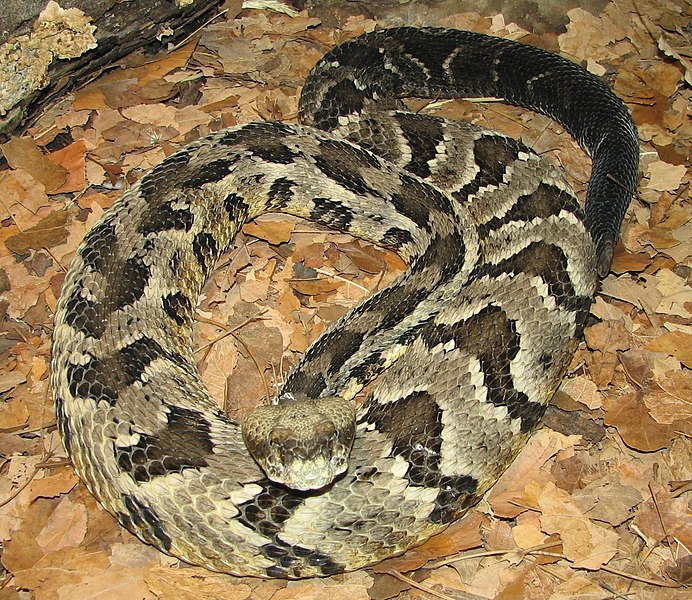
The site also contains timber rattlesnakes
Photo by Trisha M. Shears


Somewhere in the process last April 2012 he contacted me because I operate a school for prospectors teaching the fundamentals of prospecting that I try to tailor to the individual.  The owner already knew how to pan for gold, what he was really curious about was what he had on his property.  We made a trip to the site where we looked the site over and discovered plenty of evidence of prior mining activity with many prospecting pits and several hundred feet of trenching.  This activity covered several acres of the property.  From prior experience I know what this kind of work costs in money and labor.

In the past I had some involvement with Robert J. Altamura who worked for the Connecticut Geological and Natural History Survey when he prepared a map of the Bedrock Mines and Quarries of Connecticut.  Since I had a copy of the map and its accompanying booklet I checked and the site wasn’t on the map.  With that I contacted Margaret Thomas the state geologist and told her I’d found an unlisted mine.

Another creepy-crawler found on the property is the copperhead
Photo by Trisha M. Shears


Because the owner was a contractor he had some construction equipment including a backhoe that he used to explore the old mine.  He called me on the phone one morning in early May to tell me he had dug into what turned out to be an apparent mineshaft and had discovered many old bottles and other artifacts.  I told him to stop digging and I’d contact the state archeologist.  The state archaeologist told me he couldn’t come until May 24.

In the meantime I also contacted the Yale Peabody Museum who put me in touch with their mineral collection manager.  A bit later I contacted the geology department chairman at Hofstra University a personal friend to tell him what we had discovered.  Ultimately both the mineral manager and the chairman of the department agreed to come to the site on May 24.

What happened on the 24th was the meeting of a blue ribbon panel consisting of one archaeologist, three geologists and two engineers.  The net result of the meeting was we couldn’t determine what they had been mining.

The mine contains the following minerals: amphibolite, beryl, corundum, ilmenite, kyanite magnetite, pyrites talc and other minerals that are yet to be identified.  We also found one small speck of gold.

My own theory of this is:

The digging probably happened in the 1850’s after somebody came back from the California Gold Rush and decided there was gold on this property and went looking for it.  The debris filling the mineshaft has been dated to the post Civil War Era by the state archaeologist.  The mineshaft yielded what appears to be a cast iron ladle that could be used in assay work.

This tale is going to be continued!

Tuesday, May 22, 2012

The Mine that made America


Portrait of George Washington - Peale 1776


By the looks of the place today you’d never suspect that Salisbury, Connecticut made it possible for us to be a free nation rather then a colony of Great Britain this was because nestled in the hills of Salisbury was a deposit of iron ore so rich they mined it for almost two centuries from 1736 to 1923 when the mine suddenly was flooded by rushing waters.  The mine itself never did produce any gold but it did produce the best iron ore in the world, and this iron was perfectly suited for the production of cannon.  In fact they called it ordnance iron.

The iron deposits at this mine called “Ore Hill” hundreds of millions of years ago when an island arc formed in the Iapetus Ocean, the father of the Atlantic Ocean, off the east coast of what then was North America.  From these volcanoes rained eruption debris that rained down onto a vast coral reef that fringed North America forming a sediment made up of volcanic ejecta and weathering products from island arc.  The island arc was very similar to today’s Japan that formed a back arc basin between the islands and the mainland similar to today’s Sea of Japan.

This sediment was very rich in iron, and was also interbedded with limestone that eventually underwent metamorphism during the Taconic Orogeny forming the Walloomsac formation of schist stretching along the eastern border of New York State from Vermont to New York City where it underlies the New York Stock Exchange.  Throughout its length this formation is studded with rich iron deposits like plums in a plum pudding.  There were many iron mines along its length with the largest at Ore Hill in Salisbury, Connecticut.  Year’s later scientists from the Smithsonian Institute in Washington declared the ore from Ore Hill was the finest ore in the world.

It was in 1728 when a group of surveyors from Hartford that first noted the presence of iron in Salisbury, but it was Ezekiel Ashley and John Pell from nearby Sheffield, Massachusetts that discovered the ore on Ore Hill in 1731.  Mining began almost immediately with the ore going to a furnace established by Robert Livingstone in Ancram, New York seven miles to the north.

The Salisbury blast furnace was built by Ethan Allen of Ticonderoga fame, Samuel and Elisha Forbes and Col. John Hazeltine built the first blast furnace in Salisbury at the outlet of the lake in Lakeville.  The furnace changed hands several times finally falling into the hands of Richard Smith an Englishman who also had a “Finery” in Robertsville, Connecticut, the first place in America to make steel on a commercial scale.  Smith was in England when the Revolutionary War broke out forcing him to stay there until the war was over.

The Connecticut Colony seized the mine and furnace in the name of the Committee of Public Safety and the governor of Connecticut, Jonathon Trumbell persuaded Squire Samuel Forbes to come out of retirement to cast cannon for the colonial army.  Squire Forbes agreed, and in the first six months of the war cast 850 tons of cast iron cannon for
George Washington.  Throughout the war the Salisbury Furnace cast around 850 cannon ranging in size from four pounders to thirty-four pounders.  None of them ever burst!  The rest of the colonies produced six cannon most of which burst when they were fired.  

Molly Pitcher swabbing a cannon made at Salisbury, Connecticut - The Arsenal of Democracy


When George Washington took over command of the Continental Army there were a total of six cannon in the whole thirteen colonies, and they were up against the British Army the most powerful in the world at the time that had plenty of cannon of all sizes.  Were it not for the effort of the iron workers from Salisbury the chances of beating the British Army and gaining independence were virtually nil.

The mine went on to produce the guns and fittings for the USS Constellation and Constitution that fought in the war of 1812.  The mine produced the iron for the US Arsenals at Springfield, Massachusetts and Harpers Ferry, Virginia.  Later the same mine produced the iron that made railroad wheels that put the entire nation on wheels, and a good share of the world too.  The final moments for the mine were when it flooded with a sudden inrush of water in 1923.  Today the mine is a small pond on the right side of Rt. 44 between Lakeville and Millerton, New York.

For a more detailed discussion see: http://salisburyirondistrict.blogspot.com/


Sunday, May 20, 2012

The Copper Mine in Bristol Connecticut

Bornite was the principal ore produced at Bristol, there are museum class specimens all over the world from this source.
Photo by Ra'ike

The copper mine at Bristol, Connecticut started in 1937 and continued in dribs and drabs until 1953.  It is a study in how not to operate a mine.  The owners always managed to spend more of their shareowners money then they could get out of the mine.  This mine was located along the contact between the Mesozoic sandstones of the Hartford Basin and the schists of the western uplands of Connecticut.  World class specimens of chalcocite and bornite much to the consternation of the operators were collected at the mine that are still found in many museums and in the hands of private collectors.

The early part of the 19th century was marked by many mines in Connecticut, the latest survey by the Connecticut Geological and Natural History pegs the number at over six-hundred, an online source has raised this to 1,246 mines.  The first mention of this mine was by Shepard in 1837, but later it was noted by Percival in 1842.  The mine itself lies about 4 miles northwest of the center of Bristol at an elevation of around 350 feet.

Although work on the mine began in 1837 it was worked in such a desultory way that only about 125 tons were shipped to England for refining.  From 1847 to 1853 the mine was at its most active and was more vigorously worked.  It was during this period that over half a million dollars were spent developing the mine.  The workings were extended to 240 feet and to 500 feet along the vein.  This and other tunnels gave the mine a maximum width of 120 feet.

During the same period the mine produced nearly $200,000 worth of ore weighing 2,200 tons with the picked ore having a copper content of 33%.  For years the mine was abandoned after the collapse of a heap of mine tailings destroyed a dam on Poland Creek precipitating a wall of water that almost wrecked the Forestville part of Bristol.

The mine was originally discovered by a farmer, one Theophilus Botsford became curious about why a spring on his property ran green, so he took a plow and team and uncovered a vein of copper ore.  Sure enough this was the source of the green water that stained the rocks in Poland Creek and killed the vegetation along the brook.  Finding the copper ore satisfied his curiosity and it wasn’t until 1800 when Asa Hooker, a brass founder in Bristol leased the land from the widow Sarah Yale.  She was a descendent of the founder of Yale University in New Haven.  She made a deal to be paid a percentage of any ore mined, but there was little mining done until 1836 long after she had died.

After 1836 the mine was worked on a large scale but never made a profit eventually falling into the hands of John M. Woolsey of Yale.  Under the hands of Prof. Silliman who was a good professor, but a lousy miner caused the most extravagant schemes and experiments were undertaken.  Hundreds of thousands of dollars were poured into the mine with far less coming out with the Bristol Mining Company that was incorporated in 1855 was bankrupt by 1857.

According to the Tunxis Valley Herald for December 17, 1886.

"The collapse which came was caused by the grossest mismanagement, and
not from any fault in the mine. The manager's crowning impulse seems to have
been to spend the most money in the shortest possible time. Large and expensive
buildings were for some trivial cause torn down and used for fuel, and new ones
erected which if reports are true, were liable to meet a similar fate.
"The agent resided in Farmington Street and kept eight or ten fast horses
at his stables in Farmington and others at the mine. The superintendent occupied the house near the mine. The office furniture and fittings were of an expensive style. Once a dance was given in the store room which had been provided with steam pipes for heating it on this occasion as it was winter. Sibley*s Band, of Hartford, the best in the State at that time, was hired for $100; the supper was a costly one, wine of several kinds being  furnished. That this wine was not an imitation may be  inferred  from the  f a ct that those at the  supper table amused themselves by throwing turkeys and chickens at each other.”

The mine also had gold that was associated with the copper ores.

Friday, May 11, 2012

How to develop a hard rock gold deposit


An open pit gold mine at Val D'or, Quebec.  The refinery is in the background.


Once a prospector has found a viable gold deposit where a mine is going to be built the job is turned over to a firm that specializes in turning the prospect into a working mine.  It is because of this one of the great associations of the mining business got its name – the Prospectors and Developers Association of Canada (PDAC).

To create a working mine many different things have to come together, and the mine developer is like the conductor of a symphony orchestra.  One of the very first things that happen is deciding the form the mine is going to take open pit or underground.  Both types of mine have their strongpoints and sometimes the two schemes are worked together as at the Kidd Creek Mine in Timmins, Ontario.  Even to a layman it’s obvious that an open pit mine is more economical to operate then an underground mine because it requires much less equipment.  It can also use large equipment that can’t be used underground.
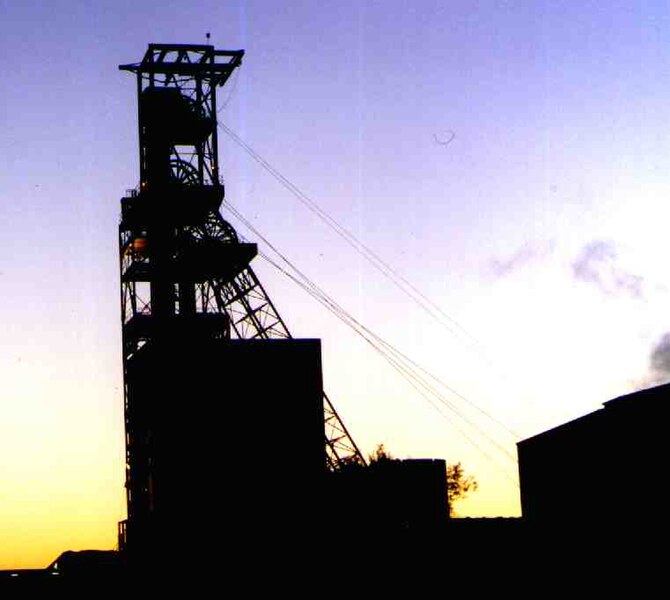
The Oryx Mine in South Africa - An example of an underground gold mine.
Photo by Babakathy

Most countries have environmental laws that require getting all kinds of environmental permits before starting construction of a mine.  This also falls under the purview of the developer although the actual permitting process is under the direction of a lawyer.  Another important document in the permitting process is the Mine Closure Plan that is usually prepared by an engineer or landscape architect that describes what will happen to the real estate once the mine closes for good.

Depending on the size of the mine determines how much physical work will be required to bring the mine up to production.  This can be a major construction project in itself involving all kinds of construction equipment let along mining equipment.

This is why the Mexicans say, “It takes a silver mine to open a gold mine,? 

Friday, March 23, 2012

Gold Occurrences in Chile


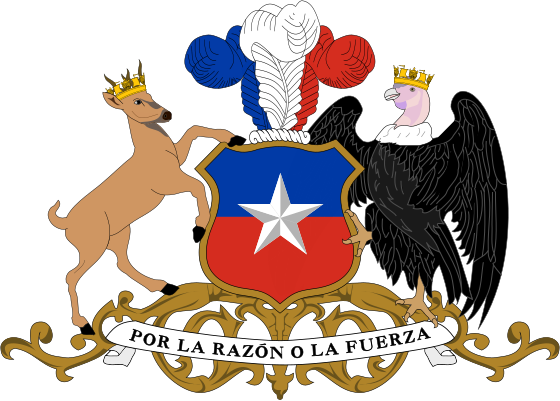
Coat of Arms of Chile
by B!mbo

Whenever anyone thinks of Chile they immediately think of copper since it is the largest producer of copper in the world, but many of the copper deposits have gold and silver as trace metals.  A recent statement by the Chilean Copper Commission (Cochilco) says their country’s production of gold could triple by 2015 making the country one of the top producers in the world.  Currently Chile’s gold production is pegged at 39.2 tonnes, however new developments and expansions of existing mines could cause output to swell to 103 tonnes by 2015.  This figure may be an underestimation as there are other gold mining projects waiting in the background.  Most of the gold produced in Chile comes from the production of copper as a byproduct.

There are several mining companies involved with this surge in gold production with the most notable being Barrick with its Pascua Lama project.  This does not include several other gold mining projects that are waiting in the wings.  Recent discoveries of gold/copper mineralization have been found in the high Andes that have become viable because of the high rise in gold and copper prices.  The biggest hurdle facing miners is the lack of or shortage of capital for developing these gold finds that sometimes can cost billions of dollars to get them into production.

Most of these projects in the high Andes are found above the 4,000 meter line making them difficult to mine as operations are hard on both personnel and equipment.  Some of these projects are centered on banded quartz projects carrying in places high anomalies of gold.  Other projects are to be found in gold bearing porphyry that has a lower gold content, but because of the vast volumes of rock present high tonnage, low grade projects.  At present the main target of the explorers is at La Falda that is a near-surface porphyry having associated epithermal gold-silver. 

Chile is not as famous for gold production then either Mexico or Peru exploration of the country by the Spaniards was financed with the placer gold that was discovered there.  In 1810 an the eve of its independence Chile was producing as much gold as Mexico and Peru combined.  In the 16th century from the founding of Santiago in 1541 gold from placer deposits mainly in the southern part of the country produced up to 2 tonnes of gold annually. This mining came to an abrupt end when the Spaniards were evicted by the local Indians.

A second cycle of gold production started at about 1740 that were mainly based on vein mining.  The gold was recovered using trapiches and mercury to recover the gold.  This production peaked with the production of 3 tonnes in 1810.  There were several areas that were producing gold with the most prominent being located at Andacollo and other areas.  Gold production in all areas declined during the War of Independence that was finally reached in 1823.


Saturday, April 2, 2011

Nancy Twinkie sees Red:

Nancy was busy with her career s a TV Newscaster so for several weeks after the water snake episode we didn’t see each other.  There was a mine in West Cummington that produced rhodonite belonging to an old time miner named Anson Betts that had operated the mine during the 1920s for flux t the steel mill in Worcester, Massachusetts.  This steel mill belonged to US Steel where they made steel to address the New England Market.

At the time I had negotiated a lease for the mine and was in the process of pumping out the water when Nancy told me over the phone she had the following weekend free, and wondered if we could go prospecting again, so when I told her about the mine she got really curious.  The following Saturday morning I picked her up at home with the back end of my pickup truck filled with mining gear, and off we went up into the Berkshires to West Cummington. 

Before we went to the mine we stopped at the old farmhouse Anson Betts called home with his wife.  Anson was ninety-eight years old, but was as spry as a man that was forty years younger, so when he met Nancy he was on his best behavior.  Mrs. Betts brought us coffee that we drank with Anson before we repaired to the mine.

Anson as a young electro-chemist invented a way of electroliticaly refining the lead ores at Trail, British Columbia that is still used today as the Betts Process.  Several weeks later I was sitting in as a guest at a class in economic geology at Yale in New Haven, Connecticut where the professor just happened to be teaching a class about lead ore, and kept mentioning that the late Anson Betts was a graduate of Yale in 1894.  I finally raised my hand to advise the professor that Anson Betts wasn’t late, and we had coffee with him Saturday morning. 

After leaving the Betts house we went down to the lower mine next to the Plainfield Rd.  This was the mine I had leased because it had nice raspberry pink rhodonite even though it was covered with a black layer of manganese dioxide that is known as pyroluisite.  The mine itself was a small open-pit mine that was only about 50 feet deep and had been excavated into the side of a hill for about 100 feet.  Most of the rock we could see was covered with a film of pyroluisite with only a few splotches of ping showing through where some rock hounds had been at work.

While I was tending to the pump Nancy went rummaging around in the back of my truck where she found a sledge-hammer that weighed 8 pounds.  With a hammer that size you can do some serious damage, and Nancy walked up to an outcrop in the mine, and gave it a mighty whack with the hammer.  Nothing happened, but I should imagine Nancy’s teeth were probably rattling.

Some of the largest deposits of rhodonite in the world are in the Ural Mountains where it was mined as a gemstone and for making decorative items suck as the columns in a church or it was also used as a sargophus for Czar Alexander II.  The miners also used chunks of rhodonite as anvils for forging steel.  Its tough!