Total Pageviews

Showing posts with label Egypt. Show all posts

Friday, May 13, 2011

Gold Mining Practices in Ancient Egypt.

The Ancient Egyptians were highly skilled in the mining of gold, made possible by the “alluvial spoil heaps and quarries which still bear witness to their activities”. Egyptian gold took two forms, dust or powder from alluvial workings and ring-shaped ingots cast from the smelted gold produced in the mines.


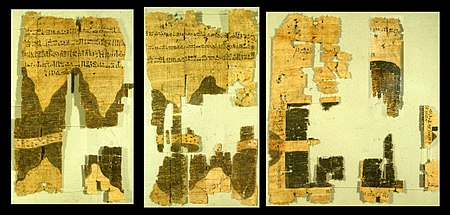
The Turin Papyrus Map is dated to 1100 BC is now at the Turin Museum. This map is rumored to be the oldest map in the world and it demonstrates the many gold bearing regions in the eastern desert of EgyptThe area shown is in the Wadi Hammamat between the towns of Quina and Qoseir. A network of roads intersects the mountainous regions and the inscriptions illustrate where gold was being mined in Egypt.

This is the right half of the above map.


In 60 B.C. Diodorus Siculus traveled in Egypt to inspect the gold mines of the Egyptians. His impressions and descriptions found in his Bibliotheca Historica drew largely upon the account given by Agatharchides of the working of gold. Agatharchides was a Greek philosopher and historian who wrote about the Red Sea in several books and the successors in Alexandria, where he worked at the court of PtolemyVI. Unfortunately, his work has been lost, yet Diodorus Siculus has keenly described laborers washing out gold from crushed quartz.


"At the extremity of Egypt and in the contiguous territory of both Arabia and Ethiopia
there lies a region which contains many large gold mines, where the gold is secured in great quantities with much suffering and at great expense. For the earth is naturally black and contains seams and veins of a marble which is unusually white and in brilliancy surpasses everything else which shines brightly by its nature, and here the overseers of the laborers in the mines recover the gold with the aid of a multitude of workers” [1].

Workers worked day and night and were confined to their particular work area in an event they tried to escape. The ground which was rich with gold was first burned and the remnants of the burn were crumbled by hand. The overseer or guard would point towards the ground or a rock. The workers with the greatest strength were assigned the quartz and they would pound it with massive force. No skills were necessary, just brute strength and agility. The workers would tunnel through the quartz, following the cleavage points and seams, never in a straight line.

Young men would wind their way through the hollowed tunnels and collect the rocks which would have been cast down piece by piece. They then transfer their load to the middle aged men who pound out the stones with iron pestles, making coarsely chopped pieces. Those pieces are then transferred to the women and older male workers whom cast them into mills and grind them into a fine powder.

The final stage includes pouring the powder on to a marble slap which has been worked into a board. The board is set at a gradual incline, so while a worker pours a continuous stream of waterover the board, the heaviest of the elements settles. Using a delicate sponging method, they pickup any small earthy particles, imperfect to be exact, and what’s left is gold dust. The gold dust is placed in earthen jars and mixed with “a lump of lead proportionate to the mass, lumps of salt and a little tin, and adding thereto, barley bran; thereupon they put on it a closefitting lid, and smearing it over carefully with mud they bake it in a kiln for five successive days and as many nights”. Once cooled, all that’s left in gold in pure form.

Notton noted that this working of the gold, as it is carried on at the farthermost borders of Egypt, is effected through all the extensive labors here described; for Nature herself, in my opinion, makes it clear that whereas the production of gold is laborious, the guarding of it is difficult, the zest for it is very great, and that its use is halfway between pleasure and pain [2].

1. Diodorus Siculus, Book III, Chapters 12 to 14; C. H. Oldfather translation, Loeb
Classical Library, 1935, 115-123
2. Notton,J. H. F.Ancient Egyptian Gold Refining: A REPRODUCTION OF EARLY
TECHNIQUES. Johnson Matthey & Co Limited, London.
3. Pictures are in the Public Domain

By Lauren Axelrod publisher of the Ancient Digger at: http://http://www.ancientdigger.com/ 

Friday, April 8, 2011

How to make a Geopolymer Crucible for Refining Gold

You can easily make a crucible for refining gold by using an ancient technology that was allegedly used to build some of the stone blocks used in the pyramids of Egypt. This technology was rediscovered in the 20th century by a chemical engineer from France named Joseph Davidovits who named it geopolymer. This material can take the place of both conventional concrete and many ceramics, but for the purpose of gold prospecting we shall limit this discussion to making high-temperature crucibles.

Pouring gold from a crucible
Photo by Allen Drebert

The activator fluid is made from 32% sodium hydroxide dissolved in water. The solution also contains 32% sodium silicate. The sodium hydroxide solution is made first by dissolving 32 g of sodium hydroxide in 100 ml of water that is allowed to sit overnight. The activator solution also requires 250 ml of a 32% solution of sodium silicate that can be mixed the next morning.

The completed activator solution contains 100 ml of the sodium hydroxide solution, and 250 ml of the sodium silicate solution mixed together. The activator solution has to be mixed with a pozzolan material of which there are several you can use:

Coal fly ash
Volcanic ash
Ground glass
Ground brick

Coal fly ash and volcanic ash and do not have to be ground, but the other materials have to be ground as fine as possible. The nice thing about making crucibles from this formula is it doesn't take much to make a workable crucible.

The process works like this:

To three parts of pozzolan material and six parts of sifted sand add enough of the activator fluid so that it makes a paste that has “zero” slump when it is mixed. Because of the highly corrosive nature of this mixture you should wear rubber gloves whenever you are handling the material.

The easiest pozzolan material for most people to acquire is either ground glass or a ground-up brick. Glass can be extremely difficult to grind unless you heat it first to red heat with a torch, and plunge it immediately into cold water. This makes it much easier to grind, and glass is one of the most readily accessible pozzolan materials.

The mixture is kneaded into a clay like mass that is then applied to a mold. Coat the surface of the mold with a film of vegetable oil so the crucible will not stick when you try to remove it. The mold should be made of wood that has been coated with a layer of shellac before being used. In a pinch you can use an ordinary drinking glass for a mold providing you cover it with a film of vegetable oil first.

The mold should be covered with about 1/4 inch of the geopolymer material that is allowed to set overnight before removing it from the mold. After the crucible is removed from the mold that is ready for use.

If you have difficulty in making the geopolymer material into a clay like mass you can add one part of calcined clay. It doesn't take much to make a single crucible and we usually use a teaspoon to measure the amounts we need. 

Getting the fixings together for this can present some problems, but the most difficult are getting the sodium hydroxide that is usually sold under its common name “lye” in hardware stores as a drain cleaner. Do not use any other drain cleaning compounds for this project. The other chemical that is hard to find his sodium silicate that also has a common name “waterglass.” If this chemical is not available locally it can be ordered from Sheffield Pottery in 1 pound quantities. Sheffield ships all over the United States and Canada.

It was probably a variation of this formula that the Japanese used to stop the leak in the nuclear reactor that was damaged by the earthquake and tsunami that struck Japan on 11 March 2011.

You can read much more about the science of geo-polymers and Pozzicrete and by going here!