Total Pageviews

Showing posts with label Central America. Show all posts

Sunday, January 15, 2012

Gold Occurrences in Central America


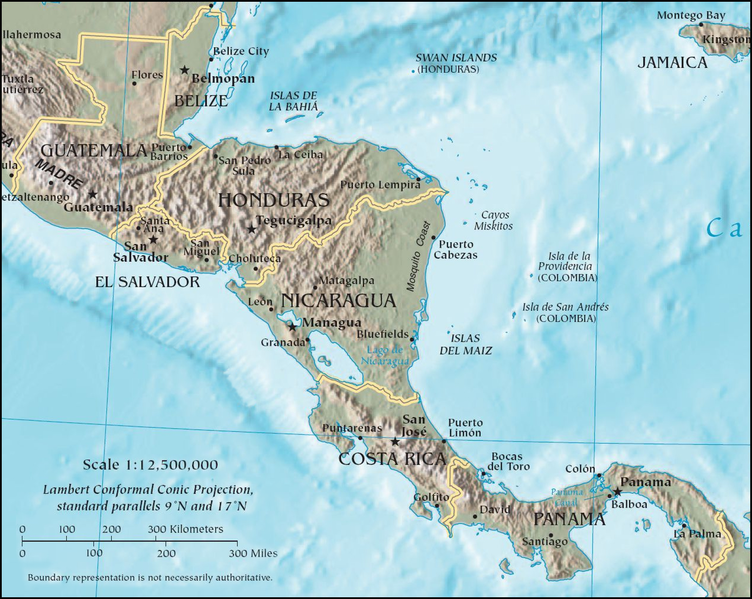
Map of Central America

With the exception of Belize gold is found throughout Central America to the extent that the area has become a Mecca for gold seekers.  The big attraction is the chain of volcanoes that reaches from one end to the other going north to south.  Central America is also one of the youngest landmasses on Earth that hardly exceeds 5 million years old.  The lode gold deposits are all epithermal deposits in nature where the gold is deposited in concentric rings around the volcanoes in the many shear zones in the area.

Recently the level of gold exploration in Central America has increased because the region is not well explored and one might say it is under explored. At the present time ounce of gold carries a high price tag combined with the laws of all the nations in Central America that for the most part are pro-mining and exploration.

The very formation of Central America as an island arc of volcanic islands that was in filled by sediments from both North and South America would be enough to form gold deposits.  Most of the lode deposits found in Central America are epithermal in nature associated with volcanism forming in fault and shear zones.  The volcanism is formed by the Cocos Plate being subducted beneath the area west of Central America just offshore.

Several gold mining companies started exploring the area during the late 1990s in the long isthmus that connects the America’s finding the whole of Central America is spotted with high grade gold deposits.  Central America may prove to be one of the premier gold bearing areas on earth.  Success prospecting Central America will prove to be more successful for those companies that strive for community support among the inhabitants rather then the old time methods of dig and run leaving a mess behind.  This will also help them to get exploration permits leading to the development of a mine if it is economically feasible.

Central America is about the size of the Yukon Territory of Canada but contains several countries all of which except one have gold deposits.  The one exception is Belize that does not contain any reported gold deposits.  Throughout most of the area are mining laes similar to those found in Canada meaning overall they are friendly to the mining community.

Now that the price of gold is hovering around US$1,600.00 per ounce has caused a significant number of grassroots discoveries of gold throughout the region.  Central America is a virtual treasure chest of minerals, more then gold is found there.  One nation, Panama is estimated to hold the largest copper deposit in the whole world.  It is not only a miner’s paradise but one for investors too.

Tuesday, January 10, 2012

Gold Occurrences in El Salvador


Coat of Arms of El Salvador


There are several volcanoes located in El Salvador with most of them found in the western part of the country and have all erupted during the Holocene.  It takes volcanic activity to create gold deposits, and that is exactly what has happened in El Salvador.  The heat from the volcanoes has driven the gold out in concentric circles around the volcanoes and is deposited when the temperature of the water drops below 300o C to about 200o C.  Quartz is also deposited at about the same range of temperature so they are often deposited at the same time.

Most of the lode gold found in El Salvador and Central America in general are in the form of epithermal deposits associated with the many volcanoes in the region.  These volcanoes are products of the subduction zone just off the west coast of Central America.  Many of these deposits grade to copper with depth making it possible that the largest copper deposits can also be found in the area.

Although there are little references to placer gold in the country it is reported to be found in most rivers and streams flowing from the interior as placer deposits in the bottom of the valleys.  Like other placer deposits it is found associated with the gravel deposits associated with flowing water.

First there was a gold rush in El Salvador that quickly was followed by the lawyers.  Although gold in plenty has been found in the country its large scale mining is being opposed by community groups, locals and environmentalists.  It seems their concern is mainly the distribution of wealth between the miners and the local population.  As we speak this is a battle moving its way through the courts!

Pacific Rim Mining has a project named El Dorado that is 65 km east of the capital of San Salvador that is presently in an advanced stage of exploration indicating there is 1.4 million ounces of proven resources available and a potential of much more that is the target for the present exploration program.

Mining and exploration is governed by the 1996 law that was last amended in 2001.
This law is administered by the Ministry of Economy’s Department of Hydrocarbons and Mines governs the granting of exploration license as well as exploitation concessions.  This allows the applicant the right to produce and sell valuable products recovered from natural resources within the area of the concession.  An Environmental Impact Study (EIS) has to be approved by the Salvadoran Ministry of Environment and Natural Resources as well as satisfying a number of other conditions.  Once it is granted the law requires that mine construction be started within the next twelve months in accordance with the conditions on the final permit.

Monday, November 28, 2011

Gold Occurrences in Guatemala


Coat of Arms


Guatemala is the northern most country in Central America adjoining Mexico on its southern border.  Gold mining has been practiced in Guatemala since before the days of the Spaniards by the Maya Indians, and is still being practiced today.. the country is mounted on the north by Mexico, on the northeast by Belize and on the South by Honduras. The Caribbean Sea lies to the east, and the Pacific Ocean to the West.

Some of the core rocks of Guatemala were laid down around 370 million years ago that have since been overlaid by tertiary volcanism many of these mountains contain iron, copper, lead, zinc and traces pf gold and silver that are still being mined today.  The Tertiary period when dinosaurs roamed the Earth was when this massive layer of volcanic rocks were laid down with their accompanying mineral deposits.  The eruptions did not stop during the Tertiary there are volcanoes still erupting today in Guatemala

Volcan Flores one of the many volcanoes of Guatemala
Photo by Rick Wunderman (Smithsonian Museum)


As recently as 23,000 years a very large eruption occurred for me a call barrel that is now occupied by Lake Atitlan in the Guatemalan highlands.  One recent eruption of Mt. Santa Maria in 1902 was one of the most violent eruptions of the 20th Century.  As recently en eruption of the volcano Pacaya in September 2010 caused 1,800 people to flee their homes as the volcano spewed ash, lava and rocks over the surrounding countryside.  The eruption was also blamed for at least three deaths.

It is a well known fact that gold is often found in the vicinity of former volcanic eruption's in deposit great amounts of gold by the action of hot water. Even today there are many hot springs to be found in Guatemala in it which could still be bearing gold laden waters. An especially good place to look for gold is around ancient volcanoes especially those that have created calderas. Gold is not usually found in the center of a caldera but rather at its edges. Many times these gold deposit a company magnetic highs that are found at the outer edges of a caldera eruption.

A great deal of Guatemala is covered by tropical rain forest combined with the rugged terrain and it's prospecting in the country very difficult although not impossible. This condition prevails through all of Central America. In Guatemala there are both placer and lode deposits of gold.  Gold can be found in most of the rivers and streams flowing down from the highlands of the country. Because of ground cover finding lode gold is more difficult although not impossible if you use modern geophysical instruments.

Gold is often accompanied by deposit so magnetite that is sensitive to a flux gate magnetometer. There are other advanced methods of exploring for gold including one very accurate means that involves taking soil samples, and subjecting the samples to analysis by an atomic absorption spectrometer.

It is possible that the area encompassed by Central America could well prove to be one of the most mineral rich areas in the world. 

Saturday, November 26, 2011

Gold Occurrences in Honduras

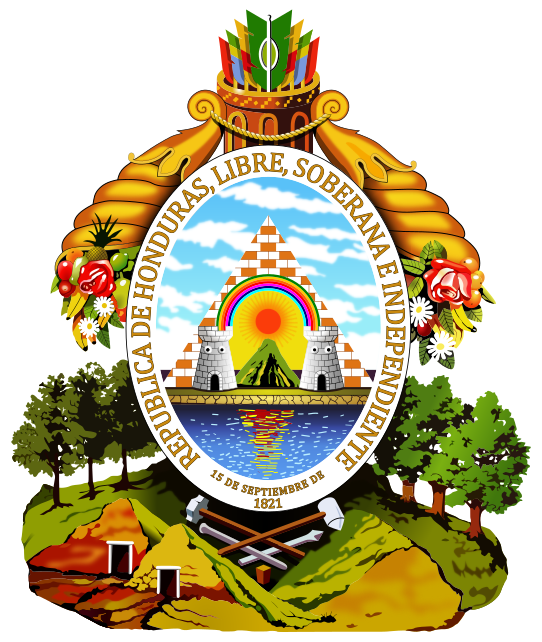
Coat of Arms for Honduras. Note the crossed hammers and chisels along with the mine entrances in the lower left corner.


Honduras is the largest and most rugged country in Central America. It was little explored until the 1960s because of the dense jungle, steep slopes and deep ravines.  Lack of roads was another contributing factor to the lack of exploration. Volcanic activity is another.  Volcanism is a rather recent occurrence in Honduras like the other countries of Central America having started as recently as 11 million years ago and still continues today.  It is this volcanic activity that carried gold and other polymetallic ore deposits in its wake.

As part of the volcanic arc of Central America, Honduras contains many volcanoes both active and extinct; it is this volcanic activity that brought with it the deposits of gold and other minerals that are found here today.  The area including Honduras has undergone a considerable amount of activity associated with subduction zones that were building volcanic arcs Honduras was part of one of several island arcs originally.  The country was finally accreted to southern Mexico, but there was still a gap between North and South America.  This gap was only closed within the past five million years when Panama was formed allowing a land bridge between the Americas.

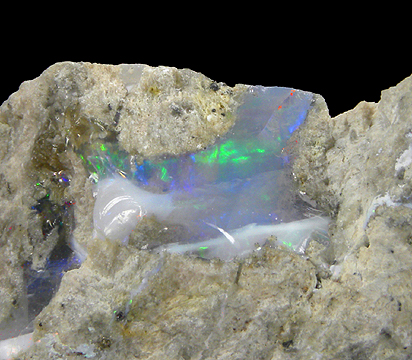
Gold isn't the only thing found in Honduras this precious opal came from the Gracis O Dios mine there.
Photo by Rob Lavinsky


Although the situation has improved Honduras to this day is largely unexplored presenting plenty of opportunities for exploration for gold that is present on both placer and lode deposits. There are several gold mines in Honduras where mining is mainly carried out by foreign interests that principally use the heap leaching process with cyanide.  The nature of the mines also lowers the water table.  Cyanide can be neutralized with a solution of laundry bleach or Clorox. 

In some cases whole villages were relocated to new sites that although they provided housing for the inhabitants they failed to provide plots of land where crops could be raised or animals pastured. The findings of an investigatory group were published in the paper, “The Price of Gold: Gold Mining and Human Rights Violations in Honduras.”  The result was made by presenting the Honduran Government with the needs of improving the regulatory needs as pertained to gold mining.

Due to its mainly volcanic origin there is plenty of gold in Honduras waiting to be discovered because although exploration conditions improved during the 1960s there is still plenty of territory that hasn’t been explored yet.  Gold is still there for the taking!