Total Pageviews

Showing posts with label Australia. Show all posts

Wednesday, August 24, 2011

Gold Occurrences in New Zealand


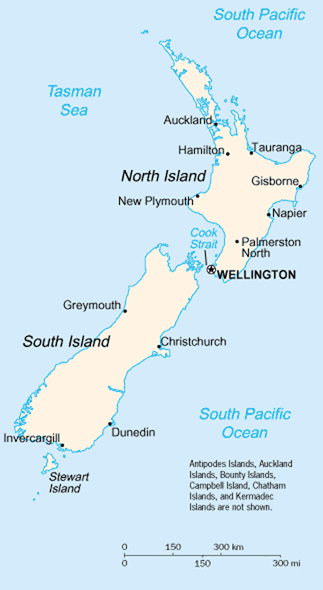
Map of New Zealand


There are several different types of gold deposit that are found in western New Zealand.  Orogenic gold deposits are found in both fault and shear zones at all crustal levels in quartz veins found within and around brittle ductile transition zones. 

The framework of New Zealand is controlled by two major faults the Wellington fault in North Island that terminates at the Bay of Plenty to the south coast, and the Alpine Fault that traverses South Island. New Zealand was rifted from Australia millions of year ago.  There is a subduction zone to the east that today drives the volcanoes found on the west side of North Island.  It is these volcanoes and earlier volcanism that has formed the gold deposits of the Islands.

Together these two faults represent a suture zone that runs the length of the islands.  It is a well known fact that many metal deposits are found associated with suture zones, and that is true in New Zealand.  Another mineral that is often found in suture zones is nephrite that is commonly called jade.  Jade is found in areas of high pressure-low temperature metamorphism commonly in blue schist grade rocks.

These deposits originated ranging from 3 km to 12 km deep with hot water from 200o to 400o C.  The gold deposits were brought to the surface by earth movements and erosion. The gold deposits are found mostly in regionally metamorphosed Paleozoic sediments that are found including those found at Golden Blocks in the northwest at Nelson, Reefton and Lyell.  Other deposits are found at Preservation Inlet in Fiordland where gold bearing quartz veins are found dipping steeply and are generally striking parallel to the axes of folding in greywacke and argillite slate host rocks.  Most of these veins are found to de discordant to the bedding. 

The lodes in these locations are usually less then a meter wide and 200 meters long.  The Birthday Reef at Blackwater, Reefton is the largest quartz vein found in the Paleozoic rocks.  This vein averages about 60 cm wide and has been mined for a distance of 1070 m that extend to a depth of 830 m.  There is also disseminated gold deposits that are next to the quartz lodes at Globe-Progress as well as others at the Reefton deposits.

There are also deposits of gold found in the Mesozoic rocks in the schist of the Otego and Marlborough as well as the greywacke found in the Southern Alps.  Here the lodes are typically lensoidal in shape that are rarely more then a meter wide and are localized along single or multiple shear zones that are parallel that usually dip steeply and are discordant to the bedding of the country rocks.  One exception is a lode vein found at McRaes where the deposits are found in the Hyde McRaes shear zone.  These gold bearing veins have a strike of more 25 km.

Many of the gold deposits are found in saddle reef deposits similar to those found in eastern Australia where they occur as veins of quartz that approach near horizontal deposits of quartz found parallel to the bedding planes in turbidites ranging in age from Silurian to Devonian in age.  A good example of this kind of deposit can be found at the Hill End Gold Field in New South Wales.  This deposit was developed in regional metamorphism over a considerable length of time.

Gold deposits can be found the length of New Zealand, but are mostly found on the western side of the islands.

Tuesday, January 4, 2011

Australian Gold

Gold is been found and mined in all the states of Australia including the Northern Territories. Although gold was originally discovered in New South Wales most of the gold produced today is found in the southwest corner of Western Australia. A long strip of gold bearing rocks is found along the coast in both New South Wales and Victoria that extends into Tasmania. The largest mining activity for gold in Australia is located in Western Australia. There are smaller gold producing areas that are almost like plums in a plum pudding scattered across the interior of Australia as can be seen on a resource map produced by the Geological Survey of Australia.

Front End Loader working in an Australian gold mine.

The largest gold nugget that was ever discovered was found in Australia in 1869. This was the Welcome Stranger nugget. This was the name given the largest alluvial gold nugget that was ever discovered on Earth. The nugget weighed in at 2,283 ounces, 6dwts and 9 grains. It was found to measure 61 cm (24 inches) by 31 cm (12.2 inches). It was discovered at Moliagul, Victoria by John Deason and Richard Oates on February 5, 1869 about 9 miles northwest of the town of Dunolly. They named this huge nugget the Welcome Stranger.

This wasn't the only large mass of gold discovered in Australia a somewhat smaller one was found by twenty-four miners working in a mine shaft in Ballarat during 1858. This was the largest gold nugget found at the time until the discovery of the Welcome Stranger in 1869. This earlier gold nugget was called the "Welcome Nugget."

An example of crystallized gold the Providence Nugget from Australia.

The official discovery of gold in the West really a start of a gold rush in 1851 when a prospector named Edward Hammond Hargraves claimed he had discovered payable gold near Bathurst, New South Wales at a place for Hargraves called Ophir. It was six months later that gold was discovered in Victoria. Even though gold had been discovered as early as 1841 by others including Rev. WB Clarke in 1841. Clarke reported his find to the then governor of New South Wales George Gipps. Gipps told Clark to put his discovery away advising Clark that “We shall both have our throats cut!” At the time Australia had a convict society and the last thing the authorities wanted was the discovery of gold. Later the governments of both New South Wales and Victoria rewarded Clarke for his contributions to the gold industry of Australia, however the financial rewards didn't compare to those that were awarded Hargraves.